Baby Oral Care Before Teeth: Cleaning Gums and Early Hygiene Practices
by Maroa Noa · 25 Mar 2026

Many parents assume oral care begins only when a baby’s first tooth appears. However, maintaining good oral hygiene before teeth emerge is one of the most important steps in protecting your baby’s long-term dental health.
Even without visible teeth, bacteria can build up in your baby’s mouth, affecting gums and setting the stage for future dental issues.
Establishing early oral care routines not only keeps your baby’s mouth clean but also helps them become comfortable with daily hygiene practices.
This article explores why pre-teething oral care matters, how to clean your baby’s gums safely, and which pharmacy essentials available at Pharmily Limited Kenya can support early oral hygiene.
Why Oral Care Before Teeth Matters
A baby’s mouth is not sterile. From birth, bacteria begin to colonize the oral cavity, especially after feeding.
Milk residue — whether from breastfeeding or formula — can accumulate on the gums and tongue, creating an environment where harmful bacteria thrive.
Cleaning your baby’s gums regularly helps remove this buildup, reducing the risk of early dental problems such as tooth decay when teeth erupt.
It also promotes healthy gum tissue, which is essential for proper tooth eruption and alignment.
Early oral care also builds a routine. Babies who become familiar with mouth cleaning early are more likely to accept toothbrushing later, making the transition smoother for both parents and child.
When Should You Start Cleaning Your Baby’s Mouth?
Oral care should begin from the first days after birth. Even before teething begins, gentle cleaning of the gums is recommended at least once or twice daily, particularly after feeding.
As your baby grows, this routine becomes the foundation for brushing once teeth emerge.
Starting early ensures consistency and helps prevent resistance to oral hygiene practices later in infancy and toddlerhood.
How to Clean Your Baby’s Gums Safely
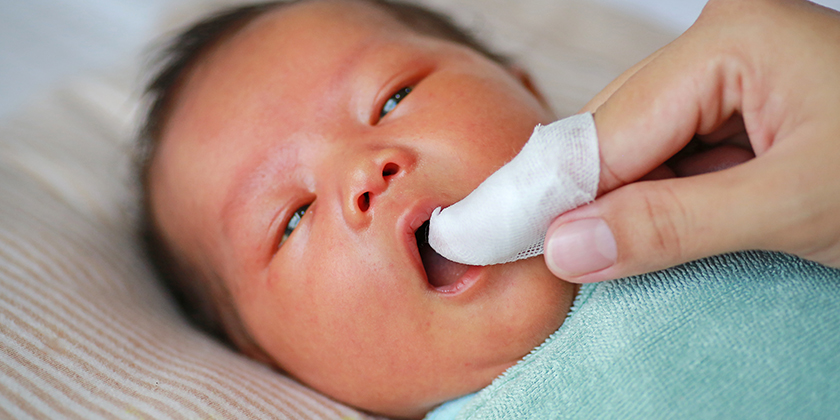
Cleaning your baby’s gums is simple, safe, and requires minimal tools. The key is to be gentle and consistent.
Step-by-Step Guide
- Wash your hands thoroughly before handling your baby’s mouth
- Wrap a clean, soft cloth or sterile gauze around your finger
- Dampen it with clean, lukewarm water
- Gently wipe your baby’s gums, tongue, and inner cheeks
- Focus on removing milk residue, especially after feeding
This process should take only a few minutes and can be incorporated into your baby’s bedtime routine.
Signs Your Baby Needs More Frequent Oral Cleaning
While daily cleaning is usually sufficient, some situations require extra attention:
- Visible milk coating on the tongue or gums
- Frequent feeding (especially night feeds)
- Dry mouth or reduced saliva
- Early signs of teething
Maintaining cleanliness during these stages helps prevent irritation and supports healthy oral development.
Early Hygiene Practices That Support Oral Health
Beyond cleaning gums, several habits can help maintain a healthy oral environment for your baby.
Avoid Letting Milk Sit in the Mouth
Allowing your baby to sleep with milk pooling in the mouth can encourage bacterial growth. After feeding, gently clean the gums or offer a small amount of water (if age-appropriate and advised).
Keep Feeding Equipment Clean
Sterilizing bottles, nipples, and pacifiers reduces exposure to harmful bacteria. This is especially important for newborns with developing immune systems.
Avoid Sharing Utensils
Parents sometimes transfer bacteria unknowingly by sharing spoons or cleaning pacifiers with their mouth. This can introduce cavity-causing bacteria early.
Encourage Natural Saliva Flow
Saliva plays a key role in protecting the mouth. Ensuring your baby is well hydrated (through feeding) supports this natural defense.
Transitioning to Tooth Care
Once the first tooth appears — usually around 6 months — oral care should evolve to include brushing.
- Use a soft-bristled infant toothbrush
- Brush twice daily using a tiny smear of fluoride toothpaste (as recommended by a healthcare provider)
- Continue cleaning the rest of the mouth gently
This transition is easier when babies are already accustomed to having their mouths cleaned.
Products That Support Baby Oral Care
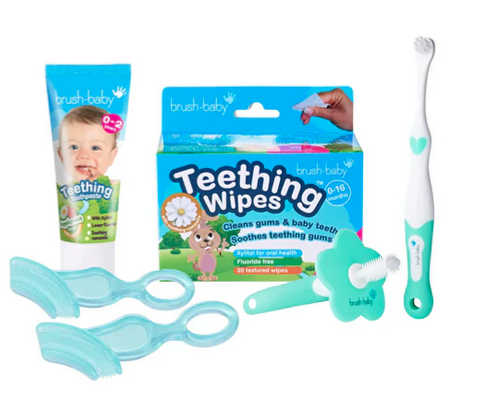
Using the right products can make early oral hygiene safer, easier, and more effective. Below are five helpful pharmacy products that support baby oral care before and during teething.
1) Teething Gels (Pain Relief + Gum Protection)
Bonjela Soothing Teething Gel 15ml - Bonjela is a fast-acting teething gel that helps relieve gum pain, inflammation, and irritation in babies over 6 months. It contains a mild anesthetic and antiseptic, which not only soothes discomfort but also helps maintain oral hygiene during teething.
Dentinox Teething Gel 15g - Dentinox is a gentle, baby-safe gel designed to soothe tender gums and reduce inflammation during teething. It also has mild antiseptic properties, helping protect the gums from infection caused by drooling or rubbing.
2) Baby Teethers (Gum Massage + Oral Development)
Japlo Stego Baby Teether - This teether is made from safe, non-toxic materials and features textured surfaces that gently massage sore gums. It helps relieve teething discomfort while promoting healthy oral development.
Japlo Tricer Baby Teether - Designed with soft silicone and varied textures, this teether helps soothe irritated gums and encourages healthy chewing habits. It is lightweight and easy for babies to hold, supporting both comfort and motor development.
3) Baby Toothbrushes (Early Oral Hygiene)
Oral-B Stages Toothbrush (0–2 Years) XSoft - This toothbrush is specifically designed for infants, with ultra-soft bristles and a small cushioned head to protect delicate gums. It allows parents to gently clean gums and early teeth without causing irritation.
4) Baby Toothpaste (For First Teeth Protection)
Colgate Kids Toothpaste 0–2 Years 50ml - This toothpaste is specially formulated for infants and helps protect emerging teeth from cavities while strengthening enamel. It is gentle on gums and supports early dental health when used in small, supervised amounts.
Common Mistakes to Avoid
- Using toothpaste before teeth appear
- Cleaning too aggressively, causing gum irritation
- Skipping oral care after night feeds
- Introducing sugary liquids in bottles
- Ignoring early signs of oral discomfort
Avoiding these mistakes helps maintain a safe and effective oral care routine.
When to See a Healthcare Professional
Consult a healthcare provider or pediatric dentist if you notice:
- White patches that do not wipe off (possible oral thrush)
- Persistent bad breath
- Bleeding or swollen gums
- Delayed tooth eruption beyond expected timelines
Early evaluation ensures that any issues are addressed before they affect long-term oral health.
Baby oral care before teeth is a simple yet powerful step in promoting lifelong dental health.
By gently cleaning your baby’s gums, maintaining hygienic feeding practices, and introducing oral care routines early, you create a strong foundation for healthy teeth and gums.
With the support of safe, effective products available at Pharmily Limited Kenya, parents can confidently manage their baby’s oral hygiene from the very beginning.
Consistency, gentleness, and early intervention are key to ensuring your baby’s smile develops healthy and strong.
FAQs
Q1: Do I need to clean my baby’s mouth even before teeth appear?
A: Yes. Cleaning removes milk residue and bacteria, helping prevent future dental issues and supporting healthy gums.
Q2: How often should I clean my baby’s gums?
A: At least once or twice daily, especially after feeding and before bedtime.
Q3: Can I use toothpaste before my baby has teeth?
A: No. Use only clean water until teeth begin to appear, unless advised otherwise by a healthcare professional.
Q4: What is the safest way to clean a baby’s gums?
A: Use a clean, damp cloth or a silicone finger toothbrush and gently wipe the gums, tongue, and cheeks.
Q5: When should I start brushing my baby’s teeth?
A: As soon as the first tooth appears, use a soft-bristled toothbrush and a small amount of fluoride toothpaste as recommended.