Ebola in East Africa, Kenya's Risk, Preparedness, and What the Public Should Know
by Maroa Noa · 08 Jun 2026
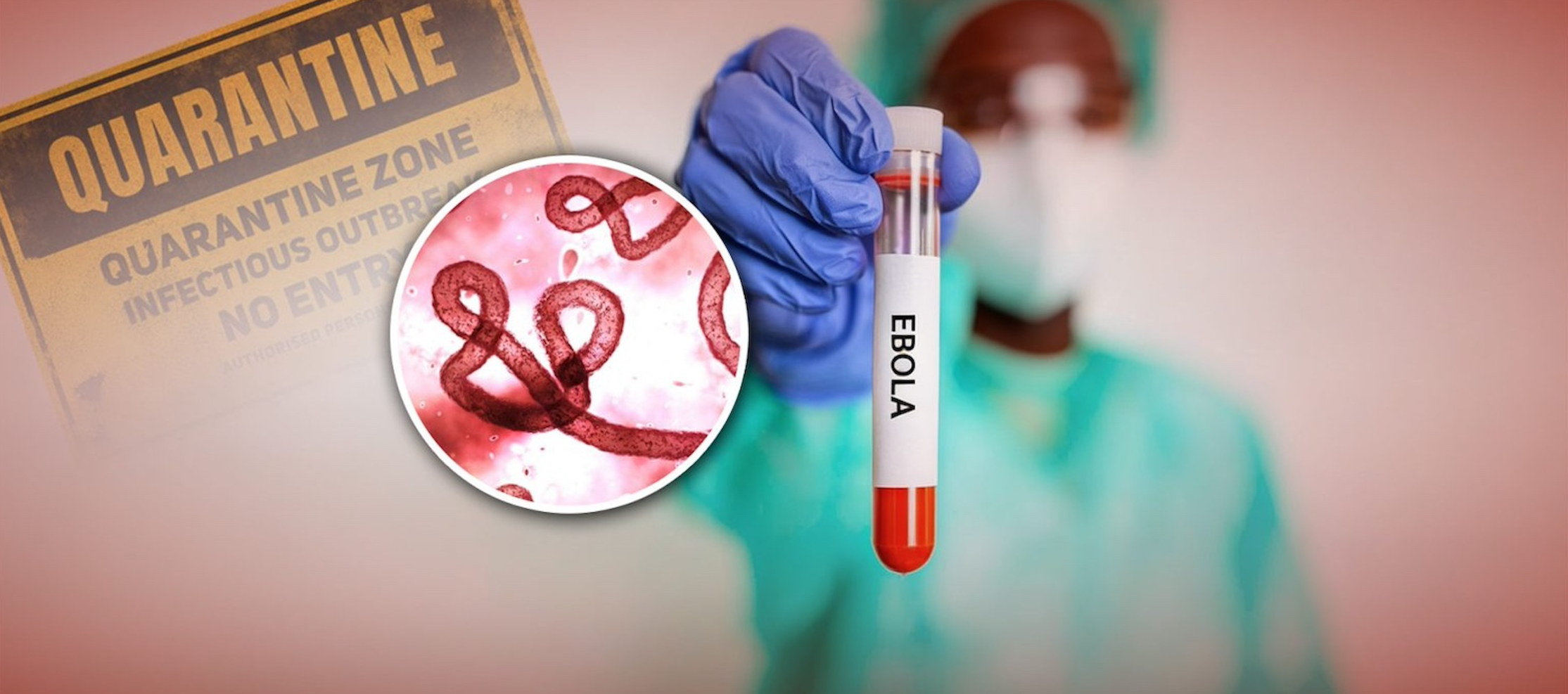
Kenya's geographic position, as East Africa's economic hub and regional gateway, places it at moderate risk during the Bundibugyo Ebola outbreak in the neighbouring DRC and Uganda. While no confirmed cases have been reported in Kenya as of June 2026, the risk is real.
Kenya's Regional Risk Assessment
Geographic Proximity and Trade Routes
Kenya shares land borders with Uganda (north) and South Sudan (northwest) and maintains significant trade, travel, and population movement with both countries.
The outbreak is currently in Ituri Province in northeastern DRC and western Uganda. Cases have been confirmed in Uganda's capital, Kampala, and the western region near the Kenya-Uganda border.
Key high-risk routes into Kenya include the following:
(1) The Kenya-Uganda border at Turkana, Busia, and Trans Nzoia counties;
(2) Jomo Kenyatta International Airport (JKIA) and other international airports receiving travellers from affected countries;
(3) Port routes at Mombasa, though East Africa's maritime trade is limited, from the DRC/Uganda outbreak zone.
Population Mobility: Traders, Returnees, Transiting Travellers
Cross-border movement includes traders, business people, returnees to Kenya, and transiting international travellers.
The Ministry of Health has noted that as of May 18, 2026, more than 34,500 travellers had been screened, including 18,552 international passengers, 5,848 local travellers, 2,514 truck drivers, and 4,729 conveyances.
This ongoing movement, combined with the incubation period of 2–21 days, means that individuals in the early, asymptomatic phase of infection could theoretically enter Kenya undetected. However, fever screening at borders can identify symptomatic cases, and isolation protocols can prevent transmission onwards.
Risk Status: Moderate to High for Detection, Low for Widespread Transmission
Kenya's risk is categorised as moderate-to-high for importing a case due to cross-border movement but low for sustained transmission IF early detection and isolation protocols function.
Kenya's health system, infrastructure, and training capacity are stronger than those of many sub-Saharan African countries, positioning the country favourably for rapid outbreak containment.
Kenya's National Preparedness Response
Government Activation & Coordination
On 17 May 2026, following the WHO's declaration of a Public Health Emergency of International Concern, Kenya's Health Cabinet Secretary announced activation of the National Incident Management System through the Kenya National Public Health Institute (KNPHI). Key coordination mechanisms include:
(1) Incident Management System at the national level;
(2) Public Health Emergency Operations Centres in all 47 counties;
(3) Rapid Response Teams on 24-hour standby;
(4) Coordination meetings between the national government, county health departments, and development partners.
Surveillance & Border Screening
Kenya has intensified surveillance and screening at all entry points. According to the Ministry of Health and official statements, enhanced measures include:
|
Border/Entry Point |
Screening Methods |
Facilities/Status |
|
Airports (JKIA, Mombasa, Kisumu, Nairobi) |
Thermal cameras, passenger screening forms, health declaration |
Operational; online passenger surveillance system deployed |
|
Turkana border (Uganda & South Sudan) |
Screening at Lokiriama, Nadapal crossings; isolation points identified |
Kanam Kemer Sub-County Hospital designated for suspect cases |
|
Busia border (Uganda) |
Screening at Busia and Mala checkpoints; coordinated with Uganda authorities |
Isolation facilities identified; joint screening protocols |
|
Trans Nzoia border (Uganda) |
Screening at Suam border point; Ministry of Health + county coordination |
Isolation facilities designated |
|
Seaports (Mombasa, Kisumu) |
Passenger screening; cargo inspection protocols |
Operational; lower risk than land borders due to outbreak location |
Population mobility mapping is underway in high-risk border regions. Truck drivers, traders, and cross-border commuters receive focused screening and health messaging.
As of early June 2026, more than 71,000 travellers had been screened, with no confirmed Ebola cases detected.
Laboratory Capacity & Diagnostic Infrastructure
Kenya has designated four national reference laboratories capable of conducting Ebola testing via RT-PCR:
- KEMRI Kisumu
- KEMRI Nairobi
- National Public Health Laboratory (NPHL)
- Mobile laboratory platforms
These facilities operate around the clock to support rapid testing. The Ministry of Health is aware of the GeneXpert detection gap (standard platforms do not detect Bundibugyo virus) and has ensured specific RT-PCR assays capable of detecting Bundibugyo are available at designated reference centres.
County-level laboratories support initial testing; confirmatory testing is coordinated through national reference labs.
Isolation & Treatment Facility Activation
Kenya has identified and activated 17 isolation centres nationwide, with designated Ebola treatment facilities including Kenyatta National Hospital (KNH), the National Police Service Hospital, and regional referral hospitals in high-risk counties (Turkana, Busia, Trans Nzoia, Mombasa). These facilities have:
- Dedicated isolation wards with barrier nursing protocols
- Personal protective equipment (PPE) stockpiles
- Trained clinical and nursing staff trained
- Laboratory support for rapid diagnosis
- Ambulance systems for safe patient transport
Human Resources & Emergency Response Teams
Healthcare workers have undergone specialised Ebola preparedness training. Additionally, a reserve team of experts in epidemiology, laboratory services, clinical management, and emergency response has been assembled and placed on standby for rapid deployment to any detected case or outbreak.
Public Awareness & Community Engagement
The Ministry of Health, with support from WHO and development partners, has launched ongoing public sensitization campaigns targeting healthcare workers, border communities, transport operators, and the general public. Key messages focus on:
- Early symptom recognition and fever reporting
- How Ebola spreads (body fluids only, not air)
- Importance of seeking care at health facilities, not self-treating at home
- Safer burial practices and engagement with traditional leaders
- PPE and infection control for healthcare workers
What Kenyans Should Do: Individual & Family-Level Actions
|
💊 PERSONAL PROTECTION & RESPONSE ACTIONS |
|
If you have travelled to DRC or Uganda in the past 21 days and develop ANY fever, headache, muscle aches, or weakness, contact your health facility or the Kenya Ministry of Health emergency line: +254 711 959 959. Monitor your temperature daily for 21 days after returning from affected regions. Any fever warrants medical evaluation. If you work in healthcare, transportation, border services, or other high-risk occupations, ensure you have received Ebola preparedness training and know your facility's isolation and reporting protocols. If you suspect Ebola in a family member or contact, do NOT delay seeking care. Call ahead to your health facility to alert them before arrival so they can prepare isolation. Do NOT participate in traditional burial rituals involving body contact if Ebola is suspected. Contact your health facility to arrange safe handling and burial. Practice good hygiene: handwashing with soap and clean water is your first line of defence against Ebola and other infections. Avoid contact with bushmeat (wild meat) or hunting of wildlife in Ebola-affected regions; such animals may carry the virus. Stay informed through official sources: Ministry of Health website (www.health.go.ke), county health offices, and WHO updates. Avoid misinformation from unverified social media. |
What to Report: Fever Reporting & Contact Tracing
Who Should Report?
Anyone with fever AND any of the following should report immediately:
- Recent travel to DRC, Uganda, or South Sudan
- Contact with someone who travelled to those countries and is now febrile
- Work in a healthcare facility that has seen suspected Ebola cases
- Exposure to bushmeat or wildlife in affected regions
Where to Report?
Contact your:
- Nearest health facility or clinic
- County health office
- Kenya National Public Health Institute emergency hotline: +254 711 959 959
- Local chief or community health volunteer (who can direct you to health services)
Contact Tracing & Quarantine
If you have been in close contact with someone with suspected Ebola, you may be placed on a contact list and monitored for 21 days. This does NOT mean you must be isolated if you have no symptoms.
Instead, you will be asked to: (1) Monitor your temperature daily; (2) Report any fever to health authorities immediately; (3) Avoid close contact with other people while monitoring; and (4) Seek medical care if symptoms develop.
FAQs
1. Should I avoid travel to Uganda because of Ebola?
Not necessarily all of Uganda, but travel to heavily affected regions (Ituri Province in DRC, western Uganda near the DRC border) should be avoided unless essential.
If you must travel to Uganda, avoid exposure-prone activities (hunting, butchering bushmeat, visiting hospitals, contact with deceased persons), maintain good hygiene, and monitor your health for 21 days after return.
2. Is Kenya's risk of Ebola really high?
Kenya's risk of importing a case is moderate-to-high due to cross-border movement and international connectivity. However, risk of widespread transmission is LOW because of Kenya's health system strength, preparedness measures, and early detection capacity.
3. What if I develop symptoms after returning from Uganda?
Contact your health facility or call +254 711 959 959 immediately. Do NOT visit a general outpatient clinic without alerting health workers beforehand; instead, call ahead so the facility can prepare an isolation room and have PPE ready.
Seek care within the first 3 days of symptom onset for the best chance of survival through supportive care.
4. Are the 17 isolation centres enough?
With no current transmission in Kenya, 17 centres are more than adequate. Even if an outbreak occurred, these centres, plus designated referral hospitals (KNH, county hospitals) provide capacity for hundreds of cases.
Kenya's main challenge is not isolation bed capacity but rapid case detection and transport. Emphasis should remain on border screening, fever surveillance, and rapid reporting.
5. Can I trust Kenya's health system to handle Ebola?
Yes, with caveats. Kenya's health system has significant strengths: experienced infectious disease specialists, access to diagnostics, and a track record of managing outbreaks (cholera, typhoid, dengue).
Challenges include uneven county-level capacity and potential PPE supply constraints in a prolonged outbreak.
References
Kenya Ministry of Health. (2026). MoH scales up Ebola surveillance and border response measures [Press Release, 22 May 2026]. Retrieved from https://health.go.ke/moh-scales-ebola-surveillance-and-border-response-measures
Kenya Ministry of Health. (2026). Kenya strengthens Ebola preparedness in high-level national readiness meeting [Press Release, June 2, 2026]. Retrieved from https://health.go.ke/kenya-strengthens-ebola-preparedness-high-level-national-readiness-meeting
Kenya Ministry of Health. (2026). Kenya intensifies Ebola preparedness: CS Duale briefs Parliament [Press Release, June 4, 2026]. Retrieved from https://health.go.ke/kenya-intensifies-ebola-preparedness-cs-duale-briefs-parliament
Republic of Kenya – Office of the President. (2026). Statement on Ebola preparedness and response coordination [Press Release, May 29, 2026]. Retrieved from the Government of Kenya's official communications.
Daily Nation. (2026). Kenya activates Ebola response as Uganda, DRC outbreak sparks border surveillance. Retrieved from https://nation.africa/kenya/news/kenya-activates-ebola-response-5466646
People Daily. (2026). Kenya intensifies Ebola surveillance as regional outbreak raises alarm. Retrieved from https://peopledaily.digital/news/kenya-intensifies-ebola-surveillance-as-regional-outbreak-raises-alarm/
The Star Kenya. (2026). How Kenya is preparing for a possible Ebola outbreak [Report, June 4, 2026]. Retrieved from https://www.the-star.co.ke/news/2026-06-04-how-kenya-is-preparing-for-ebola-outbreak
World Health Organization. (2026). Ebola disease caused by Bundibugyo virus, Democratic Republic of the Congo & Uganda [Disease Outbreak News, 17 May 2026]. Retrieved from https://www.who.int/emergencies/disease-outbreak-news/item/2026-DON602
World Health Organization. (2026). Ebola outbreak – DRC 2026. Retrieved from https://www.who.int/emergencies/situations/ebola-outbreak---drc-2026
Centers for Disease Control and Prevention. (2026). Ebola disease outbreak in the Democratic Republic of the Congo and Uganda. Retrieved from https://www.cdc.gov/ebola/situation-summary/index.html