Ebola Symptoms, Diagnosis & When to Seek Emergency Care: A Clinical Guide for East Africa
by Maroa Noa · 08 Jun 2026
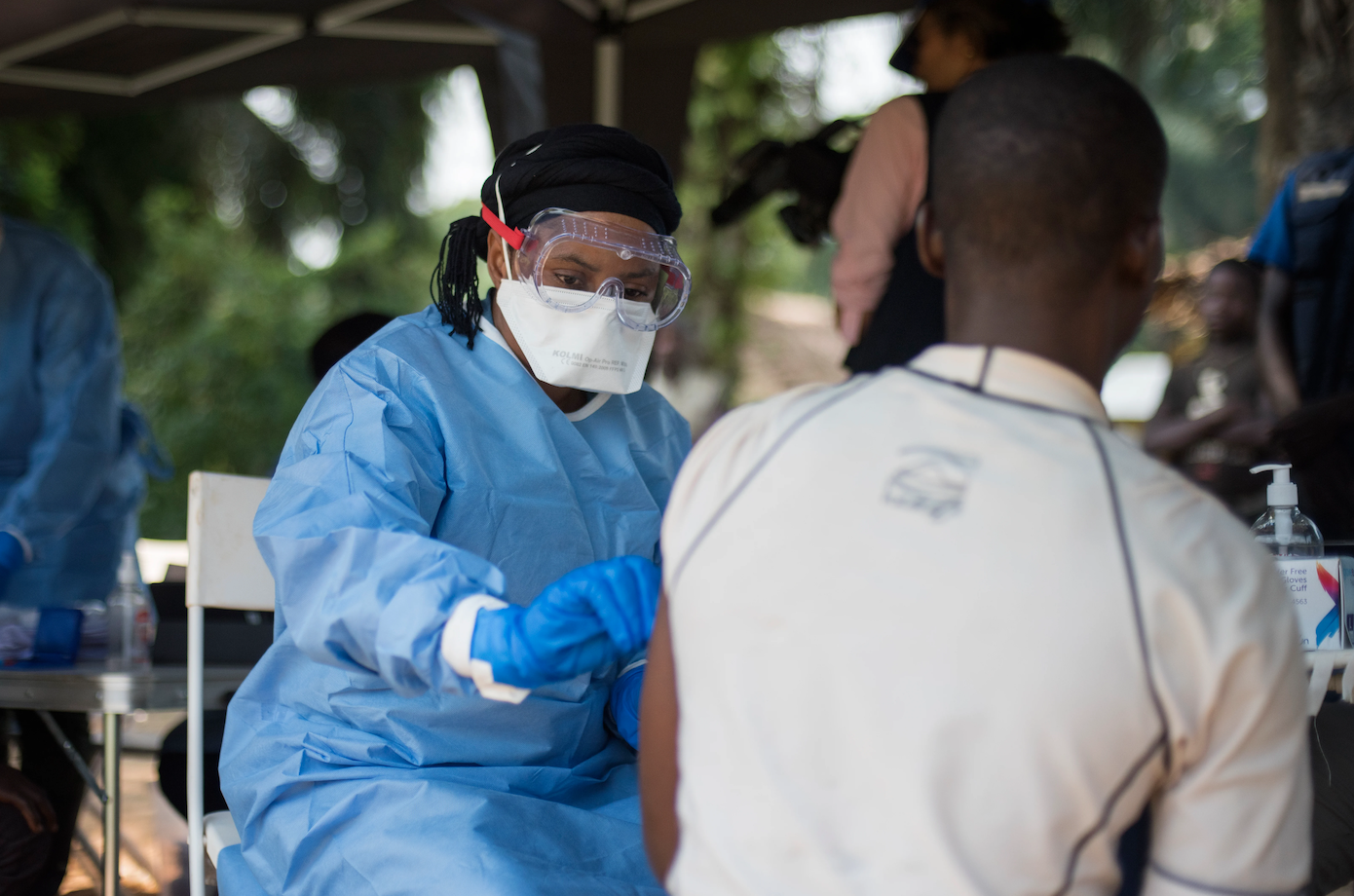
Recognising Ebola virus disease (EVD) early is challenging because initial symptoms closely resemble common East African febrile illnesses such as malaria, typhoid fever, and dengue.
This diagnostic difficulty has contributed to delayed case detection in the current 2026 Bundibugyo outbreak in the DRC and Uganda.
Timeline of Symptoms: From Exposure to Clinical Progression
The Incubation Period: When Is a Person Contagious?
The incubation period is the time between infection with the Ebola virus and the onset of symptoms.
According to the CDC, this period ranges from 2 to 21 days, with an average onset of 8 to 10 days.
Importantly, a person infected with Ebola is NOT contagious during this silent period. Transmission begins only after symptoms appear.
This fact has critical implications for public health: travellers returning from outbreak areas do not pose a risk to their communities during the first week or two unless they show symptoms. However, it is crucial to monitor health for the full 21 - day period following exposure or return from an affected region.
The 'Dry' Phase: Early, Non-Specific Symptoms (Days 1 - 4 of Illness)
The earliest phase of Ebola is called the 'dry' phase because it presents with fever and systemic symptoms but without the gastrointestinal or haemorrhagic signs that appear later.
According to CDC data from the 2014 - 2016 West African outbreak, the most common early symptoms are:
|
Symptom |
Frequency in 2014 - 2016 Outbreak |
Onset Timing |
|
Fever |
87% of cases |
Abrupt; typically first symptom |
|
Fatigue/weakness |
76% of cases |
Early; often accompanies fever |
|
Vomiting |
68% of cases |
Early 'dry' phase |
|
Loss of appetite |
65% of cases |
Early phase |
|
Diarrhoea |
66% of cases |
Can be early or late |
|
Headache |
Common |
Overlaps malaria, meningitis |
|
Muscle/joint pain |
Common |
May be prominent |
|
Chills |
Common |
Often with fever |
The critical diagnostic challenge in East Africa is that these 'dry' symptoms are indistinguishable from malaria, typhoid fever, and other endemic febrile illnesses.
A healthcare worker in Kenya who sees a patient with fever, headache, and muscle aches will naturally think of malaria or enteric fever first, especially in areas without active Ebola transmission. This is why maintaining a high clinical index of suspicion in outbreak-affected regions is essential.
The 'Wet' Phase: Gastrointestinal & Haemorrhagic Symptoms (Days 4 - 5+ of Illness)
After 4 - 5 days of illness, patients progress from 'dry' to 'wet' symptoms as the virus damages the gastrointestinal tract and coagulation system.
According to the CDC, this phase includes severe watery diarrhoea, vomiting, abdominal pain, and, notably, unexplained bleeding. Bleeding may manifest as nosebleeds, bleeding gums, blood in vomit (haematemesis), or blood in stool (melaena).
Importantly, not all patients develop visible bleeding. The absence of haemorrhagic signs does NOT rule out Ebola. The name 'haemorrhagic fever' reflects the severe form of the disease, but less dramatic presentations occur, especially with Bundibugyo virus.
Critical Phase & Outcomes (Days 6 - 16)
Patients with fatal Ebola disease typically develop severe clinical deterioration during this window, progressing to multiorgan failure and septic shock. Death most commonly occurs between days 6 and 16 of illness.
Non-fatal cases may show signs of improvement around day 6, though convalescence is often prolonged, with patients experiencing weakness, fatigue, and sometimes joint pain lasting weeks to months.
Clinical Features in Detail
Severe Manifestations & Complications
As Ebola progresses, patients may develop severe complications, including sepsis, disseminated intravascular coagulation (DIC, uncontrolled clotting and bleeding), acute kidney injury, acute respiratory distress syndrome (ARDS), and hepatic dysfunction.
These complications are responsible for most deaths. Patients with fatal diseases typically show an earlier onset of severe signs compared to survivors.
Diagnosis & Emergency Care
|
🩺 WHEN TO SEEK EMERGENCY CARE: RED FLAG SYMPTOMS |
|
Any fever (≥38°C) plus headache, muscle aches, or fatigue if you have been in an outbreak area (DRC, Uganda) or had contact with a suspected Ebola case within 21 days, do NOT wait for other symptoms. Sudden onset of vomiting or severe diarrhoea, especially if accompanied by fever or abdominal pain. Any signs of bleeding: nosebleeds, bleeding gums, blood in vomit, blood in stool, unexplained bruising, petechial rash (small red or purple spots on skin), or bleeding from other sites. Severe weakness, inability to stand, confusion, or altered mental status. Difficulty breathing or chest pain. If you are a healthcare worker or caregiver who has had unprotected contact with a patient with suspected or confirmed Ebola, seek medical evaluation immediately, even if asymptomatic. If a family member dies suddenly with fever and bleeding, DO NOT participate in traditional burial practices until it is confirmed that Ebola is not the cause. Contact your health facility first. If you return from an affected country and develop ANY fever within 21 days, call your local health facility or the Kenya Ministry of Health hotline (+254 711 959 959) rather than visiting an outpatient clinic without notice. |
|
🩺 Clinician Pearl |
|
In the East African primary care setting, the dual challenge is maintaining high clinical suspicion for Ebola while avoiding unnecessary isolation of patients with malaria or typhoid. The solution: in outbreak-affected areas, use a low threshold for Ebola testing in any febrile patient with non-specific symptoms AND epidemiological risk. Order routine tests (malaria, blood culture) in parallel. Remember: GeneXpert does not detect Bundibugyo, if you suspect Ebola and GeneXpert is negative, do not reassure the patient or staff. Follow up with specific RT-PCR. For healthcare workers: strict adherence to PPE and hand hygiene reduces your personal risk to near-zero, even with high-risk exposures. Brief your team on the early non-specific presentation so they do not miss cases presented initially as 'just another fever.' |
FAQs
1. Can I tell Ebola apart from malaria just by looking at a patient?
No. The early symptoms of Ebola and malaria are nearly identical: both present with sudden fever, headache, muscle aches, and fatigue.
The CDC notes that the only reliable way to distinguish them is through laboratory testing. However, Ebola often progresses to gastrointestinal and haemorrhagic symptoms within 4 - 5 days, whereas uncomplicated malaria typically does not. If a patient remains febrile with worsening gastrointestinal symptoms despite antimalarial treatment, suspect Ebola and test accordingly.
2. How long after exposure should I get tested for Ebola?
You can test positive for Ebola after symptoms begin, not before. According to the CDC, viral load becomes detectable in blood around the time symptoms start (typically days 1 - 3 of illness).
If you have been exposed to someone with Ebola but have no symptoms, testing is not helpful. Instead, monitor your temperature daily for 21 days. If you develop fever or symptoms at any point, seek medical care immediately and inform healthcare providers of your exposure.
3. If a test says I don't have Ebola, does that mean I'm definitely safe?
Not necessarily, especially early in illness. The CDC acknowledges that early-stage viral loads can be below the detection limit of some tests.
If you were tested on day 1 or 2 of illness and the result was negative, but you remain febrile with worsening symptoms, repeat testing is recommended.
Be especially cautious if you were tested using a standard platform (e.g., GeneXpert) in the 2026 Bundibugyo outbreak, as this platform does not reliably detect Bundibugyo virus. Request testing at a reference laboratory.
4. Are healthcare workers really at much higher risk than the general public?
Yes. The CDC emphasises that healthcare workers and family members caring for Ebola patients WITHOUT proper infection control methods have the highest risk of infection.
During past outbreaks, healthcare workers contracted Ebola at rates 13 - 28 times higher than the general population. However, with strict PPE use (full gown, gloves, N95 mask, eye protection), hand hygiene, and safe injection practices, the risk drops to near-zero. This is why rapid training, PPE supply, and safe injection protocols are critical in outbreak response.
5. What happens to people who survive Ebola? Do they recover fully?
Survivors of Ebola can experience a prolonged convalescence. Recovery of fever and acute symptoms may occur around day 6 - 7 of illness, but many survivors report weeks to months of fatigue, joint pain, headaches, and eye problems.
A small proportion of male survivors may shed virus in semen for weeks to months after recovery, which is why barrier protection (condom use) is recommended during this period.
Psychological support and rehabilitation may also be needed. However, once a person recovers, they typically develop immunity to that particular Ebola species.
References
Centers for Disease Control and Prevention. (2026). Clinical features of Ebola disease. Retrieved from https://www.cdc.gov/ebola/hcp/clinical-signs/index.html
Centers for Disease Control and Prevention. (2026). Ebola disease basics. Retrieved from https://www.cdc.gov/ebola/about/index.html
Centers for Disease Control and Prevention. (2026). How Ebola disease spreads. Retrieved from https://www.cdc.gov/ebola/causes/index.html
Centers for Disease Control and Prevention. (2026). Ebola disease outbreak in the Democratic Republic of the Congo and Uganda [Health Alert Network Notification HAN00530]. Retrieved from https://www.cdc.gov/han/php/notices/han00530.html
Centers for Disease Control and Prevention. (2026). Ebola and Bundibugyo virus frequently asked questions. Retrieved from https://www.cdc.gov/ebola/faq/index.html
Centers for Disease Control and Prevention. (2024). Ebola factsheet. Retrieved from https://www.cdc.gov/ebola/media/pdfs/2024/05/ebola-factsheet-P.pdf
European Centre for Disease Prevention and Control. (2023). Factsheet about Ebola disease. Retrieved from https://www.ecdc.europa.eu/en/infectious-disease-topics/ebola-disease/disease-information/factsheet-about-ebola-disease
National Academies of Sciences, Engineering, and Medicine. (n.d.). How does Ebola spread from person to person? Retrieved from https://www.nationalacademies.org/news/how-does-ebola-spread-from-person-to-person
World Health Organization. (2026). Ebola disease caused by Bundibugyo virus, Democratic Republic of the Congo & Uganda [Disease Outbreak News, 17 May 2026]. Retrieved from https://www.who.int/emergencies/disease-outbreak-news/item/2026-DON602
World Health Organization. (2026). Ebola outbreak - DRC 2026. Retrieved from https://www.who.int/emergencies/situations/ebola-outbreak---drc-2026