Ebola Treatment & the Race for a Vaccine: What Exists in 2026?
by Maroa Noa · 08 Jun 2026
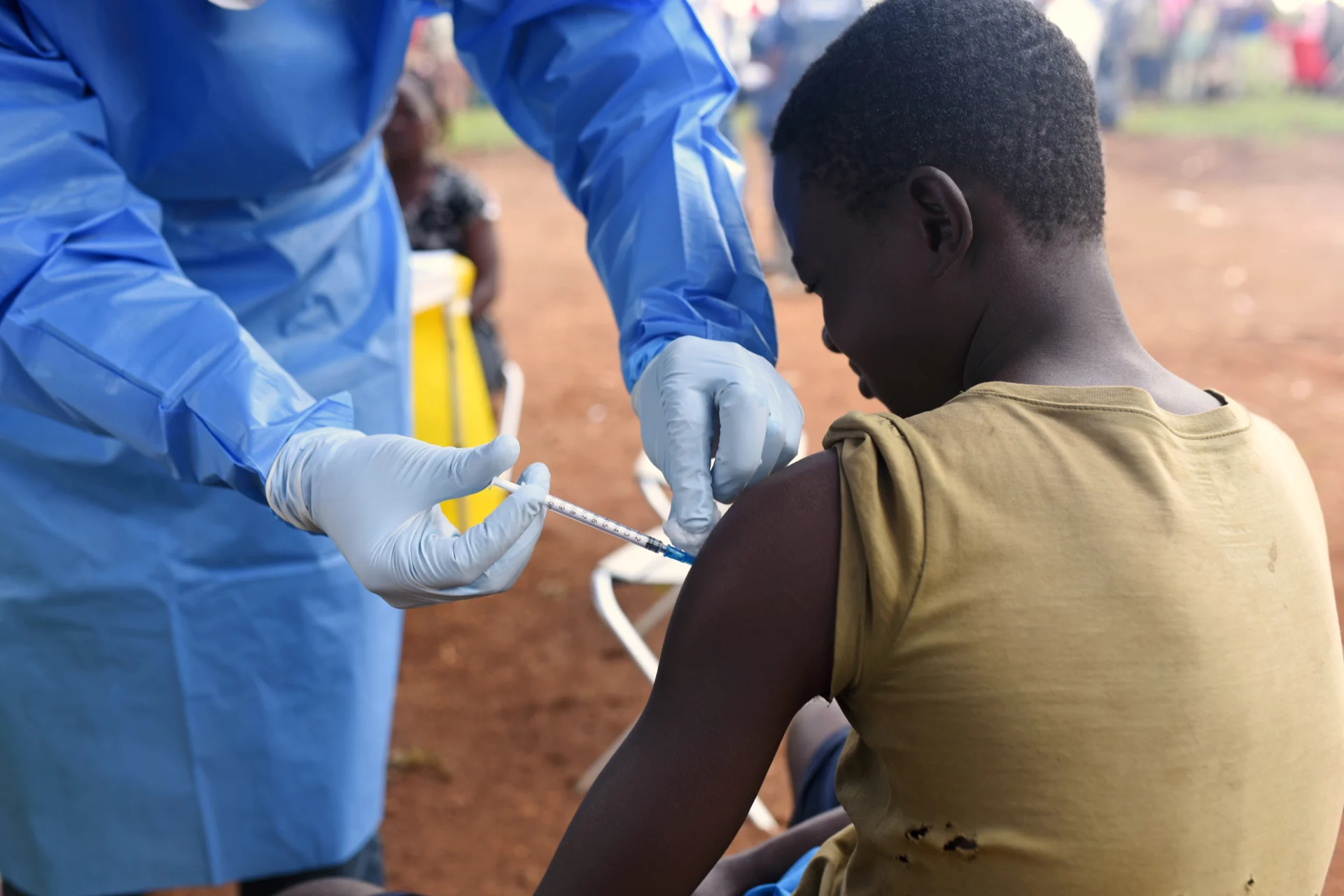
The 2026 Bundibugyo virus outbreak presents an unprecedented therapeutic challenge: unlike Zaire Ebola, for which treatments and vaccines exist, Bundibugyo has no approved countermeasures.
This reality has prompted emergency research activation globally and a WHO-convened expert advisory process to identify and prioritise the most promising investigational drugs and vaccines.
Current Standard of Care: Supportive Care
Why Supportive Care Saves Lives
There is no magic antiviral to 'kill' the Ebola virus in patients with Bundibugyo disease. Instead, recovery depends on the patient's own immune response, and supportive care dramatically improves survival by maintaining physiological stability while the immune system fights the virus.
According to CDC guidance, patients with fatal Ebola develop severe complications, including sepsis, disseminated intravascular coagulation (uncontrolled bleeding and clotting), multiorgan failure, and shock. Aggressive supportive care aims to prevent or reverse these by the following:
|
Intervention |
Rationale |
Examples |
|
Aggressive fluid & electrolyte replacement |
Diarrhoea and vomiting cause severe dehydration & electrolyte loss; IV fluids restore blood volume and prevent shock |
Balanced crystalloid IV fluids; potassium, sodium, glucose correction |
|
Symptomatic treatment |
Managing fever, pain, and nausea helps patients comfort and reduces metabolic stress |
Paracetamol for fever (avoid NSAIDs due to bleeding risk); antiemetics for vomiting |
|
Transfusion support |
Bleeding and DIC lower platelet count and coagulation factors; transfusions replace them |
Packed red blood cells, fresh frozen plasma, and platelet concentrate as indicated |
|
Sepsis management |
Bacterial superinfection is common; antibiotics + source control prevent septic shock |
Broad-spectrum antibiotics; treatment of secondary infections (UTI, pneumonia) |
|
Organ support |
Acute kidney injury, respiratory distress may require ventilation & dialysis |
Mechanical ventilation, renal replacement therapy in ICU-capable centres |
|
Nutritional support |
Prolonged illness depletes nutrients; enteral or parenteral nutrition supports recovery |
Nasogastric feeding or parenteral nutrition in ICU settings |
Survival Advantage of Early Care
A critical finding from past Ebola outbreaks: patients who seek care early (within 3 days of symptom onset) and receive aggressive supportive care have dramatically better survival than those who delay seeking care.
Early treatment allows healthcare teams to intervene before severe complications (shock and multiorgan failure) develop. This is why early recognition and rapid transport to a treatment facility are life-saving interventions.
Investigational Antiviral Treatments: What's Being Tested in 2026?
WHO Priority Therapeutics for Bundibugyo Virus Disease
On 28 May 2026, the WHO convened expert advisory groups to assess candidate treatments for the Bundibugyo virus. Three drug categories were prioritised for clinical trial evaluation:
1. Monoclonal Antibodies (mAbs)
Monoclonal antibodies are laboratory-produced proteins that mimic the immune system's antibody response to the virus. Two candidates have been prioritised:
|
Drug Name |
Developer |
Mechanism |
Status |
|
MBP-134 |
Mapp Biopharmaceutical |
Pan-ebolavirus antibody cocktail (targets multiple Ebola species) |
Clinical trials being organised; pre-clinical evidence of activity against Bundibugyo |
|
Maftivimab |
Regeneron Pharmaceuticals |
Monoclonal antibody; shown in vitro to be active against Bundibugyo virus |
Clinical trials being organised; Regeneron has donated 500 doses to WHO |
Both mAbs are investigational for Bundibugyo and are NOT approved for use outside of clinical trials. However, they represent the most advanced therapeutic options currently available.
In high-risk situations (e.g., post-exposure prophylaxis for healthcare workers with needle-stick injuries), they may be considered under emergency protocols with informed consent.
2. Antiviral Drugs
Antivirals directly inhibit viral replication. Two candidates are being prioritised:
|
Drug Name |
Developer |
Mechanism |
Potential Status |
|
Remdesivir |
Gilead Sciences |
Nucleotide analog; inhibits viral RNA polymerase |
Being assessed for clinical trials, FDA-approved for Zaire Ebola; unknown activity vs. Bundibugyo |
|
Obeldesivir |
Investigational (unknown sponsor in prompt) |
Oral antiviral showed 100% protection in monkeys when given 24 hours post-exposure; predicted active vs. Bundibugyo |
Pre-clinical: being considered for post-exposure prophylaxis trials |
Remdesivir is the most well-known, having been used compassionately during the 2014–2016 West African Ebola outbreak and in subsequent Zaire Ebola outbreaks. However, its efficacy against Bundibugyo is unknown.
Obeldesivir is promising due to its oral formulation (easier to administer) and preclinical evidence of protection when given after exposure.
Post-Exposure Prophylaxis (PEP): A Hope for Healthcare Workers
One of the most important investigational uses is post-exposure prophylaxis, giving antiviral or antibody treatment to someone who has been exposed to Ebola but is not yet symptomatic.
WHO has identified obeldesivir as a candidate for this purpose. If proven effective, PEP could protect healthcare workers and high-risk contacts after needle-stick injuries or other exposures, potentially eliminating infection risk if given within hours of exposure. However, PEP protocols are still investigational and not yet available for routine use.
Vaccines: What Exists and What's in Development
Ervebo (Zaire Ebola Vaccine): Not Recommended for Bundibugyo
Ervebo (rVSV-ZEBOV) is the ONLY licensed Ebola vaccine globally, approved by the FDA, EMA, and WHO.
It is highly effective (>90% efficacy) against Zaire Ebola virus disease. However, it is NOT licensed for Bundibugyo virus.
On 28 May 2026, the WHO issued emergency guidance advising that evidence for cross-protection of Ervebo against Bundibugyo is very limited and insufficient to recommend its use.
Laboratory studies suggest possible partial heterologous immune responses, but findings are inconsistent and based primarily on small animal studies.
Clinical efficacy data in humans are unavailable. Therefore, Ervebo is NOT recommended for routine use during the 2026 Bundibugyo outbreak, though it may be considered in specific research or emergency contexts with expert approval.
Candidate Vaccines in Development
Several vaccines are in development or undergoing animal testing:
|
Vaccine Name |
Developer |
Platform |
Timeline |
|
ChAdOx1 Bundibugyo |
Oxford University / Serum Institute of India |
Chimpanzee adenovirus vector (same platform as successful Sudan Ebola vaccine IAVI) |
Could be available for efficacy assessment within 2–3 months (by August 2026); requires additional animal data |
|
Oxford BDBV vaccine |
Oxford University |
(Specific platform not detailed) |
Currently undergoing animal trials |
|
IAVI Sudan Ebola vaccine |
International AIDS Vaccine Initiative |
Already succeeded in Stage III human trials for Sudan ebolavirus |
Could potentially be adapted for Bundibugyo; less clear timeline |
The most advanced candidate is ChAdOx1 Bundibugyo. WHO experts note that a single-dose vaccine approach might be suitable for contacts of Ebola cases (post-exposure vaccination), while a two-dose strategy could be used for high-risk but unexposed populations such as healthcare workers and frontline responders. However, all these vaccines remain investigational and are not yet available outside of clinical trials.
Vaccine Deployment Strategy: Contacts vs. High-Risk Populations
When vaccines become available, deployment strategies will likely prioritise:
(1) Contacts of confirmed Ebola cases, vaccinated immediately or within days of exposure to prevent infection;
(2) Healthcare workers and first responders, vaccinated proactively to protect the response workforce;
(3) High-risk populations in affected regions: vaccination to reduce ongoing transmission.
However, vaccine supply constraints and the need for rigorous safety and efficacy data will limit initial deployment.
Timeline Reality: When Will Treatments & Vaccines Be Available?
Investigational Drugs: Months, Not Weeks
The WHO has prioritised investigational therapeutics for clinical trial evaluation, but clinical trials take time:
(1) Protocol development and ethics approval: weeks;
(2) Patient recruitment and treatment: weeks to months (depending on outbreak trajectory);
(3) Data analysis and regulatory review: additional weeks to months.
Best-case scenario: efficacy data on monoclonal antibodies or antivirals could be available by late 2026. However, even positive efficacy data require regulatory pathways for broader deployment.
Vaccines: 2–3 Months for Candidates, Longer for Deployment
ChAdOx1 Bundibugyo could be ready for clinical testing by August 2026 (per WHO guidance), but testing and approval will take additional months.
Mass deployment is unlikely before late 2026 or 2027. This is not fast enough for the current outbreak in its acute phase but could be valuable for preventing resurgence and protecting high-risk populations long-term.
Managing community expectations is critical: public messaging should be clear that vaccines and specific antivirals are NOT immediately available but that prevention (isolation, infection control) and supportive care ARE available now and are effective.
FAQs
1. Is there a cure for Ebola in 2026?
There is no 'cure' in the sense of a single drug that kills the virus. However, recovery is possible through supportive care, and approximately 50% of patients with the Bundibugyo virus survive with appropriate treatment.
2. If I am vaccinated against Zaire Ebola, am I protected against Bundibugyo?
Not reliably. Ervebo vaccine is highly effective against Zaire Ebola, but evidence for protection against Bundibugyo is limited and inconclusive. WHO issued guidance on 28 May 2026 advising against recommending Ervebo for Bundibugyo protection due to insufficient evidence.
3. When will a Bundibugyo vaccine be available?
Candidate vaccines such as ChAdOx1 Bundibugyo could be ready for clinical testing by August 2026, but human efficacy trials will take additional months. Mass deployment is unlikely before late 2026 or early 2027, depending on trial results and regulatory approval.
4. Should I request remdesivir or monoclonal antibody treatment?
Remdesivir and monoclonal antibodies (maftivimab, MBP-134) are investigational for Bundibugyo and are available ONLY in clinical trials or under emergency protocols approved by regulatory authorities. They are not available through routine medical requests. If you develop suspected Ebola, seek care at a designated treatment facility; your healthcare team will determine if you are eligible for clinical trial participation. Do not request these drugs outside official channels.
5. Is supportive care really enough to save Ebola patients?
Yes. Approximately 50% of patients with Bundibugyo virus survive with supportive care, and survival rates are higher with early care (within 3 days of symptom onset).
Supportive care addresses the complications that kill Ebola patients: dehydration, shock, bleeding, and organ failure. By maintaining blood pressure, correcting electrolytes, replacing blood components, and managing infections, healthcare teams give patients' immune systems time to control the virus.
Early care (within 3 days) coupled with access to transfusion and ICU support offers a reasonable chance of survival.
References
Centers for Disease Control and Prevention. (2026). Ebola and Bundibugyo virus frequently asked questions. Retrieved from https://www.cdc.gov/ebola/faq/index.html
Centers for Disease Control and Prevention. (2026). Ebola disease outbreak in the Democratic Republic of the Congo and Uganda [Health Alert Network Notification HAN00530]. Retrieved from https://www.cdc.gov/han/php/notices/han00530.html
World Health Organization. (2026). Experts convened by WHO advise on candidate treatments and vaccines for Ebola disease caused by Bundibugyo virus [News Release, 28 May 2026]. Retrieved from https://www.who.int/news/item/28-05-2026-experts-convened-by-who-advise-on-candidate-treatments-and-vaccines-for-ebola-disease-caused-by-bundibugyo-virus
World Health Organization. (2026). WHO emergency guidance on the use of licensed Ebola virus vaccine during Bundibugyo virus disease outbreaks, 28 May 2026. https://doi.org/10.2471/B09772
World Health Organization. (2026). Ebola outbreak – DRC 2026. Retrieved from https://www.who.int/emergencies/situations/ebola-outbreak---drc-2026
World Health Organization. (2026). Ebola disease caused by Bundibugyo virus, Democratic Republic of the Congo & Uganda [Disease Outbreak News, 17 May 2026]. Retrieved from https://www.who.int/emergencies/disease-outbreak-news/item/2026-DON602
Centers for Disease Control and Prevention. (2024). Ebola factsheet. Retrieved from https://www.cdc.gov/ebola/media/pdfs/2024/05/ebola-factsheet-P.pdf
Centers for Disease Control and Prevention. (2026). Clinical features of Ebola disease. Retrieved from https://www.cdc.gov/ebola/hcp/clinical-signs/index.html
Centers for Disease Control and Prevention. (2026). Ebola disease basics. Retrieved from https://www.cdc.gov/ebola/about/index.html
World Health Organization. (2026). Ebola: Disease information. Retrieved from https://www.who.int/teams/health-product-policy-and-standards/standards-and-specifications/norms-and-standards/vaccine-standardization/ebol