H. pylori vs. Ulcers vs. Gastritis: How to Know What You Actually Have
by Maroa Noa · 21 May 2026
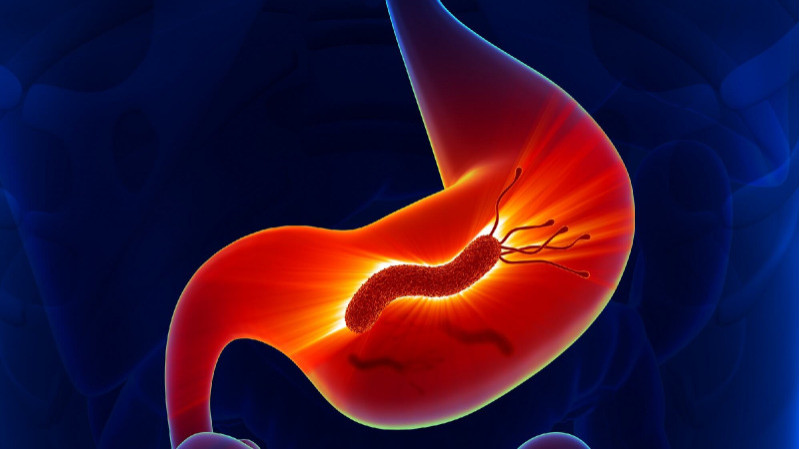
Upper abdominal discomfort, bloating, nausea, and the burning sensation popularly called 'ulcers', these symptoms are among the most common reasons patients present to pharmacies and clinics across East Africa.
Yet the terms 'H. pylori, 'ulcer', and 'gastritis' are frequently used interchangeably by patients and sometimes conflated even in clinical settings. This is clinically important because they are distinct conditions with different causes, diagnostic methods, and treatments.
In Kenya and the broader East African region, H. pylori prevalence is exceptionally high (65–80% in adults), NSAID use is widespread, and dietary factors contribute to gastric irritation.
Understanding how these conditions relate to each other, and how to tell them apart, is essential for any healthcare professional managing digestive symptoms, and empowers patients to seek appropriate care rather than self-treating indefinitely.
This article provides a systematic framework for distinguishing H. pylori infection, peptic ulcer disease, and gastritis, covering their definitions, causes, symptoms, diagnostic approaches, and treatment principles.
Definitions: What Each Condition Actually Is
|
Condition |
What it is |
What it is NOT |
|
H. pylori infection |
A bacterial infection of the stomach lining caused by Helicobacter pylori, a spiral-shaped, urease-producing Gram-negative bacterium |
Not a disease in itself, it is an infection that can cause or contribute to gastritis, ulcers, and gastric cancer. |
|
Gastritis |
Inflammation of the gastric mucosa (stomach lining), confirmed on histology (biopsy) or inferred endoscopically. Can be acute or chronic, focal or diffuse |
Not the same as an ulcer, inflammation does not necessarily produce a mucosal break; symptoms can be identical. |
|
Peptic ulcer disease (PUD) |
A discrete mucosal break ≥5mm in the stomach (gastric ulcer) or first part of the small intestine (duodenal ulcer), reaching the submucosa |
Not just 'stomach pain', an ulcer is a specific structural lesion with defined endoscopic and histological characteristics. |
Table 1: Definitions of the three key upper gastrointestinal conditions. H. pylori infection is the upstream cause; gastritis and ulcers are downstream consequences.
How H. pylori, Gastritis, and Ulcers Are Related
The relationship between these three conditions is best understood as a cascade. H. pylori infection is the upstream trigger, and gastritis and ulcers are downstream consequences, though not all patients progress through the full cascade:
- H. pylori colonise the gastric mucosa → triggers immune activation → causes chronic active gastritis (virtually all H. pylori-infected individuals have some degree of gastritis on biopsy)
- Chronic H. pylori gastritis → in a subset of patients → disrupts the protective mucus layer, increases acid secretion, and damages the mucosal barrier → peptic ulcer forms
- H. pylori causes approximately 70–80% of duodenal ulcers and 60–70% of gastric ulcers globally (Lanas & Chan, 2017)
- However, not all people with H. pylori develop ulcers; only 10–15% of infected individuals ever develop a clinically apparent peptic ulcer. Host genetic factors, bacterial virulence factors (CagA, VacA), and environmental co-factors determine progression.
- Gastritis can exist entirely independently of H. pylori, caused by NSAIDs, alcohol, autoimmune disease (autoimmune gastritis/pernicious anaemia), bile reflux, and other factors
Causes: What Causes Each Condition
|
Condition |
Primary Causes |
Contributing Factors in East Africa |
|
H. pylori infection |
Ingestion of H. pylori via faecal-oral or oral-oral route; contaminated water or food; household transmission |
High-density living, shared water sources, inadequate sanitation, and high childhood mortality rates |
|
Gastritis (H. pylori-related) |
H. pylori infection is the most common cause of chronic gastritis globally |
Very high H. pylori prevalence in the adult population |
|
Gastritis (non-H. pylori) |
NSAIDs/aspirin, alcohol, autoimmune (pernicious anaemia), bile reflux, stress (critical illness) |
Widespread OTC NSAID/diclofenac use; alcohol; traditional herbal medicines |
|
Peptic ulcer, duodenal |
H. pylori (70–80%); NSAIDs (15–20%); rare: Zollinger-Ellison syndrome, Crohn's disease |
H. pylori + frequent NSAID use for musculoskeletal pain |
|
Peptic ulcer, gastric |
H. pylori (60–70%); NSAIDs (25–30%); smoking; blood group A associated |
NSAID use without gastroprotection; delayed presentation to care |
Table 2: Primary causes of H. pylori infection, gastritis, and peptic ulcer disease in the East African context.
Symptoms: Why They Overlap and How to Start Distinguishing
The frustrating clinical reality is that the symptoms of H. pylori infection, gastritis, and peptic ulcer disease overlap substantially. All three can present with the dyspepsia syndrome (upper abdominal discomfort, bloating, nausea, heartburn).
Symptom patterns alone are insufficient to make a diagnosis. However, certain features can raise or lower suspicion for specific conditions:
|
Symptom/Feature |
H. pylori infection |
Gastritis |
Peptic Ulcer Disease |
|
Epigastric pain/discomfort |
Common, burning or gnawing |
Common, burning, heaviness, or cramp-like |
Classic, burning/gnawing; often more severe |
|
Relation to meals |
Variable |
Often worse with spicy or irritant foods |
Duodenal: relieved by eating; Gastric: worsened by eating |
|
Night pain wakes the patient. |
Uncommon |
Uncommon |
A characteristic of a duodenal ulcer is pain at 2–3 am |
|
Nausea/vomiting |
Common |
Common |
Common; persistent vomiting suggests gastric outlet obstruction |
|
Bloating/fullness |
Very common |
Common |
Common |
|
Weight loss |
Usually, absent |
Usually absent (unless severely atrophic) |
Gastric ulcer: possible; unintentional weight loss is an alarm feature |
|
Haematemesis/melaena |
Rare, only if an ulcer develops |
Rare, possible in severe erosive gastritis |
Classic complication, upper GI bleed; medical emergency |
|
Symptom-free periods |
Possible |
Possible |
Common with duodenal ulcer, waxing/waning pattern |
Table 3: Symptom comparison across H. pylori infection, gastritis, and peptic ulcer disease. Note the significant overlap; diagnosis requires testing, not symptom assessment alone.
Alarm Features: When Symptoms Demand Urgent Investigation
Certain features should always prompt urgent endoscopic evaluation regardless of suspected diagnosis:
- Unintentional weight loss (>5% body weight)
- Progressive dysphagia (difficulty swallowing)
- Haematemesis (vomiting blood) or melaena (black tarry stools)
- Persistent vomiting
- Epigastric mass palpable on examination
- New-onset dyspepsia in a patient aged ≥60 years
- Iron deficiency anaemia without another explanation
- Family history of gastric cancer
These alarm features require endoscopy as the first investigation, not empirical H. pylori testing and treatment.
Diagnostic Tests: How Each Condition Is Confirmed
|
Test |
What it Diagnoses |
Sensitivity / Specificity |
Practical Notes for Kenya |
|
Urea Breath Test (UBT) |
H. pylori infection (active) |
~95% / ~95% |
Best non-invasive test; stop PPIs 2 weeks, antibiotics 4 weeks before testing; available at select centres |
|
Stool H. pylori Antigen Test |
H. pylori infection (active) |
~90–94% / ~97% |
Most practical for Kenya; available at reference labs; same pre-test restrictions apply. |
|
H. pylori serology (blood antibody) |
Past or current exposure |
~85% / ~79% |
NOT recommended for active infection testing or test-of-cure, remains positive after eradication |
|
Upper GI Endoscopy + Biopsy |
Ulcers, gastritis (histological), H. pylori (rapid urease test + histology) |
Gold standard for structural lesions |
Required for alarm features; biopsy can confirm H. pylori and assess for cancer/metaplasia. |
|
Rapid urease test (CLO test) |
H. pylori at endoscopy |
~90–95% / ~95–100% |
Performed on biopsy specimen during endoscopy; result in 1–24 hours |
|
Barium meal X-ray |
Ulcer craters (indirect) |
Lower than endoscopy |
Largely superseded by endoscopy; cannot biopsy lesions to rule out malignancy |
Table 4: Diagnostic tests for H. pylori, gastritis, and peptic ulcer disease with practical considerations for Kenya.
The Diagnostic Pathway: A Practical Approach
Current guidelines (Malfertheiner et al., 2022; Chey et al., 2017) recommend a 'test and treat' strategy for uncomplicated dyspepsia in patients under 60 without alarm features:
- Assess for alarm features; if present, refer for urgent endoscopy.
- Take a careful drug history. Is the patient using NSAIDs, aspirin, corticosteroids, or anticoagulants? NSAID-associated disease is common and requires specific management.
- Test for H. pylori non-invasively, stool antigen test or urea breath test (ensure PPIs stopped ≥2 weeks, antibiotics ≥4 weeks before testing).
- If H. pylori positive, treat with appropriate eradication regimen and confirm eradication at 4+ weeks post-treatment.
- If H. pylori negative and NSAIDs not implicated, empirical PPI therapy for 4–8 weeks; consider functional dyspepsia.
- If symptoms persist despite H. pylori eradication and PPI therapy, or if alarm features develop at any time, proceed to endoscopy.
|
💊 Medication Tips & Counselling Points
|
|
🩺 When to See a Doctor
|
Frequently Asked Questions
1. Can I have H. pylori without having an ulcer or gastritis?
Yes, in fact, most people with H. pylori never develop a symptomatic ulcer. Approximately 85–90% of H. pylori-infected individuals remain asymptomatic or have only mild dyspeptic symptoms.
Virtually all infected individuals have some degree of histological gastritis (microscopic inflammation), but this may not cause noticeable symptoms.
Clinically apparent peptic ulcers develop in only about 10–15% of infected individuals over a lifetime. The risk of ulcer formation is influenced by bacterial virulence (particularly the CagA and VacA proteins), host immune response, and cofactors such as NSAID use and smoking.
2. I was diagnosed with gastritis by endoscopy. Does that mean I definitely have H. pylori?
Not necessarily. H. pylori is the most common cause of chronic gastritis globally, but gastritis has multiple other causes.
NSAID use, excessive alcohol, autoimmune gastritis (associated with pernicious anaemia and B12 deficiency), bile reflux, and stress-related mucosal injury all cause histological gastritis.
When endoscopy shows gastritis, biopsies are typically taken to assess for H. pylori (by rapid urease test and histology), to characterise the type and severity of inflammation, and to look for atrophic changes or intestinal metaplasia that increase cancer risk.
A diagnosis of gastritis on endoscopy should always prompt the question: What is the cause?
3. My doctor said I have an ulcer, but H. pylori tests were negative. How is that possible?
H. pylori-negative peptic ulcers account for approximately 20–30% of all peptic ulcers, and the proportion is increasing, likely reflecting both falling H. pylori prevalence in some populations and rising NSAID use.
In Kenya, NSAIDs are among the most commonly purchased over-the-counter medications. Other causes of H. pylori-negative ulcers include: Zollinger-Ellison syndrome (gastrin-secreting tumour causing extreme acid hypersecretion, rare), Crohn's disease affecting the stomach or duodenum, and cytomegalovirus-associated ulcers in immunocompromised patients.
False-negative H. pylori tests can also occur, particularly if the patient was recently on antibiotics or PPIs before testing, which suppresses bacterial load below the test detection threshold.
4. Is gastritis permanent, or can it be cured?
Whether gastritis is reversible depends entirely on its cause and how advanced it is. H. pylori-associated gastritis: eradicating H. pylori leads to resolution of the active (neutrophilic) inflammatory component in the vast majority of patients, and chronic inflammation improves significantly over 1–2 years post-eradication.
If atrophic gastritis or intestinal metaplasia has developed, these changes are not fully reversible, but their progression can be halted. NSAID-induced gastritis: resolves on stopping the NSAID, often within days to weeks, particularly with concurrent acid suppression.
Autoimmune gastritis: chronic and progressive, cannot be reversed, but monitoring for B12 deficiency and gastric cancer surveillance are critical. Early-stage, non-atrophic H. pylori gastritis treated promptly has an excellent prognosis.
5. Why do some people with ulcers feel no pain at all?
Silent peptic ulcers, ulcers that cause no pain, are more common than generally appreciated. They are particularly prevalent in elderly patients and in those taking NSAIDs regularly.
NSAIDs have both analgesic (pain-blocking) and gastropathic properties, so a patient taking diclofenac daily for arthritis may develop a significant gastric ulcer while experiencing no abdominal pain, only to present with the first complication: a gastrointestinal bleed manifesting as melaena or haematemesis.
This is one of the most important reasons current guidelines recommend routine PPI co-prescription for any patient taking NSAIDs long-term, particularly those over 65 or with a prior ulcer history.
References
- Chey, W. D., Leontiadis, G. I., Howden, C. W., & Moss, S. F. (2017). ACG clinical guideline: Treatment of Helicobacter pylori infection. American Journal of Gastroenterology, 112(2), 212–239. https://doi.org/10.1038/ajg.2016.563
- Lanas, A., & Chan, F. K. L. (2017). Peptic ulcer disease. The Lancet, 390(10094), 613–624. https://doi.org/10.1016/S0140-6736(16)32404-7
- Malfertheiner, P., Megraud, F., Rokkas, T., Gisbert, J. P., Liou, J. M., Schulz, C., … & European Helicobacter and Microbiota Study Group. (2022). Management of Helicobacter pylori infection: The Maastricht VI/Florence consensus report. Gut, 71(9), 1724–1762. https://doi.org/10.1136/gutjnl-2022-327745
- Malfertheiner, P., Chan, F. K. L., & McColl, K. E. L. (2009). Peptic ulcer disease. The Lancet, 374(9699), 1449–1461. https://doi.org/10.1016/S0140-6736(09)60938-7
- Rugge, M., Sugano, K., Scarpignato, C., Sacchi, D., & Oblitas Lozada, W. (2020). H. pylori eradication in the era of antibiotic resistance. Therapeutic Advances in Gastroenterology, 13, 1–15. https://doi.org/10.1177/1756284820sreview
- Sugano, K., Tack, J., Kuipers, E. J., Graham, D. Y., El-Omar, E. M., Miura, S., … & Malfertheiner, P. (2015). Kyoto global consensus report on Helicobacter pylori gastritis. Gut, 64(9), 1353–1367. https://doi.org/10.1136/gutjnl-2015-309252
- Uedo, N., Mori, Y., & Ishihara, R. (2022). Atrophic gastritis and intestinal metaplasia as precancerous lesions of gastric cancer. Best Practice & Research Clinical Gastroenterology, 56–57, 101786. https://doi.org/10.1016/j.bpg.2022.101786
Disclaimer: This article is intended for educational purposes only and does not constitute medical advice. Always consult a qualified healthcare professional before starting, stopping, or changing any medication or treatment.