How Breast Self-Exams Save Lives in Kenya
by Maroa Noa · 28 Jan 2026
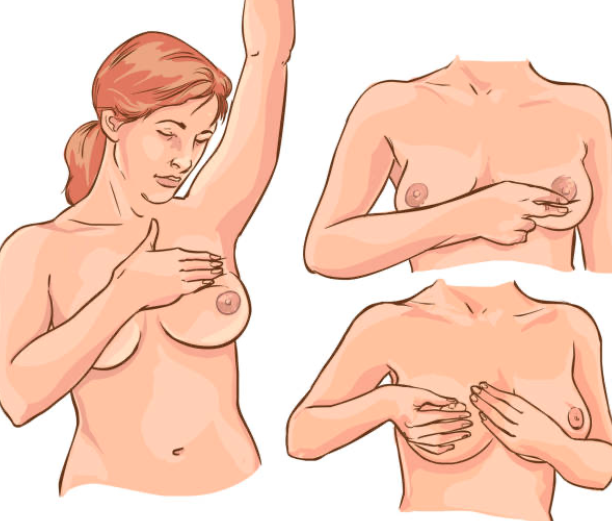
When Angela, a 42-year-old teacher in Nairobi, felt a small lump while showering, her heart sank. But years of monthly self-exams told her this felt different.
Within a week, an ultrasound confirmed early-stage breast cancer. Three weeks later, she started treatment. Today, she's cancer-free and back in her classroom.
"I caught it because I knew my body," Angela says. "That five-minute check saved my life."
Breast cancer is Kenya's second most common female cancer, with over 6,000 new cases annually.
Early detection offers a 90% survival rate, which drops to 20% when caught late. Most lumps are found by women themselves—not doctors. Your hands are your best early detection tool.
Why Self-Exam Matters
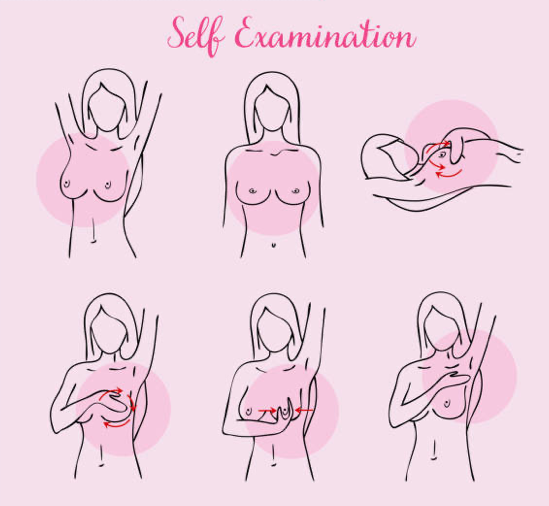
Mammograms remain the gold standard, but they're inaccessible for many Kenyan women.
The self-exam is free, takes 5 minutes, and helps you know your normal. This familiarity lets you detect changes immediately.
When to Start: Know Your Risk
All women 20+ should examine monthly. Start earlier if you have:
- Family history: Mother or sister with breast cancer (begin 10 years before their diagnosis age)
- Genetic risk: BRCA gene mutation
- Dense breasts: Naturally lumpier tissue requires closer monitoring
The 3-Step Self-Exam: Your Monthly Ritual
Best time: 3-5 days after your period ends. If menopausal, pick the same date monthly (e.g., 1st of month).
Step 1: Mirror Check
Stand undressed from the waist up, hands on hips. Look for:
- Skin dimpling, puckering, or bulging
- Nipple position changes or inversion
- Redness, rash, or swelling
- Any nipple discharge
Raise your arms overhead and look again. Press hands firmly on hips and flex chest muscles. Check for any changes.
Step 2: In the Shower
Soap makes lumps easier to detect. With one arm raised, use the pads (not tips) of your three middle fingers to press firmly in small circles. Cover the entire breast and armpit in vertical strips. Feel for hard knots, thickening, or areas that feel different.
Repeat on the other side.
Step 3: Lying Down
Lie on your back with a pillow under one shoulder. Place your arm behind your head. Use the same circular motion to press firmly down to the ribcage. Cover the entire breast, armpit, and collarbone area.
Tip: Many lumps appear in the upper outer quadrant near the armpit. Pay extra attention here.
What If You Find Something?
Don't panic—8 out of 10 lumps are not cancer. Hormonal changes, cysts, and fibroadenomas are common. But any new lump must be checked within 1-2 weeks.
Your doctor will ask:
- How long have you noticed it?
- Does it change with your cycle?
- Any nipple discharge or skin changes?
Tests you may need:
Ultrasound
An ultrasound uses sound waves to create images of the breast or internal organs. It is commonly used to check lumps and helps distinguish between fluid-filled cysts and solid masses. It is painless, safe, and does not use radiation.
Mammogram
A mammogram is a low-dose X-ray of the breast used mainly for early detection of breast cancer. It can identify changes before symptoms appear and is recommended for routine screening, especially in women aged 40 years and above.
Biopsy
A biopsy involves removing a small sample of tissue from a suspicious area for laboratory examination. It is the only test that can confirm whether a lump or abnormal finding is cancerous or benign.
Know Your Normal vs. Abnormal
Normal changes:
- Tenderness before periods
- General lumpiness, especially in the upper outer area
- Slight size differences between breasts
Abnormal changes (see a doctor immediately):
- Hard, fixed lump that doesn't move
- Skin dimpling (like orange peel)
- New nipple inversion
- Bloody nipple discharge
- Armpit lump
- New persistent pain not linked to your cycle
Clinical Breast Exam & Mammography
Get a clinical breast exam annually (every 6 months if high-risk). Takes 5-10 minutes and is often free at government facilities.
Mammography: Every 1-2 years starting at age 40, annually after 50. High-risk women may start at 30.
Your health is in your hands. Literally.
Pharmily supports your journey:
- Phone: +254726669898
- Location: Muthaiga Business Center, Nairobi
- Free delivery in Nairobi (orders above Ksh 2,999)
Get your medication today. We deliver across Kenya within 4-24 hours.
Five minutes. Once a month. It could save your life.
FAQs
1. I'm 25 and found a small lump. Should I worry? Most lumps at 25 are benign (fibroadenoma or cyst). But get it checked. Schedule an ultrasound—early assessment brings peace of mind or early treatment.
2. My breasts are always lumpy. How do I spot abnormalities? Focus on changes: new lumps, harder texture, or lumps that don't change with your cycle. Know your "normal" pattern—anything different deserves evaluation.
3. Is mammography painful? It's uncomfortable but brief (20 seconds per image). Schedule when breasts aren't tender and take a painkiller beforehand. Minor discomfort is worth finding cancer early.
4. What if I can't afford imaging? Start with free self-exam and clinical exam at government facilities. If a lump is found, request referral for subsidized imaging at higher level facility.