Tinea Versicolor in Kenya: Causes, Symptoms, and Treatment Options
by Maroa Noa · 17 Jul 2026
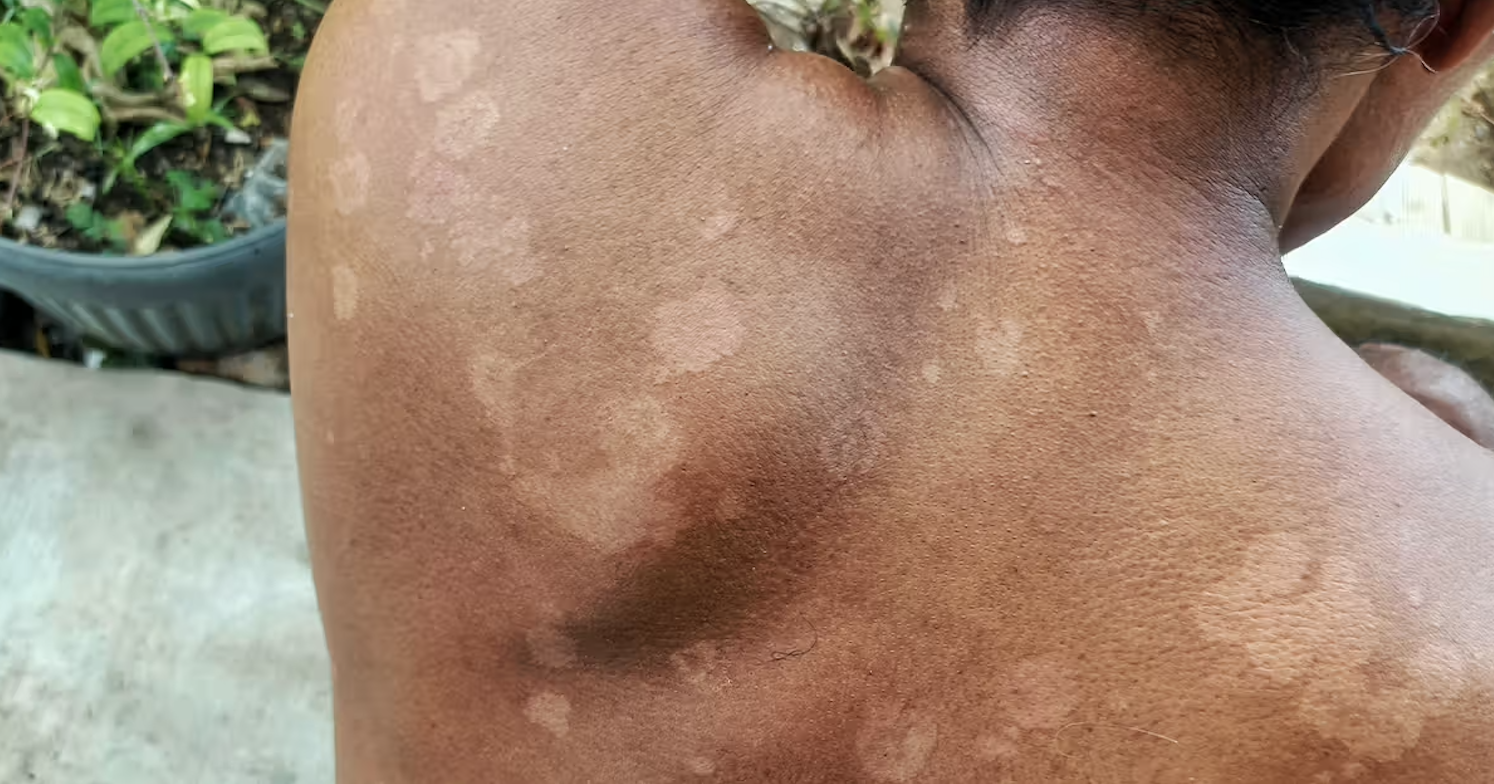
A Pharmily guide to understanding and managing this common skin condition
Have you noticed patches on your skin that are lighter or darker than the rest of your body, and don't tan the same way? This is probably tinea versicolor, one of the most common skin conditions we see at the pharmacy, especially when it's hot and humid. The good news is it isn't dangerous or contagious, even though it can be annoying to deal with.
What Is Tinea Versicolor?
Tinea versicolor (also called pityriasis versicolor) is caused by a yeast, not a worm, despite what the name might suggest. This yeast, called Malassezia, actually lives on everyone's skin all the time as part of your normal skin flora. It's usually harmless.
Sometimes, though, this yeast grows more than usual and starts to affect your skin's color. This can leave patches that are either lighter or darker than the skin around them, often with a bit of fine, dry scale. You may notice it more after being in the sun, because the affected patches don't tan the way the rest of your skin does.
Why Is It So Common in Kenya?
This yeast loves warm, sweaty, humid conditions, which is exactly what much of Kenya offers, especially at the coast and during the rainy season. A few things make it more likely to happen:
- Hot, humid weather
- Oily skin, which is common in teenagers and young adults
- Heavy sweating, from exercise, work, or just the weather
- Wearing tight clothes that don't let your skin breathe
- A weakened immune system
- Hormonal changes, including during pregnancy
- Using heavy or oily skin products
One thing worth knowing: tinea versicolor is not caused by being unclean, and you can't catch it from someone else the way you can with ringworm. This is a common worry, but there's no need for embarrassment.
What Does It Look Like?
The most common signs are:
- Patches of skin lighter or darker than the skin around them
- Usually found on the chest, back, neck, and upper arms
- A light scale on the patches, sometimes only noticeable if you scratch gently
- Patches that can grow and join together over time
- Mild itching, especially when it's hot or after sweating
- Patches that stand out more after time in the sun
On darker skin, the patches are often lighter than the skin around them, which is why people sometimes mistake tinea versicolor for vitiligo, a different condition.
|
Tinea Versicolor or Vitiligo? Vitiligo happens when the skin loses its pigment-making cells completely, leaving smooth, well-defined patches with no scaling. Tinea versicolor patches usually have a bit of scale and less clear-cut edges, and they get better with antifungal treatment. If you're not sure which one you have, ask your pharmacist, they can often tell just by looking, and a simple skin scraping test can confirm it. |
How Do You Know It's Tinea Versicolor?
Usually, a pharmacist or clinician can tell just by looking at the pattern of the patches. If it's not obvious, a couple of simple tests can help:
- Shining a special UV light (called a Wood's lamp) on the skin, affected patches may glow a yellow-green color
- Taking a small skin scraping and looking at it under a microscope
If a skin change doesn't go away after a few weeks, or keeps spreading, it's best to have it checked rather than guessing based on pictures online.
How Is It Treated?
Tinea versicolor responds well to antifungal treatment. One thing to keep in mind: clearing the yeast is the easy part. Getting your skin color back to normal can take weeks or even months after that, even once the yeast is gone.
Creams and Washes You Can Buy Over the Counter
For most cases, these are the first thing to try, and they're available at Pharmily:
- Selenium sulfide shampoo or lotion, left on the skin for about 10 minutes then rinsed off, usually once a day for one to two weeks
- Ketoconazole shampoo or cream, used in a similar way
- Clotrimazole or terbinafine cream, good for smaller patches
- Zinc pyrithione soap or shampoo, useful for mild cases or keeping it from coming back
Tablets, When Needed
For larger or stubborn patches, a doctor may prescribe a short course of antifungal tablets, like fluconazole or itraconazole. These tablets can interact with other medicines and aren't right for everyone, so they should only be used if your pharmacist or doctor recommends them.
Keeping It From Coming Back
This is a condition that likes to return, especially in our climate. Once your skin has cleared, using an antifungal wash once or twice a month, especially during hot, humid months, can help keep it away.
Simple Ways to Prevent It
- Shower soon after sweating heavily or exercising
- Wear loose, breathable clothes like cotton where you can
- Don't share towels, clothes, or bedding while you have an active flare-up
- If your skin is oily, choose oil-free skin and hair products
- Keep your skin dry, especially in areas that sweat a lot
When Should You See a Pharmacist or Doctor?
It's worth getting checked if:
- The patches haven't improved after two to three weeks of consistent treatment
- The patches are covering a large area or spreading quickly
- You're not sure if it's tinea versicolor, vitiligo, or something else
- It keeps coming back despite treatment
- You're pregnant, breastfeeding, or on other medication and want to know what's safe to use
At Pharmily, our pharmacists can help you figure out what's causing the patches, recommend the right treatment, and help you avoid it coming back, which matters a lot given how common this is in our climate.
Quick Recap
- Tinea versicolor is a yeast overgrowth, not a worm, and it isn't contagious
- It's especially common in Kenya's warm, humid weather
- Patches can be lighter or darker than the skin around them, often with a light scale
- Creams and washes clear most cases; tablets are for bigger, stubborn cases
- Your skin color can take weeks to months to fully even out, even after treatment works
- Using an antifungal wash now and then can help prevent it returning
FAQs
Q: Is tinea versicolor contagious?
No, it isn't. It's caused by yeast that already lives on your own skin, so you can't catch it from or pass it to someone else.
Q: Why do the patches show up more in summer?
Heat and sweating create ideal conditions for the yeast to grow, and the affected patches don't tan like the rest of your skin, making them stand out more after sun exposure.
Q: Can diet affect tinea versicolor?
There's no strong evidence linking diet to this condition. It's mainly driven by heat, humidity, sweating, and oily skin.
Q: Will it come back after treatment?
It often does, especially in hot, humid climates. Using an antifungal wash once or twice a month can help reduce how often it returns.
Q: Can I use the same shampoo treatment on my face?
Selenium sulfide and ketoconazole washes can be harsh on facial skin. Check with a pharmacist for a gentler option if the patches are on your face.
This article is for general educational purposes and does not replace professional medical advice. Please consult a pharmacist or doctor for diagnosis and treatment tailored to your specific situation.