Blood Bank Fridge – Reliable Cold Storage for Blood & Blood Products
Key Benefits of a Blood Bank Fridge
Precise Temperature Control (2°C – 6°C) – Maintains the ideal temperature range required for safe storage of blood and blood components.
Uniform Cooling System – Ensures consistent temperature distribution to protect blood quality.
Advanced Alarm System – Alerts users to temperature fluctuations, door openings, or power failures.
Energy-Efficient & Reliable – Designed for continuous operation in hospitals, laboratories, and blood banks.
Secure Storage Design – Lockable doors and organized shelving help maintain safety and accessibility.
Blood Bank Fridge – Essential Equipment for Safe Blood Preservation
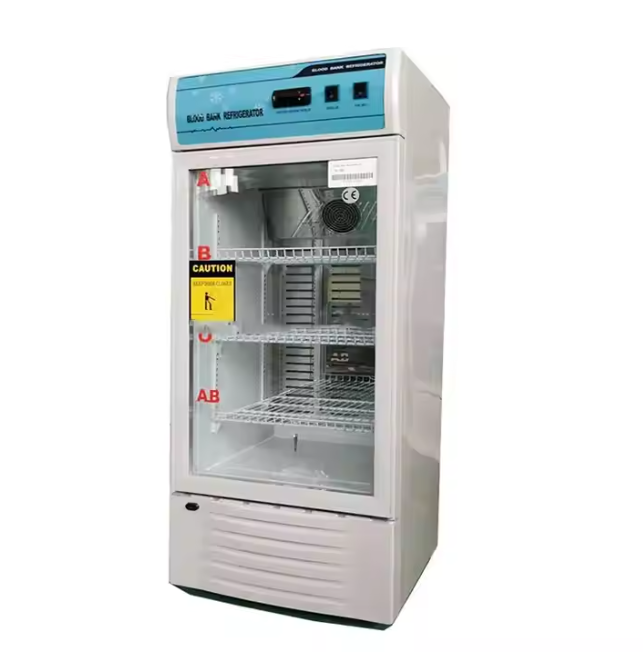
A Blood Bank Fridge is a specialized medical refrigeration unit designed to store whole blood, red blood cells, plasma, and other blood components under controlled conditions. Maintaining the correct storage temperature is critical to preserving the quality, safety, and effectiveness of blood used in transfusions.
These refrigerators are engineered with precision cooling technology, digital temperature monitoring, and built-in alarm systems to ensure blood products remain within the required temperature range at all times.
Ideal for hospitals, blood banks, diagnostic laboratories, and emergency care facilities, blood bank refrigerators play a vital role in modern healthcare systems.
Why Choose a Blood Bank Fridge?
Medical-Grade Temperature Accuracy – Ensures compliance with blood storage standards.
Continuous Monitoring – Digital displays allow easy tracking of internal temperature levels.
Safety Alarm Systems – Alerts staff if temperatures exceed safe limits.
Large Storage Capacity – Adjustable shelves or drawers allow organized storage of blood bags.
Reliable Performance – Built for 24/7 operation in critical healthcare environments.
Typical Features of a Blood Bank Fridge
Digital temperature display
Temperature range of 2°C – 6°C
Forced air circulation system
Audible and visual alarm systems
Lockable door for restricted access
Interior LED lighting
Adjustable stainless steel shelves or baskets
(Specifications may vary depending on the manufacturer and model.)
How to Use a Blood Bank Fridge Safely
Install the refrigerator in a well-ventilated area away from direct heat sources.
Monitor the temperature regularly to ensure it remains between 2°C and 6°C.
Organize blood bags properly to allow proper air circulation.
Avoid frequent door opening to maintain stable internal temperatures.
Record temperature logs regularly according to hospital protocols.
Who Should Use a Blood Bank Fridge?
Hospitals and medical centres
Blood banks and transfusion services
Diagnostic and research laboratories
Emergency and trauma care facilities
Medical training institutions
Key Features at a Glance
Medical-grade refrigeration system
Accurate temperature control (2°C – 6°C)
Built-in alarm and monitoring systems
Secure lockable door
Durable and energy-efficient design
Suitable for continuous medical use
Warnings & Precautions
For professional healthcare facility use only.
Do not store food or non-medical items inside the unit.
Ensure regular maintenance and calibration.
Avoid overloading the fridge to maintain proper air circulation.
Connect to a stable power supply or backup system where possible.
Buy Blood Bank Fridge at the Best Price from Pharmily
Ensure safe and reliable storage of blood products with a high-quality Blood Bank Fridge—available at Pharmily, your trusted supplier of medical equipment in Kenya.
Why Buy from Pharmily?
Genuine medical-grade equipment
Reliable storage solutions for healthcare facilities
Fast and secure delivery across Kenya
Equip your hospital or laboratory with dependable blood storage technology—order your Blood Bank Fridge from Pharmily today.
FAQs
Q: What temperature should a blood bank fridge maintain?
Blood bank refrigerators typically maintain a temperature range of 2°C to 6°C, which is ideal for preserving blood and blood components.
Q: Can a regular refrigerator be used to store blood?
No. Blood must be stored in a specialized blood bank fridge designed with precise temperature control and monitoring systems.
Q: Do blood bank fridges have alarms?
Yes. Most models include audible and visual alarms that alert staff if the temperature moves outside the safe range.
Q: Who requires a blood bank refrigerator?
Hospitals, blood banks, laboratories, and healthcare facilities that store blood products require these specialized refrigerators.
There are no product reviews yet.