
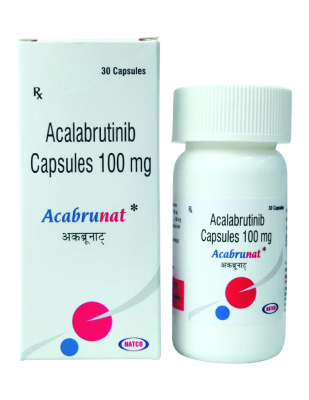
1. What is ACABRUNAT, and What Is It Used
For?
ACABRUNAT contains acalabrutinib,
a targeted cancer medicine that belongs to a class of drugs called BTK
inhibitors (Bruton's Tyrosine Kinase inhibitors). It works by blocking a
specific protein (BTK) that cancer cells need to grow and survive, effectively
slowing or stopping the growth of certain blood cancers.
Acalabrutinib 100 mg is indicated
for the treatment of adults with: Chronic Lymphocytic Leukaemia (CLL) or Small
Lymphocytic Lymphoma (SLL) — as a first-line treatment or after at least one
prior therapy; and Mantle Cell Lymphoma (MCL) — in patients who have received
at least one prior therapy.
Unlike traditional chemotherapy,
acalabrutinib is a precision medicine that specifically targets cancer cells.
It is taken orally and has been shown in clinical trials to significantly
improve progression-free survival in patients with CLL/SLL and MCL.
2. How to Take This Medicine
The recommended dose of
acalabrutinib is 100 mg taken twice daily (approximately every 12 hours), with
or without food. Capsules should be swallowed whole with water — do not open,
crush, or chew the capsules.
Dosing Schedule
•
Take one 100 mg capsule in
the morning and one 100 mg capsule in the evening.
•
Take at roughly the same
times every day to maintain steady levels in your blood.
•
If you miss a dose, take it
as soon as you remember — unless the next dose is within 3 hours. Never double
up.
Acid-Reducing Medicines
Proton pump inhibitors (PPIs) such
as omeprazole can reduce acalabrutinib absorption. If you take antacids (e.g.,
aluminium/magnesium hydroxide), take acalabrutinib at least 2 hours before or
after. If you use H2-receptor antagonists (e.g., ranitidine), take
acalabrutinib at least 2 hours before taking the H2 blocker. PPIs should
ideally be avoided — discuss alternatives with your doctor.
3. Side Effects
Common Side Effects (may affect more than 1 in 10 patients)
•
Headache — often mild and
occurs early in treatment.
•
Diarrhoea — usually mild;
stay hydrated.
•
Bruising easily and
petechiae (small red/purple spots on skin).
•
Fatigue and muscle aches
(myalgia).
•
Upper respiratory tract
infections (coughs, colds).
•
Nausea.
Serious Side Effects — Tell Your Doctor Immediately
•
Unusual bleeding (blood in
urine/stool, prolonged bleeding from cuts).
•
Signs of infection: fever,
chills, persistent sore throat.
•
Irregular heartbeat or
palpitations (atrial fibrillation).
•
Severe skin rash or
allergic reaction.
•
Progressive Multifocal
Leukoencephalopathy (PML) — rare brain infection: confusion, memory loss,
vision or speech changes.
4. Contraindications — Who Should NOT Take
This Medicine
|
Do not take ACABRUNAT
if you: •
You are allergic to
acalabrutinib or any other ingredient in the capsule. •
You are taking certain
strong CYP3A inducers — discuss with your doctor. |
5. Safety Warnings and Special Precautions
Bleeding Risk
Acalabrutinib increases the risk
of bleeding. Tell your doctor before starting this medicine if you take blood
thinners (warfarin, heparin, aspirin, NSAIDs like ibuprofen). You may need to
stop acalabrutinib 3–7 days before any surgical procedure.
Infections
Patients taking acalabrutinib are
more prone to infections, including serious bacterial, viral, and fungal
infections. Report any signs of infection to your doctor promptly.
Cardiac Effects
Atrial fibrillation (irregular
heartbeat) has been reported. Tell your doctor if you have existing heart
problems or experience palpitations, shortness of breath, or chest discomfort.
Pregnancy and Breastfeeding
Acalabrutinib can harm an unborn
baby. Women of childbearing potential must use effective contraception during
treatment and for at least 1 week after the last dose. Breastfeeding is not
recommended during treatment.
6. Drug Interactions
Tell your doctor and pharmacist
about all medicines you are taking, as acalabrutinib is metabolised by CYP3A4
enzymes and interacts with several drugs:
•
Strong CYP3A4 inhibitors
(e.g., ketoconazole, itraconazole, clarithromycin) — increase acalabrutinib
levels; avoid combination.
•
Strong CYP3A4 inducers
(e.g., rifampicin, phenytoin, carbamazepine, St John's Wort) — decrease
acalabrutinib levels; avoid combination.
•
Anticoagulants and
antiplatelet drugs (warfarin, aspirin, clopidogrel) — increased bleeding risk.
•
Proton pump inhibitors
(omeprazole, lansoprazole) — reduce absorption; use antacids or H2 blockers
with timing separation instead.
7. Storage Instructions
•
Store below 30°C in a dry
place, away from direct sunlight.
•
Keep in the original
packaging.
•
Keep out of reach of
children.
•
Do not use after the expiry
date printed on the pack.
8. Prescription Status in Kenya
ACABRUNAT (acalabrutinib) is a
prescription-only medicine (POM) in Kenya. It must only be dispensed on the
prescription of a registered oncologist or physician. This is a specialist
medicine and patients should not share it with others.
9. Patient Guidance
|
Important Reminders for
Patients •
Take your medicine at the
same times every day — set an alarm if needed. •
Never stop treatment
without speaking to your oncologist first. •
Carry a list of all your
medicines to every medical appointment. •
Avoid contact sports or
activities with high injury risk due to bleeding risk. •
Report any unusual
bleeding, bruising, or signs of infection to your doctor immediately. •
Women: use reliable
contraception throughout treatment. •
Tell any dentist or
surgeon that you are taking acalabrutinib before any procedure. |
10. Pharmacist / Prescriber Notes
•
Dose: 100 mg twice daily
(200 mg/day total). No dose adjustment for mild-moderate hepatic impairment;
avoid in severe hepatic impairment.
•
CrCl ≥15 mL/min: no dose
adjustment needed. Not adequately studied in severe renal impairment — monitor.
•
Monitor full blood count
(FBC), liver function tests (LFTs), and signs of bleeding/infection regularly.
•
Hold treatment at least 3–7
days prior to elective surgery.
•
No food effect on
absorption — capsules may be taken with or without food.
•
Counsel patient on PML risk
(rare) — reinforce reporting of any neurological symptoms.
11. Frequently Asked Questions (FAQs)
What is ACABRUNAT used for?
ACABRUNAT contains acalabrutinib,
a targeted cancer medicine used to treat chronic lymphocytic leukaemia (CLL),
small lymphocytic lymphoma (SLL), and mantle cell lymphoma (MCL) in adults.
Can I eat normally while taking
ACABRUNAT?
Yes, acalabrutinib can be taken
with or without food. However, avoid grapefruit and Seville oranges as they can
affect how the drug is processed in your body.
What should I do if I miss a
dose?
Take the missed dose as soon as
you remember, unless your next scheduled dose is within 3 hours — in that case,
skip the missed dose and continue with your normal schedule. Never take two
doses at once.
Is it safe to take ACABRUNAT
with blood thinners?
This combination increases
bleeding risk significantly. If you take warfarin, aspirin, or other
anticoagulants, your doctor needs to know and will monitor you carefully.
Can I have surgery while taking
ACABRUNAT?
You should stop acalabrutinib 3–7
days before any planned surgery or invasive procedure to reduce bleeding risk.
Always inform your surgeon and anaesthetist you are on this medicine.
How long will I need to take
this medicine?
Acalabrutinib is usually a
long-term treatment taken until disease progression or until side effects
become unacceptable. Your oncologist will review this regularly.
Can I take heartburn medicines
with ACABRUNAT?
Proton pump inhibitors (like
omeprazole) reduce the absorption of acalabrutinib and should ideally be
avoided. If you need antacids, take them at least 2 hours before or after your
dose. Discuss alternatives with your doctor.
Will ACABRUNAT affect my immune
system?
Yes. Acalabrutinib can lower your
ability to fight infections. Avoid close contact with people who are ill, and
contact your doctor promptly if you develop fever, chills, or any signs of
infection.
Is ACABRUNAT safe during
pregnancy?
No. Acalabrutinib can harm an
unborn baby. Effective contraception must be used by women of childbearing
potential during treatment and for at least 1 week after the last dose.
Can I store ACABRUNAT in the
refrigerator?
There is no need to refrigerate
ACABRUNAT. Store it at room temperature (below 30°C) in its original packaging,
away from moisture and sunlight.
There are no product reviews yet.