What is ACITROM and What Is It Used For?
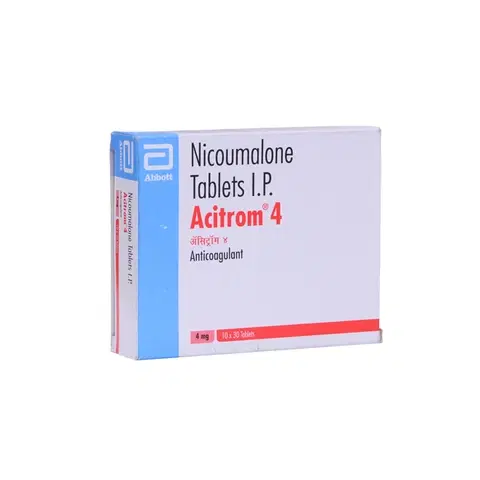
ACITROM contains acenocoumarol
(also known as nicoumalone), an oral anticoagulant that works by blocking the
action of vitamin K, which is essential for the liver to produce clotting
factors. By reducing clotting factor production, ACITROM thins the blood and
prevents dangerous blood clots from forming or growing.
ACITROM is used to prevent and
treat: Deep Vein Thrombosis (DVT) — blood clots in the leg veins; Pulmonary
Embolism (PE) — blood clots in the lungs; Prevention of stroke and blood clots
in patients with atrial fibrillation (irregular heartbeat); Prevention of clots
in patients with mechanical heart valves; Recurrent thromboembolic events.
Acenocoumarol has a shorter
half-life than warfarin, making dose adjustments faster, but it also requires
consistent INR monitoring.
2. How to Take This Medicine
The dose of ACITROM is highly
individualised and is adjusted based on regular INR (International Normalised
Ratio) blood tests. Your doctor will determine your personal dose.
Typical Dosing
•
Starting dose: Usually 8–12
mg on day 1 followed by 4-8 mg on day 2, then adjusted based on INR.
•
Maintenance dose: Usually
1–10 mg daily, taken at the same time each day.
•
Take at the same time every
day, with or without food.
•
Never change your dose
without guidance from your doctor — your INR result determines your dose.
Target INR Ranges
•
Most indications (DVT/PE
prevention, AF): INR 2.0–3.0.
•
Mechanical heart valves:
INR 2.5–3.5 (higher target).
3. Side Effects
The Most Important Side Effect: Bleeding
The main risk with ACITROM is
bleeding. This can range from minor (nosebleeds, bleeding gums, easy bruising)
to life-threatening (internal bleeding, brain haemorrhage).
Signs of Serious Bleeding — Seek Emergency Medical Help Immediately
•
Coughing or vomiting blood.
•
Blood in urine (red/pink
urine) or dark/tarry stools.
•
Severe headache, dizziness,
or sudden weakness (may indicate brain bleed).
•
Prolonged bleeding from
cuts that does not stop.
•
Heavy or unusual vaginal
bleeding.
Other Side Effects
•
Skin reactions: rash, hair
loss.
•
Rare: 'Purple toe syndrome'
(painful purple discolouration of the toes — seek medical advice).
•
Rare: Liver changes.
4. Contraindications — Who Should NOT Take
This Medicine
|
Do not take ACITROM if
you: •
You are pregnant
(especially first trimester — risk of foetal malformations). •
You have active,
uncontrolled bleeding. •
You have had a recent
stroke (haemorrhagic stroke). •
You have a peptic ulcer,
oesophageal varices, or recent gastrointestinal bleeding. •
You are having surgery on
the brain, spinal cord, or eye. •
You have severe liver or
kidney disease. •
You are allergic to
acenocoumarol or any coumarin anticoagulant. •
You have certain bleeding
disorders (haemophilia, platelet disorders). |
5. Safety Warnings and Special Precautions
INR Monitoring — Critical
Regular INR blood tests are
essential for safe anticoagulation. During initiation, tests are done every 1–3
days; once stable, monthly monitoring is typical. Keep a record of all your INR
results and doses.
Diet and Vitamin K
Vitamin K (found in green leafy
vegetables such as spinach, kale, broccoli, and cabbage) directly affects how
ACITROM works. Do not suddenly change your intake of these foods. Maintain a
consistent diet rather than eliminating these healthy foods.
Dental and Surgical Procedures
Always tell any dentist, surgeon,
or healthcare professional that you are taking ACITROM before any procedure.
You may need to stop or reduce your dose before surgery.
Falls and Injuries
Reduce your risk of falls and
injuries. Even minor injuries can lead to significant internal bleeding while
anticoagulated.
6. Drug Interactions
ACITROM has a very large number of
interactions — virtually any new medicine can affect your INR. Always inform
your doctor and pharmacist before starting any new medicine, including
over-the-counter medicines and herbal remedies.
•
Aspirin and NSAIDs
(ibuprofen, diclofenac, naproxen) — greatly increase bleeding risk; avoid
unless specifically directed by your doctor.
•
Antibiotics (especially
metronidazole, ciprofloxacin, clarithromycin) — may increase INR significantly.
•
Antifungals (fluconazole,
miconazole) — potently increase anticoagulant effect.
•
St John's Wort —
significantly reduces anticoagulant effect.
•
Amiodarone — greatly
increases anticoagulant effect; requires dose reduction.
•
Carbamazepine, rifampicin —
reduce anticoagulant effect.
7. Storage Instructions
•
Store below 25°C, in a dry
place away from light.
•
Keep in the original
packaging.
•
Keep out of reach of
children.
8. Prescription Status in Kenya
ACITROM is a prescription-only
medicine (POM) in Kenya. It must only be dispensed on the prescription of a
registered medical practitioner. Patients should carry their anticoagulation
monitoring record ('yellow book') at all times.
9. Patient Guidance
|
Important Reminders for
Patients •
Take your tablet at the
SAME TIME every day — consistency is essential. •
Never skip a dose or
double up on a missed dose. •
Keep all INR blood test
appointments — your life may depend on these tests. •
Carry an anticoagulant
alert card or wear a medical ID bracelet. •
Tell ALL healthcare
providers (dentists, nurses, pharmacists) you take ACITROM before any
procedure. •
Do not take aspirin or
ibuprofen for pain — use paracetamol instead (in controlled doses). •
Limit alcohol — it
affects INR and bleeding risk. •
Maintain a consistent
diet about green leafy vegetables. •
Report any unusual
bleeding immediately. |
10. Pharmacist / Prescriber Notes
•
Acenocoumarol has a shorter
half-life (~8–11 hours) than warfarin (~36 hours), meaning INR fluctuates more
rapidly — more frequent monitoring may be needed during dose changes.
•
Target INR: 2.0–3.0 for
most indications; 2.5–3.5 for mechanical heart valves.
•
Antidote: Vitamin K
(phytomenadione) reverses anticoagulation; for urgent reversal, Prothrombin
Complex Concentrate (PCC) or Fresh Frozen Plasma (FFP) may be used.
•
Monitor LFTs in patients
with liver disease — reduced clotting factor synthesis means enhanced
anticoagulant sensitivity.
•
Pregnancy: Acenocoumarol
crosses the placenta and causes foetal warfarin syndrome; LMWH is preferred
during pregnancy.
11. Frequently Asked Questions (FAQs)
What is ACITROM used for?
ACITROM is a blood-thinning
medicine (anticoagulant) used to prevent and treat dangerous blood clots in the
veins (DVT), lungs (PE), and to prevent strokes in patients with atrial
fibrillation or mechanical heart valves.
What is an INR test and why do
I need it?
INR (International Normalised
Ratio) is a blood test that measures how long it takes your blood to clot. When
taking ACITROM, your INR must stay in a specific target range — too low means
clots can still form; too high means dangerous bleeding.
Can I eat green vegetables
while on ACITROM?
Yes, but maintain a CONSISTENT
intake. Vitamin K in green vegetables (spinach, kale, broccoli) affects how
ACITROM works. Eating these foods regularly is fine — just don't suddenly eat
large amounts or stop eating them, as this will affect your INR.
What should I do if I miss a
dose?
Take the missed dose as soon as
you remember on the same day. If you remember the next day, skip the missed
dose and continue normally. Never double up. Inform your doctor at your next
INR check.
Can I take ibuprofen for pain
while on ACITROM?
No — ibuprofen, aspirin, and other
NSAIDs significantly increase your risk of serious bleeding. Use paracetamol
(in normal doses) for pain relief instead, and inform your doctor.
Is ACITROM safe during
pregnancy?
ACITROM is not safe in the first
trimester (risk of birth defects) or in late pregnancy (risk of bleeding during
delivery). If you become pregnant, contact your doctor immediately. Low
molecular weight heparin injections are generally preferred during pregnancy.
What should I do if I have a
fall or injury while on ACITROM?
Seek medical attention promptly,
even for seemingly minor injuries. Internal bleeding can occur without obvious
external wounds when taking anticoagulants.
How is acenocoumarol different
from warfarin?
Both are vitamin K antagonists,
but acenocoumarol works faster and has a shorter half-life (~8–11 hours vs. ~36
hours for warfarin). This means dose changes affect the INR more quickly, which
is why more frequent INR monitoring may be needed during adjustments.
There are no product reviews yet.