What is ADVAGRAF and What Is It Used For?
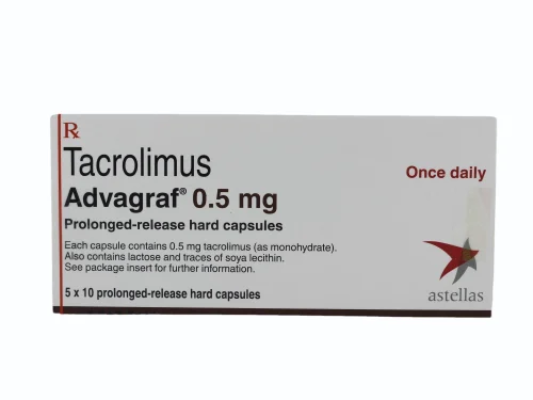
ADVAGRAF contains tacrolimus, a
powerful immunosuppressant (medicine that reduces the activity of the immune
system). It belongs to a class of medicines called calcineurin inhibitors,
which work by blocking T-lymphocytes (white blood cells) from attacking and
rejecting a transplanted organ.
ADVAGRAF prolonged-release
capsules are specifically formulated for once-daily dosing (unlike
immediate-release tacrolimus which is taken twice daily).
ADVAGRAF is indicated for:
Prevention of organ rejection in adult kidney, liver, and heart transplant
recipients; Treatment of organ rejection in patients already experiencing
rejection who are resistant to other immunosuppressive medicines.
IMPORTANT: ADVAGRAF (once daily)
and immediate-release tacrolimus capsules (Prograf, twice daily) are NOT
interchangeable on a milligram-for-milligram basis. They require dose
conversion under specialist supervision.
2. How to Take This Medicine
ADVAGRAF is taken ONCE daily in
the morning, consistently. The dose is highly individualised based on regular
blood level monitoring (tacrolimus trough levels) and transplant type.
Typical Starting Doses
•
Kidney transplant:
0.15–0.20 mg/kg once daily.
•
Liver transplant: 0.10–0.20
mg/kg once daily.
•
Heart transplant:
0.075–0.10 mg/kg/day in 2 divided doses, in combination with other
immunosuppressants.
Administration Instructions
•
Take on an EMPTY STOMACH (1
hour before or 2–3 hours after a meal) for consistent absorption.
•
Swallow capsules whole — do
not open, crush, or chew.
•
Take at the SAME TIME every
day — even a few hours' difference can alter blood levels.
•
Avoid grapefruit and
grapefruit juice — these significantly increase tacrolimus levels.
3. Side Effects
Common Side Effects
•
Tremor (shaking hands) —
often improves with dose reduction.
•
Headache and insomnia.
•
Nausea, diarrhoea,
constipation, vomiting.
•
High blood pressure
(hypertension).
•
High blood sugar
(hyperglycaemia) — monitor for new-onset diabetes.
•
Elevated creatinine /
reduced kidney function.
•
Elevated potassium
(hyperkalaemia).
Serious Side Effects — Report Immediately
•
Signs of infection: fever,
chills, persistent cough, painful urination.
•
Neurotoxicity: confusion,
seizures, vision changes, weakness.
•
Signs of kidney damage:
reduced urine output, swelling.
•
Cardiac effects: chest
pain, irregular heartbeat.
•
Signs of malignancy: new
lumps, persistent skin lesions, unexplained weight loss.
4. Contraindications — Who Should NOT Take
This Medicine
|
Do not take ADVAGRAF if
you: •
You are allergic to
tacrolimus or macrolide antibiotics (similar chemical structure). •
You are allergic to any
other ingredient in ADVAGRAF capsules. •
You are pregnant — unless
benefits clearly outweigh risks (discuss with transplant specialist). |
5. Safety Warnings and Special Precautions
Infection Risk
Immunosuppression greatly
increases the risk of bacterial, viral, fungal, and opportunistic infections
(e.g., CMV, BK virus, PCP). Report any fever, unusual symptoms, or signs of
infection immediately to your transplant team.
Cancer Risk
Long-term immunosuppression
increases the risk of certain cancers, particularly skin cancers and lymphomas.
Protect your skin from sun exposure at all times — use SPF 50+ sunscreen and
protective clothing.
Blood Level Monitoring
Regular blood tests to check
tacrolimus trough levels, kidney function, liver function, blood glucose, and
potassium are essential. Never miss monitoring appointments.
Diabetes
Post-transplant diabetes mellitus
(PTDM) can develop with tacrolimus. Monitor blood glucose regularly, especially
in the first months after transplantation.
6. Drug Interactions
•
Strong CYP3A4 inhibitors
(ketoconazole, fluconazole, erythromycin, clarithromycin, diltiazem, verapamil)
— markedly increase tacrolimus blood levels.
•
Strong CYP3A4 inducers
(rifampicin, phenytoin, carbamazepine, St John's Wort) — significantly reduce
tacrolimus blood levels, risking rejection.
•
Grapefruit juice —
increases tacrolimus levels; avoid completely.
•
Potassium-sparing diuretics
(spironolactone, amiloride) — risk of hyperkalaemia.
•
NSAIDs, aminoglycosides,
amphotericin B — additive nephrotoxicity.
•
Live vaccines — do not
administer live vaccines during treatment.
7. Storage Instructions
•
Store below 25°C in a dry
place.
•
Keep in the original
blister pack to protect from moisture.
•
Keep out of reach of
children.
•
Do not use after the expiry
date.
8. Prescription Status in Kenya
ADVAGRAF is a prescription-only
specialist medicine (POM) in Kenya. It must only be initiated by a transplant
specialist and dispensed on a valid prescription. Patients must not switch
between tacrolimus formulations without specialist guidance.
9. Patient Guidance
|
Important Reminders for
Patients •
Take ADVAGRAF at the SAME
TIME every morning, on an empty stomach. •
Never stop or change your
dose without consulting your transplant team. •
Avoid grapefruit, Seville
oranges, and pomelo — they can cause dangerous rises in tacrolimus levels. •
Protect your skin from
sun exposure — use SPF 50+ sunscreen daily. •
Report any fever,
infection, tremor, confusion, or signs of rejection to your transplant centre
immediately. •
Carry your transplant
medicines list and transplant centre contact number at all times. •
Do not take any new
medicine (including herbal remedies) without first checking with your
transplant pharmacist. |
10. Pharmacist / Prescriber Notes
•
Target trough levels:
Kidney — 10–15 ng/mL initially, 5–10 ng/mL maintenance; Liver — 10–15 ng/mL
initially; Heart — 10–20 ng/mL. Confirm with transplant centre protocol.
•
ADVAGRAF 0.5 mg contains
lactose — caution in patients with lactose intolerance.
•
NOT interchangeable with
Prograf (immediate-release) or generic tacrolimus without specialist dose
recalculation.
•
Monitor: tacrolimus trough
levels, FBC, renal function (eGFR, creatinine), LFTs, fasting glucose,
electrolytes (K+, Mg2+), blood pressure.
•
CMV prophylaxis
(valganciclovir) is typically co-prescribed in high-risk patients
(donor+/recipient-).
•
PCP prophylaxis
(co-trimoxazole) is usually given for the first 3–6 months post-transplant.
11. Frequently Asked Questions (FAQs)
What is ADVAGRAF used for?
ADVAGRAF contains tacrolimus, an
immunosuppressant medicine used to prevent organ rejection after a kidney,
liver, or heart transplant. It suppresses the immune system so it does not
attack and destroy the transplanted organ.
What is the difference between
ADVAGRAF and Prograf (tacrolimus capsules)?
Both contain tacrolimus, but
ADVAGRAF is a prolonged-release formulation taken ONCE daily (in the morning),
while Prograf is taken TWICE daily. They are not interchangeable without
specialist dose adjustment.
Why must I take ADVAGRAF on an
empty stomach?
Food — especially high-fat meals —
significantly reduces the amount of tacrolimus absorbed from ADVAGRAF. Taking
it consistently on an empty stomach (1 hour before or 2–3 hours after a meal)
ensures reliable blood levels.
Why can't I eat grapefruit?
Grapefruit and grapefruit juice
inhibit the enzyme (CYP3A4) that breaks down tacrolimus, causing blood levels
to rise to potentially toxic levels — increasing the risk of kidney damage and
neurological side effects.
How often do I need blood
tests?
Frequently — especially in the
first months after transplantation. Once stable, your transplant team will
advise on frequency. Blood levels must stay within a specific range to prevent
rejection (too low) or toxicity (too high).
Can I have vaccines while
taking ADVAGRAF?
Live vaccines (e.g., yellow fever,
BCG, live flu vaccine) must be avoided during immunosuppression. Non-live
vaccines (e.g., flu shot, hepatitis B) are safe and recommended. Discuss with
your transplant team.
Is it safe to become pregnant
while taking ADVAGRAF?
Pregnancy while on tacrolimus
requires very careful specialist management. Tacrolimus does cross the placenta
and can cause premature delivery and other complications. Always discuss family
planning with your transplant team.
What should I do if I miss a
dose of ADVAGRAF?
Take the missed dose as soon as
you remember on the same day. If you have already reached the time for your
next dose, skip the missed dose. Never double up. Contact your transplant team
if you are unsure.
There are no product reviews yet.