
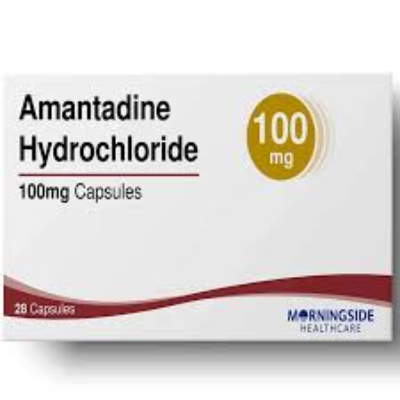
What is Amantadine and What Is It Used For?
Amantadine is a unique medicine
with two distinct mechanisms of action. As an antiviral, it inhibits
replication of influenza A virus. As a treatment for Parkinson's disease, it
stimulates the release of dopamine in the brain and also blocks NMDA (glutamate)
receptors, helping to control the motor symptoms of Parkinsonism.
Amantadine 100 mg capsules are
used for: Parkinson's disease — to reduce tremor, rigidity, and slowness of
movement, either alone or in combination with levodopa; Drug-induced
Parkinsonism (extrapyramidal side effects from antipsychotic medicines); Treatment
and prevention of influenza A virus infections (though widespread resistance
has limited its current antiviral use).
2. How to Take This Medicine
Parkinson's Disease
•
ER tablet: 137 mg once
daily for 1 week then increase to usual dose of 274 mg once daily
•
Immediate release: 100 mg
twice daily (some patients may benefit from 300 mg/day in divided doses).
Drug-Induced Parkinsonism
•
100 mg twice daily for
immediate release tablets. ER tablets – 129 mg once daily.
Influenza A (antiviral — if applicable)
•
100 mg twice daily, started
within 24–48 hours of symptom onset.
Take capsules with or without
food. To reduce insomnia, take the last dose in the afternoon — not at bedtime.
3. Side Effects
Common Side Effects
•
Livedo reticularis — a
purplish, mottled, net-like discolouration of the skin (harmless, resolves on
stopping).
•
Ankle swelling (oedema).
•
Insomnia and vivid dreams —
avoid taking doses late in the day.
•
Dizziness and
lightheadedness.
•
Nausea, loss of appetite,
dry mouth.
•
Confusion or difficulty
concentrating — more common in elderly patients.
Serious Side Effects — Seek Medical Attention
•
Hallucinations, delusions,
or psychosis.
•
Neuroleptic malignant
syndrome (on abrupt withdrawal) — high fever, muscle rigidity, altered
consciousness.
•
Severe confusion or
agitation.
•
Seizures (especially in
those with epilepsy).
4. Contraindications — Who Should NOT Take
This Medicine
|
Do not take Amantadine
if you: •
You are allergic to
amantadine or any ingredient in the capsule. •
You have severe kidney
disease (creatinine clearance <15 mL/min) without close monitoring. •
You have untreated
angle-closure glaucoma. •
You are pregnant or
trying to conceive — amantadine has teratogenic potential. •
You have a history of
epilepsy — use with extreme caution only. |
5. Safety Warnings and Special Precautions
Abrupt Withdrawal
Never stop amantadine suddenly —
this can cause a severe, potentially life-threatening withdrawal reaction
similar to Neuroleptic Malignant Syndrome (high fever, muscle rigidity, mental
status changes). Always taper the dose gradually under medical supervision.
Kidney Function
Amantadine is excreted entirely by
the kidneys. Dose reduction is essential in patients with reduced kidney
function. Regular kidney function monitoring is required.
Psychiatric History
Amantadine can cause
hallucinations, confusion, and psychosis, especially in elderly patients. Use
with great caution in anyone with a history of psychiatric illness.
Driving
Amantadine can cause dizziness and
confusion. Do not drive or operate machinery until you know how this medicine
affects you.
6. Drug Interactions
•
Anticholinergics (e.g.,
trihexyphenidyl, procyclidine) — additive CNS toxicity (confusion,
hallucinations, dry mouth); use with caution.
•
Levodopa — additive benefit
in Parkinson's disease; however, may increase dyskinesias.
•
Alcohol — enhanced CNS
depression and dizziness; avoid.
•
Thiazide diuretics and
triamterene — reduce renal clearance of amantadine, increasing toxicity.
•
Stimulants and drugs that
alkalinise urine — increase amantadine reabsorption and toxicity.
•
Trimethoprim — may increase
amantadine plasma levels.
7. Storage Instructions
•
Store below 25°C in a dry
place away from light.
•
Keep in the original
packaging.
•
Keep out of reach of
children.
8. Prescription Status in Kenya
Amantadine is a prescription-only
medicine (POM) in Kenya. It should be dispensed only on the prescription of a
registered medical practitioner.
9. Patient Guidance
|
Important Reminders for
Patients •
Never stop amantadine
suddenly — always reduce the dose gradually as instructed by your doctor. •
Take the last dose of the
day in the afternoon, not at bedtime, to minimise sleep disturbance. •
Tell your doctor if you
notice any blotchy purplish skin pattern on your legs or arms (this is
harmless but should be reported). •
Do not drink alcohol
while taking amantadine. •
Tell your doctor if you
experience any confusion, hallucinations, or unusual thoughts. •
If you have kidney
problems, your dose will need to be reduced — attend regular kidney function
monitoring. |
10. Pharmacist / Prescriber Notes
•
Renal dose adjustment: CrCl
30–50 mL/min: 200 mg day 1 then 100 mg daily. CrCl 15–29 mL/min: 200 mg day 1
then 100 mg alternate days. CrCl <15 mL/min or haemodialysis: 200 mg once
weekly.
•
Elderly: Start at 100 mg
once daily and titrate carefully — greatly increased risk of CNS side effects.
•
Drug holidays: Some
neurologists use periodic 'drug holidays' (supervised withdrawal) to reduce
tolerance development in Parkinson's disease — must be done in hospital
setting.
•
Tolerability issues: Livedo
reticularis and ankle oedema are common; both usually resolve within weeks of
stopping.
11. Frequently Asked Questions (FAQs)
What is amantadine used for?
Amantadine is mainly used in Kenya
to treat Parkinson's disease and drug-induced Parkinsonism (movement side
effects from antipsychotic medicines). It has historically also been used to
prevent and treat influenza A.
Why do I have a purple blotchy
pattern on my skin?
This is called livedo reticularis
— a common, harmless side effect of amantadine. It appears as a purplish,
net-like pattern, usually on the legs. It fades when the medicine is stopped
but does not require emergency treatment.
Can I stop taking amantadine if
I feel better?
No — never stop amantadine
suddenly. Abrupt discontinuation can cause a serious withdrawal syndrome with
high fever, severe muscle rigidity, and altered consciousness. Always taper off
gradually under your doctor's guidance.
Why shouldn't I take amantadine
before bed?
Amantadine can cause insomnia and
vivid dreams. Taking the last dose in the early-to-mid afternoon reduces this
risk.
Does amantadine interact with
alcohol?
Yes — alcohol combined with
amantadine increases dizziness, confusion, and CNS depression. It is best to
avoid or strictly limit alcohol during treatment.
There are no product reviews yet.