
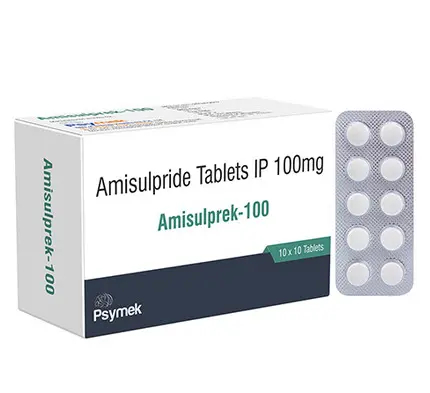
What is Amisulpride and What Is It Used For?
Amisulpride is an atypical
antipsychotic medicine that works by selectively blocking dopamine D2 and D3
receptors in the brain. Unlike many other antipsychotics, it has little
affinity for histamine, muscarinic, or adrenergic receptors, which gives it a more
targeted profile. At low doses, it blocks presynaptic D3 receptors and
paradoxically increases dopamine transmission, helping with negative symptoms
of schizophrenia.
Amisulpride is indicated for the
treatment of: Schizophrenia — including both acute psychotic episodes (positive
symptoms: hallucinations, delusions, thought disorder) and chronic
schizophrenia with predominantly negative symptoms (social withdrawal, emotional
blunting, poverty of speech); Dysthymia (mild chronic depression) — lower doses
are used in some clinical guidelines.
Amisulpride should only be
initiated under the supervision of a psychiatrist. It is a well-studied
atypical antipsychotic with a good evidence base for both positive and negative
symptoms of schizophrenia.
2. How to Take This Medicine
Acute Psychosis (Positive Symptoms — Schizophrenia)
•
400–800 mg/day in two
divided doses.
•
Maximum dose: 1200 mg/day
(specialist use only).
Predominantly Negative Symptoms
•
50–300 mg/day as a single
daily dose.
Dysthymia
•
50 mg once daily.
Take tablets with or without food.
If taking once daily, it can be at any time of day. For twice-daily dosing,
space doses evenly (e.g., morning and evening).
3. Side Effects
Common Side Effects
•
Insomnia, agitation, and
anxiety.
•
Extrapyramidal effects —
tremor, stiffness, restlessness (akathisia), slowness of movement —
dose-dependent and less common than with typical antipsychotics.
•
Raised prolactin — breast
enlargement, milky discharge, menstrual irregularities, reduced libido, sexual
dysfunction.
•
Weight gain (moderate).
•
Constipation, nausea.
Serious Side Effects — Seek Medical Attention
•
QT prolongation and cardiac
arrhythmias — increased risk if taking other QT-prolonging drugs.
•
Neuroleptic Malignant
Syndrome (NMS) — rare, life-threatening: high fever, severe muscle rigidity,
altered consciousness. Seek emergency help immediately.
•
Tardive dyskinesia —
involuntary repetitive movements (usually with long-term use).
•
Seizures — use with caution
in epilepsy.
4. Contraindications — Who Should NOT Take
This Medicine
|
Do not take Amisulpride
if you: •
You are allergic to
amisulpride or any ingredient in the tablet. •
You have a
prolactin-dependent tumour (e.g., pituitary prolactinoma, breast cancer). •
You have
phaeochromocytoma (adrenal gland tumour). •
You are taking medicines
known to prolong the QT interval (discuss with your doctor). •
You have a severe kidney
disease without dose adjustment. •
You are taking levodopa
(or other dopamine agonists) — except in Parkinson's disease under specialist
guidance. •
Children and adolescents
under 18 years (safety not established). |
5. Safety Warnings and Special Precautions
QT Prolongation and Cardiac Risk
Amisulpride can prolong the QT
interval on an ECG (electrocardiogram), which can potentially cause a dangerous
heart arrhythmia. An ECG and electrolytes (particularly potassium and
magnesium) should be checked before starting treatment, and any abnormalities
corrected.
Elderly Patients with Dementia
Antipsychotics including
amisulpride should be used with great caution in elderly patients with
dementia-related psychosis, as they are associated with an increased risk of
stroke and death in this population.
Prolactin Elevation
Amisulpride raises prolactin
levels more than most atypical antipsychotics. In patients with breast cancer
or prolactinoma, amisulpride should be avoided. Monitor for symptoms of
hyperprolactinaemia.
Renal Impairment
Amisulpride is excreted renally.
Reduce dose in kidney impairment: CrCl 30–60 mL/min: use half the usual dose;
CrCl 10–30 mL/min: use one-third of the usual dose.
6. Drug Interactions
•
QT-prolonging drugs
(antiarrhythmics, tricyclic antidepressants, certain antibiotics like
moxifloxacin, methadone) — risk of fatal cardiac arrhythmia; avoid or monitor
very carefully with ECG.
•
Levodopa and dopamine
agonists — mutual antagonism; avoid in Parkinson's disease unless specifically
managed by a neurologist.
•
Alcohol — enhanced CNS
depression and sedation.
•
Antihypertensives —
increased risk of low blood pressure.
•
Lithium — potential for
additive neurotoxicity and increased QT risk.
7. Storage Instructions
•
Store below 25°C, away from
moisture and direct light.
•
Keep in the original
packaging.
•
Keep out of reach of
children.
8. Prescription Status in Kenya
Amisulpride is a prescription-only
medicine (POM) in Kenya. It must only be initiated and supervised by a
registered psychiatrist or physician with experience in treating psychotic
disorders.
9. Patient Guidance
|
Important Reminders for
Patients •
Take your medication at
the same time(s) every day for best results. •
Do not stop taking
amisulpride without talking to your psychiatrist — stopping suddenly can
cause a relapse of symptoms. •
Limit or avoid alcohol
during treatment. •
Tell your doctor if you
notice breast changes, milky discharge, missed periods, or sexual
difficulties. •
Stand up slowly from
lying or sitting down to reduce dizziness from low blood pressure. •
Attend all scheduled
psychiatric and monitoring appointments. |
10. Pharmacist / Prescriber Notes
•
Baseline: ECG (QTc
interval), FBC, fasting glucose, lipids, prolactin, U&E, LFTs, weight,
blood pressure.
•
Ongoing: Repeat ECG if dose
changes or QT-prolonging drugs added. Monitor weight, glucose, lipids, blood
pressure annually or more frequently.
•
Renal dose adjustment: CrCl
30–60 mL/min: 50% of normal dose; CrCl 10–30 mL/min: 33% of normal dose; avoid
in CrCl <10 mL/min.
•
Amisulpride does not
undergo significant hepatic metabolism — dose adjustment not required for
hepatic impairment.
•
Less metabolic risk than
olanzapine/clozapine but more prolactin elevation than other atypicals —
consider in patient counselling.
11. Frequently Asked Questions (FAQs)
What is amisulpride used for?
Amisulpride is an antipsychotic medicine used to treat schizophrenia — both the acute symptoms (hallucinations, delusions) and the chronic negative symptoms (withdrawal, emotional blunting). It is also sometimes used in low doses for dysthymia (chronic mild depression).
Will amisulpride cause weight
gain?
Weight gain is possible with
amisulpride, but it is generally more moderate than with olanzapine or
clozapine. Monitor weight regularly and maintain a healthy diet and physical
activity.
Why am I producing breast milk
(or having other hormonal side effects)?
Amisulpride increases prolactin
levels, which can cause breast milk production, breast enlargement, missed
periods, and reduced libido in both men and women. Tell your doctor if these
side effects are bothersome.
Can I drink alcohol while
taking amisulpride?
Alcohol enhances the sedating and
CNS-depressant effects of amisulpride and should be avoided or strictly limited
during treatment.
Can I drive while taking
amisulpride?
Amisulpride may cause dizziness
and slow reactions. Until you know how it affects you, avoid driving, operating
machinery, or other tasks requiring alertness.
There are no product reviews yet.