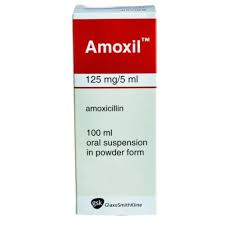
What Is Amoxil Syrup
and What Is It Used For?
Amoxil Syrup contains amoxicillin, a broad-spectrum
aminopenicillin antibiotic that kills bacteria by inhibiting cell wall synthesis.
It binds to penicillin-binding proteins (PBPs), disrupting peptidoglycan
cross-linking and causing bacterial cell lysis. Amoxicillin is active against a
wide range of Gram-positive and some Gram-negative organisms.
In Kenya, Amoxil Syrup is one of the most commonly dispensed paediatric antibiotics at community pharmacies and is included in the Kenya Essential Medicines List (KEML).
Amoxil Syrup is prescribed for childhood infections
including ear, throat, chest, urinary tract, and skin infections. It is suitable
for children who cannot swallow tablets.
Approved Indications
•
Acute otitis media (middle ear infection) in children
•
Pharyngitis and tonsillitis (Group A Streptococcus)
•
Community-acquired pneumonia (mild to moderate)
•
Acute sinusitis
•
Urinary tract infections (UTIs) caused by susceptible
organisms
•
Skin and soft tissue infections
•
H. pylori eradication (as part of triple therapy)
•
Lyme disease prophylaxis / treatment (where applicable)
How to Take This
Medicine
General Instructions
Amoxil Syrup must be reconstituted with clean, cooled boiled
water before use. Shake the bottle well before each dose. Measure each dose
carefully using the graduated oral syringe or measuring spoon provided. Give at
regular intervals (every 8 or 12 hours) to maintain steady antibiotic levels.
Dosage, Adults
Adults: 250–500 mg every 8 hours or 500–875 mg every 12 hours
depending on infection severity.
Dosage, Children
Children (mild-moderate infections): 25 mg/kg/day in divided
doses every 8–12 hours (max 40–90 mg/kg/day for severe infections such as AOM).
Each 5 mL of reconstituted Amoxil Syrup contains 125 mg amoxicillin.
Missed Dose
Give the missed dose as soon as you remember. If it is nearly
time for the next dose, skip the missed one. Never double dose.
Duration of Treatment
Complete the full prescribed course (typically 5–10 days)
even if symptoms improve. Stopping early promotes antibiotic resistance.
Side Effects
Common Side Effects
•
Diarrhoea (most common, give with food to reduce)
•
Nausea and vomiting
•
Skin rash (including maculopapular rash, distinct from
allergic rash)
•
Stomach cramps and indigestion
Less Common Side Effects
•
Oral or vaginal candidiasis (thrush) due to disruption of
normal flora
•
Headache and dizziness
•
Raised liver enzymes (transient)
Serious / Seek Immediate Medical Attention
•
Anaphylaxis, severe allergic reaction with throat swelling,
difficulty breathing, collapse. Seek emergency care immediately
•
Stevens-Johnson syndrome / toxic epidermal necrolysis (rare
but life-threatening skin reactions)
•
Clostridium difficile-associated diarrhoea (CDAD), watery or
bloody stool with fever; stop amoxicillin and seek care
•
Drug-induced hepatitis (rare)
Contraindications
|
⚠ CONTRAINDICATIONS • Known
hypersensitivity (allergy) to amoxicillin, any penicillin, or beta-lactam
antibiotics • History of
severe immediate hypersensitivity reaction (anaphylaxis) to any beta-lactam • Infectious
mononucleosis (glandular fever), amoxicillin causes rash in up to 90% of
cases |
Safety Warnings and
Special Precautions
•
Before prescribing, always ask about history of penicillin
allergy. Cross-reactivity with cephalosporins exists (~1–2%).
•
In Kenya, check local antimicrobial susceptibility patterns; amoxicillin
resistance is increasing in E. coli and H. influenzae.
•
Reconstituted suspension must be stored in the refrigerator
and discarded after 7 days; counsel caregivers on this.
•
Use with caution in patients with renal impairment; dose
adjustment required if eGFR < 30 mL/min.
•
Amoxicillin can cause false-positive urine glucose results
with copper-reduction methods (e.g., Clinitest). Use glucose oxidase methods
(e.g., Diastix) instead.
•
Prolonged use may result in superinfection with
non-susceptible organisms including fungi.
•
Pregnancy: Category B, adequate human studies show no
increased risk; considered safe when clinically needed.
Drug Interactions
Always inform your pharmacist and prescriber about all
medicines, supplements, and herbal remedies you are currently taking.
Warfarin / other anticoagulants: Amoxicillin may potentiate
anticoagulant effect, monitor INR
Methotrexate: Penicillins reduce renal tubular
secretion of methotrexate, increasing toxicity risk
Oral contraceptives: Theoretical reduction in
contraceptive efficacy (clinical significance debated, advise barrier methods
during course)
Probenecid: Blocks renal excretion of
amoxicillin, raising plasma levels, occasionally used therapeutically
Allopurinol: Combined use increases risk of skin
rash
Chloramphenicol/tetracyclines: May antagonise the bactericidal
effect of amoxicillin
Storage Instructions
Unreconstituted powder: store below 25°C in a cool, dry place
away from sunlight. After reconstitution: refrigerate at 2–8°C and discard
after 7 days. Do not freeze. Label the bottle with the date of reconstitution.
Keep out of reach of children.
Prescription Status in
Kenya
Amoxil Syrup is a Prescription Only Medicine (POM) in Kenya
under the Pharmacy and Poisons Act (Cap 244). Despite being widely available,
dispensing without a valid prescription is illegal and contributes to
antibiotic resistance. Pharmily dispenses only on presentation of a valid
prescription.
Patient Guidance
|
✔ PATIENT GUIDANCE, KEY
TAKE-AWAY POINTS • Always
complete the full antibiotic course; stopping early can allow bacteria to
survive and become resistant. • Shake the
bottle well before each dose and measure carefully with the oral syringe, not
a household spoon. • Store the
reconstituted syrup in the fridge and use within 7 days, discard any
remaining medicine after this time. • Give with
food or milk if the child experiences stomach upset. • If your
child develops a rash, difficulty breathing, or severe diarrhoea, stop the
medicine and go to hospital immediately. • Do not
share antibiotics or save leftover medicine for another illness. • Tell your
pharmacist or doctor if your child has ever had a bad reaction to penicillin
or any antibiotic. |
Pharmacist / Prescriber
Notes
Amoxil Syrup is among the highest-volume paediatric
dispensing items at Kenyan community pharmacies. Key counselling priorities:
reconstitution technique (room-temperature-cooled boiled water to the mark on the bottle), refrigeration requirement, and a strict 7-day discard policy after
reconstitution.
Caregiver education on antibiotic stewardship is essential at
every dispensing. Ask whether the child has been on amoxicillin recently; recurrent
prescriptions within 90 days may indicate treatment failure and possible
resistance; consider referring for culture and sensitivity. Note that a
maculopapular (non-itchy, flat) rash appearing 5–10 days into therapy is often
a non-allergic drug reaction, not a true penicillin allergy; document
accurately to avoid lifelong inappropriate allergy labelling.
Frequently Asked
Questions (FAQs)
Q1: How do I prepare Amoxil Syrup at home?
A: Add cooled boiled water to the powder in the bottle up to
the line marked on the label. Shake well until all powder dissolves. Store in
the refrigerator. The syrup is ready for use immediately after reconstitution.
Q2: How long can I keep Amoxil Syrup after
mixing?
A: Refrigerate reconstituted Amoxil Syrup and use within 7
days. After 7 days, discard any unused portion even if it looks fine; the
antibiotic degrades and becomes ineffective.
Q3: My child has developed a rash. What should
I do?
A: A mild flat rash appearing 5–10 days into the course is
sometimes a non-allergic reaction to amoxicillin, not necessarily a penicillin
allergy. However, any rash accompanied by swelling, difficulty breathing, or
hives requires immediate medical attention. Stop the medicine and go to the
nearest hospital.
Q4: Is it OK
to give Amoxil with milk or food?
A: Yes. Food does not significantly affect amoxicillin
absorption and can help reduce stomach upset. It is safe to give with meals, milk,
or formula.
Q5: Will
Amoxil Syrup treat a viral infection like a cold or flu?
A: No. Amoxicillin is an antibiotic that kills only bacteria.
It does not affect viruses. Taking antibiotics for viral infections promotes
antibiotic resistance without providing any benefit.
There are no product reviews yet.