

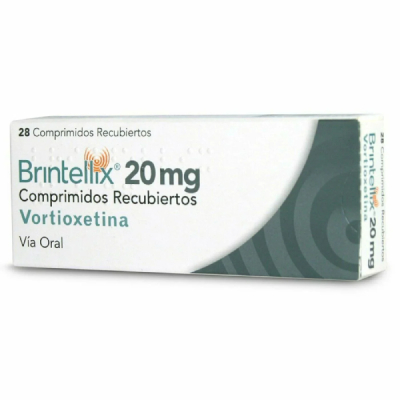
WHAT IS THIS MEDICINE AND
WHAT IS IT USED FOR?
Brintellix contains vortioxetine, a
modern antidepressant used to treat major depressive disorder (MDD) — also
known as clinical depression. Unlike older antidepressants, vortioxetine works
in multiple ways on the brain's serotonin system: it not only increases
serotonin levels (like SSRIs) but also fine-tunes specific serotonin receptors.
Research suggests this gives it benefits for both mood and cognitive symptoms
of depression — such as poor concentration, slow thinking, and brain fog —
which are often undertreated with standard antidepressants. The 20 mg dose is
the highest available dose and is typically prescribed after starting at 10 mg.
3. HOW TO TAKE THIS MEDICINE
Take one 20 mg tablet once a day at any
time of day, with or without food (usually starts with 5-10 mg once daily).
Take at the same time each day to keep levels steady. Continue taking even if
you feel better — stopping too soon greatly increases the risk of depression
returning. Treatment usually continues for at least 6 months after you feel
well.
|
💡
PATIENT TIP: This 20 mg dose is not recommended for people over 65 years —
the maximum for elderly patients is 10 mg. If you are taking certain
medicines that affect the CYP2D6 liver enzyme (such as bupropion, fluoxetine,
or paroxetine), your doctor may reduce your vortioxetine dose to 10 mg. No
renal dose adjustment is needed. Use with caution in severe liver disease. |
4. POSSIBLE SIDE EFFECTS
|
How Common? |
Side Effects to Know About |
|
Common (>1 in 10) |
Nausea (most common,
especially at higher doses — usually settles within 1–2 weeks), headache,
dizziness, diarrhoea, constipation, dry mouth, itching (pruritus), abnormal
dreams |
|
Less Common |
Vomiting, excessive
sweating (including night sweats), sexual side effects (lower rate than many
other antidepressants) |
|
Seek Medical Help |
Serotonin syndrome — a
dangerous drug interaction (agitation, confusion, rapid heartbeat, fever,
muscle stiffness — emergency). Low sodium in the blood (hyponatraemia —
especially in the elderly). Increased risk of bleeding (especially with
NSAIDs or blood thinners). Activation of mania in people with bipolar
disorder. Suicidal thoughts (monitored closely especially in under-25s when
starting treatment). |
5. WHO SHOULD NOT TAKE THIS
MEDICINE
Concurrent use of MAOIs (monoamine
oxidase inhibitors) — allow 14 days after stopping an MAOI before starting
vortioxetine; allow 21 days after stopping vortioxetine before starting an
MAOI. Known allergy to vortioxetine.
|
⚠
IMPORTANT SAFETY INFORMATION: SUICIDALITY: A small
increase in suicidal thoughts has been observed in children, adolescents, and
young adults (under 25) when starting antidepressants. Close monitoring
during the first few weeks is essential. SEROTONIN SYNDROME: Risk
is greatest when combined with other serotonergic drugs (tramadol, triptans,
lithium, linezolid, St John's Wort) — potentially life-threatening. STOPPING TREATMENT: Reduce
the dose gradually — stopping suddenly can cause dizziness, nausea, and other
discontinuation symptoms. BIPOLAR DISORDER: Vortioxetine may trigger mania in
people with undiagnosed bipolar disorder. |
6. MEDICINES THAT INTERACT
WITH THIS TREATMENT
MAOIs (including phenelzine,
tranylcypromine, selegiline): contraindicated — potentially fatal serotonin
syndrome. CYP2D6 inhibitors (bupropion, fluoxetine, paroxetine): significantly
increase vortioxetine blood levels — dose reduction to 10 mg required.
Serotonergic drugs (tramadol, triptans, lithium, linezolid, St John's Wort):
serotonin syndrome risk. NSAIDs, aspirin, warfarin: increased bleeding risk.
Alcohol: increased sedation — advise avoidance.
7. HOW TO STORE THIS
MEDICINE
Store below 30°C in original packaging.
Protect from light and moisture. Keep out of reach of children.
8. PRESCRIPTION REQUIREMENT
|
Status |
Prescription Only Medicine
(POM) |
9. GUIDANCE FOR PATIENTS
& CAREGIVERS
Take once daily at any time with or
without food. Nausea is common when starting or increasing the dose — it is a
temporary side effect that usually settles within 1–2 weeks. It may take 2–4
weeks to notice improvement in your mood. Do not stop taking Brintellix
suddenly — tell your doctor before stopping and they will gradually reduce your
dose. Report immediately if you notice thoughts of self-harm, feel unusually
agitated, confused, or feverish (possible serotonin syndrome). Avoid St John's
Wort and discuss all supplements with your doctor. Limit alcohol.
10. PHARMACIST &
PRESCRIBER NOTES
|
Clinical Dispensing Notes |
20 mg is the maximum dose
— not for elderly patients (max 10 mg). Nausea is dose-dependent and
transient — counsel to take with food and that it resolves. CYP2D6 inhibitor
co-prescription (bupropion, paroxetine, fluoxetine) requires 50% dose
reduction. Check for MAOIs and serotonergic drug interactions. Monitor for
activation of mania in bipolar patients. Gradual tapering plan before
discontinuation. |
11.
FREQUENTLY ASKED QUESTIONS
Q: How is vortioxetine different from
other antidepressants like SSRIs?
A: Vortioxetine is a 'multimodal'
antidepressant. Like SSRIs, it increases serotonin levels — but it also
directly modulates several serotonin receptors. This broader action is thought
to explain why many patients find it helpful for the thinking and memory
problems (cognitive symptoms) that other antidepressants may not fully address.
Q: Why do I feel nauseous after starting
Brintellix 20 mg?
A: Nausea is the most common side effect
of vortioxetine and is more pronounced at higher doses. It is caused by
serotonin activity in the gut lining. Importantly, it is temporary and almost
always settles within 1–2 weeks. Taking the tablet with a small amount of food
can help. Do not stop the medicine because of early nausea without speaking to
your doctor.
Q: How long does vortioxetine take to
work for depression?
A: Most people begin to notice some
improvement in mood within 2–4 weeks, but the full benefit may take 4–6 weeks
or longer. Cognitive symptoms (brain fog, concentration) may improve earlier
than mood. Stick with the treatment and keep your follow-up appointments.
Q: What happens if I stop Brintellix
suddenly?
A: Stopping vortioxetine abruptly,
especially at 20 mg, can cause discontinuation symptoms including dizziness,
nausea, headache, and irritability. Your doctor will guide you on gradually
reducing the dose before stopping. Never stop suddenly without medical advice.
Q: Can I drink alcohol while taking
Brintellix?
A: It is advisable to avoid or
significantly limit alcohol while on any antidepressant. Alcohol is a
depressant itself and can worsen depression symptoms, reduce the effectiveness
of your medication, and increase side effects like drowsiness and dizziness.
There are no product reviews yet.