. WHAT IS THIS MEDICINE AND
WHAT IS IT USED FOR?
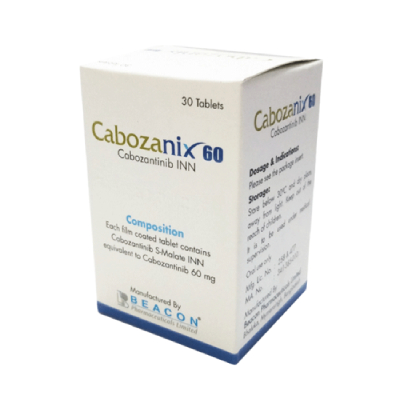
Cabozanix contains cabozantinib, a type
of targeted cancer therapy called a tyrosine kinase inhibitor (TKI). Unlike
traditional chemotherapy, which attacks all rapidly dividing cells, cabozantinib
specifically blocks multiple protein signals (including MET, RET, VEGFR2, AXL,
and others) that certain cancer cells depend on to grow new blood vessels
(angiogenesis) and spread. Cabozanix is used to treat: advanced renal cell
carcinoma (RCC) — the most common type of kidney cancer; hepatocellular
carcinoma (HCC) — primary liver cancer (after sorafenib treatment); and
differentiated thyroid cancer (DTC) that has spread and is no longer responding
to radioactive iodine treatment.
3. HOW TO TAKE THIS MEDICINE
Take one 40 - 60 mg tablet ONCE DAILY at
the same time each day. Take on an EMPTY STOMACH — do not eat for at least 2
hours before and at least 1 hour after taking the tablet. Swallow whole with
water — do not crush or split. Do not eat grapefruit or drink grapefruit juice
during treatment. When combined with nivolumab for kidney cancer, the dose is
usually reduced to 40 mg once daily.
|
💡
PATIENT TIP: Dose reductions are made
in 20 mg steps (60 mg → 40 mg → 20 mg) for significant side effects. Hold for
Grade 3 or intolerable Grade 2 toxicities; resume at reduced dose when
resolved. Permanently discontinue
for Grade 4 events, blood clots in arteries (stroke, MI), GI perforation, or
jaw bone death (ONJ). No adjustment for
mild/moderate liver impairment; severe liver disease: not recommended. |
4. POSSIBLE SIDE EFFECTS
|
How Common? |
Side Effects to Know About |
|
Common (>1 in 10) |
Diarrhoea (most common —
affects most patients), fatigue, reduced appetite and weight loss, nausea,
hand-foot skin reaction (painful redness and peeling on palms and soles),
high blood pressure, mouth sores, hoarse voice, vomiting, constipation,
abdominal pain |
|
Less Common |
Hair colour changes,
muscle cramps, raised liver enzymes, underactive thyroid, protein in urine,
headache, peripheral nerve tingling |
|
Seek Medical Help |
Severe hypertension /
hypertensive crisis (stroke risk), arterial blood clots (heart attack,
stroke), venous blood clots (DVT, pulmonary embolism), hole in gut wall (GI
perforation — abdominal emergency), severe liver damage/liver failure,
reversible brain swelling (PRES/RPLS), jawbone death (ONJ), impaired wound
healing — do not have surgery while on treatment without careful planning. |
5. WHO SHOULD NOT TAKE THIS
MEDICINE
Known allergy to cabozantinib. Pregnancy
(causes serious birth defects and can kill the fetus). Breastfeeding. Planned
major surgery within 28 days.
|
⚠
IMPORTANT SAFETY INFORMATION: HYPERTENSION: Your blood
pressure must be controlled before starting. Monitor throughout treatment and
treat promptly if it rises. BLEEDING AND CLOTS: Report
any signs of a blood clot or unusual bleeding immediately. GI PERFORATION: Abdominal
pain that gets suddenly worse may indicate a hole in the gut — a
life-threatening emergency. JAWBONE: Inform your
dentist that you are on this medicine before any invasive dental work. Brush
teeth gently and avoid unnecessary dental extractions. WOUND HEALING:
Cabozantinib must be stopped at least 28 days before any elective surgery. CONTRACEPTION: Effective
contraception is required during treatment and for at least 4 months after the
last dose. |
6. MEDICINES THAT INTERACT
WITH THIS TREATMENT
CYP3A4 inhibitors (ketoconazole,
clarithromycin, ritonavir, grapefruit): increase cabozantinib levels — reduce
cabozantinib dose by 20 mg. CYP3A4 inducers (rifampin, carbamazepine,
phenytoin, St John's Wort): decrease levels — increase dose by 20 mg (max 80
mg). Anticoagulants (warfarin): careful monitoring needed. Avoid grapefruit.
7. HOW TO STORE THIS
MEDICINE
Store below 25°C. Protect from light and
moisture. Keep in original container. Keep out of reach of children.
8. PRESCRIPTION REQUIREMENT
|
Status |
Prescription Only Medicine
(POM) — Oncology Specialist Required |
9. GUIDANCE FOR PATIENTS
& CAREGIVERS
Take one tablet at the same time every
day on an EMPTY STOMACH — nothing to eat for 2 hours before and 1 hour after
taking it. Do not crush or split. Check your blood pressure regularly at home
if possible. Report immediately: severe or sudden high blood pressure, chest
pain, signs of a stroke (face drooping, arm weakness, speech difficulty),
severe stomach pain, severe redness and peeling of hands and feet, jaw pain, or
unusual bleeding. Do not eat grapefruit. Use effective contraception during and
for 4 months after treatment. Do not take St John's Wort.
10. PHARMACIST &
PRESCRIBER NOTES
|
Clinical Dispensing Notes |
Oncology specialist
prescription required. Standard dose: 60 mg (monotherapy RCC, HCC, DTC) or 40
mg (with nivolumab for RCC). EMPTY STOMACH critical for consistent
absorption. CYP3A4 interactions are clinically significant — adjust dose with
inhibitors (reduce 20 mg) or inducers (increase 20 mg). Monitor BP every
cycle. Regular LFTs, CBC, urinalysis (proteinuria). Dental review before
initiation (ONJ risk). Withhold 28 days perioperatively. Counsel on
contraception (4 months post-treatment). |
11.
FREQUENTLY ASKED QUESTIONS
Q: What cancer does cabozantinib
(Cabozanix) treat?
A: Cabozantinib is used to treat three
types of cancer: advanced renal cell carcinoma (RCC — kidney cancer),
hepatocellular carcinoma (HCC — primary liver cancer, after sorafenib treatment
has stopped working), and differentiated thyroid cancer (DTC) that has spread
and no longer responds to radioactive iodine.
Q: What is hand-foot skin reaction and
how can I manage it?
A: Hand-foot skin reaction (HFSR or
palmar-plantar erythrodysaesthesia) causes painful redness, swelling,
blistering, and peeling on the palms of the hands and soles of the feet. It is
one of the most common side effects of cabozantinib. Management includes: using
thick moisturisers, wearing soft padded shoes, avoiding pressure on affected
areas, and dose reduction if it becomes severe. Tell your oncology team early —
they can help manage it effectively.
Q: Can I have surgery while taking
Cabozanix?
A: Not without planning — cabozantinib
impairs wound healing and must be stopped at least 28 days before any planned
surgery. It can be restarted after your surgical wound has healed fully. This
is important to prevent serious wound healing complications after surgery.
Q: Why does my doctor monitor my blood
pressure so closely on Cabozanix?
A: Cabozantinib blocks the VEGFR
pathway, which helps control blood vessel tone. This interference commonly
raises blood pressure, sometimes to dangerous levels. Uncontrolled hypertension
increases the risk of stroke and heart attack. Blood pressure monitoring at
home and at each clinic visit allows early intervention.
There are no product reviews yet.