
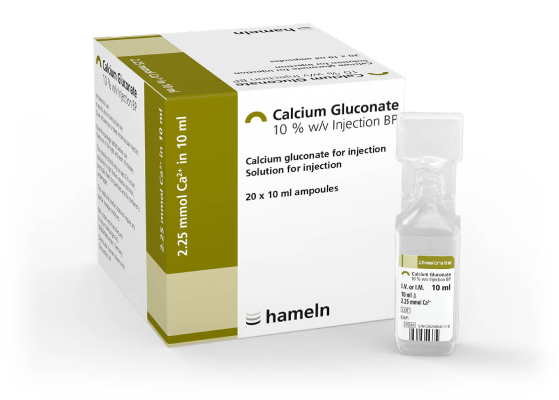
What is Calcium Gluconate Injection and What Is
It Used For?
Calcium Gluconate 10% Injection is a sterile intravenous (IV) solution
used to rapidly restore calcium levels in the body when they fall dangerously
low. Calcium is an essential mineral required for muscle contraction, heart
rhythm, nerve transmission, blood clotting, and bone integrity. This injection
is administered exclusively in clinical settings under the direct supervision
of a healthcare professional — it is never a self-administered medicine.
Approved Uses
• Emergency treatment of acute
symptomatic hypocalcaemia (dangerously low blood calcium — tetany, seizures,
laryngospasm)
• Emergency management of severe
hyperkalaemia (high potassium levels threatening heart rhythm — calcium
stabilises the cardiac membrane)
• Treatment of hypermagnesaemia
(elevated magnesium causing cardiac or respiratory depression)
• Antidote for hydrofluoric acid (HF)
burns — applied topically, injected, or given IV
• Neonatal hypocalcaemia (newborn low
calcium)
• Hypocalcaemia associated with massive
blood transfusion, hypoparathyroidism, and renal failure
2. How to Take This Medicine
This medicine is prepared and administered exclusively by trained
healthcare professionals in a hospital or clinical setting. The dose and rate
of infusion depend on the reason for use, the severity of the condition, and
the patient's clinical status.
Standard Dosing
• Adults: 10 mL (1 g) of 10% solution
administered by slow IV infusion over at least 10 minutes. Do not exceed 200
mg/min infusion rate.
• Children: 100–200 mg/kg IV over 10
minutes. Continuous infusion may follow at 200–500 mg/kg/day.
• Neonates: 200–500 mg/kg/day by
continuous infusion or divided doses every 6 hours.
Always dilute before administration. ECG monitoring is recommended during
infusion. Administer through a secure IV line — extravasation (leakage) causes
serious tissue damage.
3. Side Effects
Common (may affect more than 1 in 10 patients)
• Tingling or warmth sensation during
injection
• Flushing and feeling of heat
• Metallic or chalky taste in the mouth
• Nausea
Serious — Tell Your Doctor or Nurse Immediately
• Rapid infusion: severe bradycardia
(slow heart rate), hypotension, arrhythmias, or cardiac arrest — always
administer slowly
• Extravasation (IV leakage into
surrounding tissue): tissue necrosis and calcification — painful and serious
• Signs of hypercalcaemia (too much
calcium): confusion, excessive thirst, frequent urination, constipation, bone
pain, irregular heartbeat
• Aluminium toxicity (with prolonged
use in neonates or renally impaired patients — specific formulations)
4. Contraindications — Who Should NOT Receive
This Medicine
• Do not use if you have hypercalcaemia
(already high blood calcium levels)
• Do not use if you have known
hypersensitivity to calcium gluconate or any ingredient
• Do not use in patients with
sarcoidosis or conditions that already cause elevated blood calcium
• Do not administer at the same time as
IV ceftriaxone — risk of fatal calcium-ceftriaxone precipitate in the lungs and
kidneys
• Use with extreme caution in patients
taking digoxin or other cardiac glycosides — can trigger life-threatening
arrhythmias
5. Safety Warnings and Special Precautions
Pregnancy
Use only when clearly necessary. Untreated maternal hypocalcaemia poses
more risk to the fetus than careful IV calcium use. Limited safety data exists
for IV use during pregnancy.
Breastfeeding
Calcium is naturally present in breast milk. IV use is unlikely to harm
the nursing infant but exercise caution.
Renal Impairment
Risk of hypercalcaemia is increased. Use the lowest effective dose and
monitor serum calcium closely.
Neonates
Particularly vulnerable to aluminium toxicity from prolonged parenteral
calcium administration. Monitor closely.
6. Drug Interactions
• Ceftriaxone: ABSOLUTELY
CONTRAINDICATED — fatal precipitate can form in the bloodstream
• Digoxin and cardiac glycosides:
Increased risk of life-threatening arrhythmias — avoid or monitor very closely
with ECG
• Sodium bicarbonate: INCOMPATIBLE — do
not mix in the same IV line
• Thiazide diuretics: May further
elevate calcium levels — monitor serum calcium
• Beta-blockers: Calcium may reduce
antihypertensive effectiveness
• Tetracyclines and bisphosphonates:
Calcium reduces their oral absorption — separate dosing times
7. Storage
• Store below 25°C, away from light
• If crystallisation occurs, warm
ampoule in a 60°C water bath for 15–30 minutes with occasional shaking; cool to
body temperature before use
• Discard any unused portion —
single-use ampoules only
• Do not use if solution is not clear
and colourless
8. Prescription Status
POM — Prescription Only Medicine. Hospital/clinical use only. Requires IV
access and continuous monitoring.
9. Patient Guidance
|
⚠ Calcium Gluconate 10% Injection is a
hospital-only medicine. Never attempt to self-administer. If you have
concerns about your calcium levels, discuss oral calcium supplementation with
your doctor or pharmacist. |
If you are receiving this treatment in hospital, you will be continuously
monitored. Alert your nurse immediately if you feel your heart racing, chest
tightness, or unusual pain at your IV site.
10. Pharmacist / Prescriber Notes
• Always confirm absence of ceftriaxone
co-administration before dispensing or administering — risk of fatal
precipitate
• Verify and document IV site patency
before infusion; extravasation risk is significant
• Slow infusion rate is mandatory — do
not exceed 200 mg/min; ideally infuse over 10–20 minutes
• Cardiac glycoside patients require
continuous ECG monitoring during infusion
• Check serum ionised calcium before
and after dosing; repeat as clinically indicated
• For hyperkalaemia management: the
effect on cardiac membrane is immediate but transient — concurrent
potassium-lowering therapy must be initiated in parallel
• Do not confuse with calcium chloride
injection — calcium gluconate contains less elemental calcium per mL; calcium
chloride is 3× more potent per volume
11. Frequently Asked Questions (FAQs)
Q: Why am I receiving an injection instead of calcium
tablets?
A: Calcium tablets work slowly
through digestion and are suitable for maintaining calcium levels in
non-emergency situations. The injection is used when calcium levels need to be
raised immediately — such as during cardiac emergencies or severe tetany — because
it delivers calcium directly into the bloodstream within seconds.
Q: Is this the same as the calcium supplements I can buy at
a pharmacy?
A: No. This is a high-strength
injectable formulation used only for emergencies or specific hospital
indications. Oral calcium supplements (calcium carbonate or calcium citrate
tablets) are entirely different products used for dietary supplementation and
are safe to take at home.
Q: Why is my IV calcium drip going so slowly?
A: Giving calcium too quickly can
cause a dangerous drop in heart rate and blood pressure and potentially trigger
a cardiac arrest. The slow drip rate is a critical safety measure, not
inefficiency.
There are no product reviews yet.