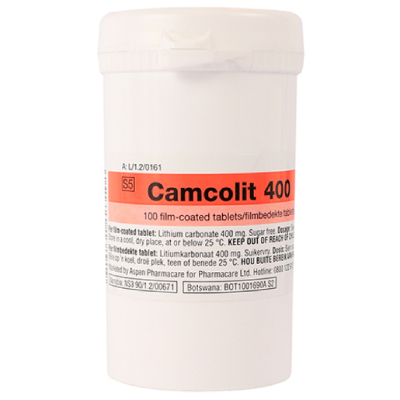
What is CAMCOLIT and What Is It Used For?
Camcolit 400 contains lithium carbonate — a mood-stabilising mineral salt
that has been one of the cornerstones of psychiatric treatment for over 50
years. It is used to control and prevent the extreme mood swings of bipolar
disorder (manic-depressive illness), reducing both manic episodes (periods of
abnormally elevated mood, impulsivity, and hyperactivity) and depressive
episodes over the long term.
Lithium has a narrow therapeutic window — the difference between an
effective dose and a toxic dose is small. This is why regular blood tests are
essential throughout treatment to ensure levels remain in the safe range.
Approved Uses
• Treatment and prevention
(prophylaxis) of mania and manic episodes in bipolar disorder
• Treatment and prevention of bipolar
manic-depressive illness (both manic and depressive phases)
• Prophylaxis of recurrent unipolar
depression (in patients who have not responded to other treatments)
• Reduction of aggressive or
self-mutilating behaviour
2. How to Take This Medicine
Dosing
• Acute mania (hospital initiation): 600–900
mg daily, then adjusted to achieve serum lithium 0.6–1.0 mmol/L (measured 12
hours after the last dose)
• Prophylaxis (long-term): Usually
300–400 mg/day initially for 7 days; titrated to maintain serum lithium 0.4–0.8
mmol/L
• Elderly: Lower doses; target serum
level 0.4–0.7 mmol/L — toxic symptoms appear at lower concentrations
• Children: NOT recommended
Administration
• Usually taken twice daily with meals
to reduce nausea
• Once levels are stable, once-daily
dosing at night may be appropriate — discuss with your doctor
• Swallow tablets whole — do not crush
• Blood samples MUST be taken exactly
12 hours after the last dose for accurate monitoring
• Maintain consistent fluid intake and
salt (sodium) intake — changes in either can dramatically alter your lithium
level
If You Miss a Dose
• Take it as soon as you remember —
unless it has been more than 6 hours since the missed dose, in which case skip
it and continue normally. Never double up.
3. Side Effects
Common (may affect more than 1 in 10 patients)
• Excessive thirst and frequent
urination — very common, affects 30–50% of patients
• Fine hand tremor — common at the
start, usually improves over time
• Nausea, vomiting, diarrhoea — common
initially, usually settles
• Dry mouth, weight gain (with
long-term use)
• Mild cognitive effects — slight
memory or concentration changes
Serious — Tell Your Doctor Immediately
|
⚠ LITHIUM TOXICITY IS A MEDICAL EMERGENCY.
Signs include: coarse tremor, confusion, drowsiness, slurred speech, muscle
twitching, vomiting, and seizures. If you experience these symptoms, stop
taking Camcolit and go to the nearest emergency department immediately. |
• Hypothyroidism (1–4% of patients):
Monitor thyroid function regularly — lifelong therapy may be needed
• Kidney damage: Monitor kidney
function regularly, especially after 10+ years of use
• Rare kidney tumours with very
long-term use (over 10 years)
4. Contraindications — Who Should NOT Take This
Medicine
• Do not take if you have severe kidney
disease
• Do not take if you have cardiac
arrhythmias or Brugada syndrome (including family history)
• Do not take if you have low sodium
levels in the blood (hyponatraemia) — including from dehydration, low-salt
diet, or Addison's disease
• Do not take if you have untreatable
hypothyroidism
• Do not take while breastfeeding
• Do not take if you are allergic to
lithium
5. Safety Warnings and Special Precautions
Pregnancy
Lithium in early pregnancy significantly increases the risk of cardiac
malformations in the baby — particularly Ebstein's anomaly. Use only if
benefits clearly outweigh the risks under specialist supervision. Cardiac
monitoring of the fetus is recommended.
Breastfeeding
CONTRAINDICATED. Lithium passes into breast milk in significant amounts
and can cause toxicity in the nursing infant.
Dehydration, Sweating, Diarrhoea
These conditions reduce sodium levels in the body, causing the kidneys to
retain lithium — this can rapidly cause toxicity. Drink plenty of fluids and
contact your doctor if you become unwell.
Diet
Maintain consistent salt (sodium) intake. Do not start a low-salt diet
while on lithium without discussing with your doctor. Fasting, strict dieting,
or excessive sweating (e.g. during intense exercise or hot weather) all change
lithium levels.
6. Drug Interactions
• NSAIDs (e.g. ibuprofen, diclofenac):
Significantly increase lithium toxicity risk — avoid without medical
supervision
• ACE inhibitors (ramipril, lisinopril)
and ARBs (losartan): Increase lithium levels — potentially fatal
• Diuretics (water tablets): Increase
lithium toxicity risk — including herbal diuretics
• Metronidazole, trimethoprim,
tetracyclines: Increase lithium levels
• SSRIs (fluoxetine, paroxetine) and
TCAs: Increased risk of neurotoxicity
• Antipsychotics (haloperidol,
clozapine): Increased risk of neurotoxicity and cardiac arrhythmias
• Theophylline, high-sodium
preparations: Decrease lithium levels, reducing effectiveness
7. Storage
• Store below 25°C, away from moisture
and light
• Keep in the original container with
the desiccant sachet
• Keep out of reach of children
8. Prescription Status
POM — Prescription Only Medicine. Initiation and dose adjustment must be
performed by a specialist psychiatrist. Regular blood level monitoring and
kidney/thyroid function tests are required throughout therapy.
9. Patient Guide
|
⚠ NEVER stop Camcolit suddenly without
consulting your psychiatrist — this can trigger a severe manic episode. If
you feel unwell or have signs of toxicity (see Section 3), seek emergency
care immediately. |
• Carry a lithium treatment card or
medical ID stating you are taking lithium
• Tell all healthcare providers
(including dentists, surgeons, and A&E staff) that you take lithium
• Avoid alcohol and recreational drugs
• Drink at least 2 litres of water
daily in hot weather or when exercising
10. Pharmacist / Prescriber Notes
• Therapeutic range: Acute mania
0.6–1.0 mmol/L; Prophylaxis 0.4–0.8 mmol/L; Elderly 0.4–0.7 mmol/L — always
measured 12 hours post-dose
• Toxic levels: >1.5 mmol/L causes
significant toxicity; >2.0 mmol/L is potentially fatal — treat as medical
emergency
• Baseline investigations: eGFR,
thyroid function (TSH, FT4), ECG, FBC, serum calcium, weight
• Monitoring schedule: Serum lithium
every 3–6 months when stable; eGFR and TFTs annually (or 6-monthly if any
decline)
• Lithium is renally cleared — any
reduction in renal function (dehydration, illness, new nephrotoxic drug)
requires immediate reassessment of dosing
• Drug alert: NSAIDs and ACE inhibitors
are the most common causes of iatrogenic lithium toxicity — pharmacy-level
screening is essential
• Controlled-release formulation: do
not substitute with immediate-release lithium without specialist guidance —
bioavailability and dosing frequency differ
11. Frequently Asked Questions (FAQs)
Q: Why do I need blood tests every few months?
A: Lithium has a very narrow range
between a therapeutic dose and a toxic dose — blood tests are the only reliable
way to confirm your levels are safe and effective. Even when you feel well, the
test is essential to catch silent changes in kidney function or lithium
accumulation.
Q: What should I do if I think I have lithium toxicity?
A: If you experience coarse tremor,
confusion, drowsiness, slurred speech, or muscle twitching — stop taking
Camcolit immediately and go to the nearest emergency department. Take your
medication packaging with you.
Q: Can I drink alcohol while taking Camcolit?
A: Alcohol can worsen lithium side
effects including dizziness and cognitive impairment, and dehydration from
alcohol can increase lithium levels. You should avoid or significantly limit
alcohol during lithium therapy.
There are no product reviews yet.