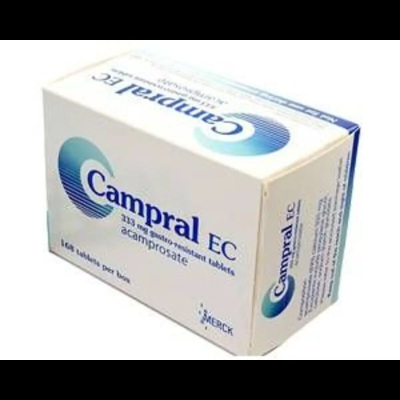
What is CAMPRAL and What Is It Used For?
Campral (acamprosate) helps people with alcohol use disorder who have
already stopped drinking to maintain their abstinence. Prolonged alcohol use
disrupts the balance of neurotransmitters in the brain. When alcohol is
suddenly stopped, the brain remains in a state of chemical imbalance —
contributing to cravings, anxiety, insomnia, and restlessness that drive
relapse. Campral works by restoring this chemical balance.
Campral does NOT prevent or treat alcohol withdrawal symptoms such as
shaking or seizures — these require separate medical management before Campral
is started. It is most effective when used as part of a comprehensive treatment
programme that includes counselling and psychological support.
Approved Uses
• Maintenance of abstinence from
alcohol in alcohol-dependent adults who have already completed alcohol
detoxification
• Used as an adjunct (add-on) to
psychosocial therapy — not to be used as a standalone treatment
• Treatment should start as soon as
possible after the alcohol withdrawal period ends
2. How to Take This Medicine
Dosing
• Adults ≥60 kg: 2 tablets (666 mg)
three times daily — morning, noon, and evening. Total daily dose: 1,998 mg
• Adults <60 kg: 333 or 666 mg 2
times daily
• Moderate renal impairment (CrCl 30–50
mL/min): Reduce to 1 tablet (333 mg) three times daily
• Children/adolescents under 18: NOT
recommended — safety and efficacy not established
• Elderly: Use with caution due to
reduced renal function; assess kidney function before starting
Recommended treatment duration is 1 year. Continue even if a relapse
(return to drinking) occurs — relapse is a common part of recovery, not a
reason to stop.
Administration
• Swallow tablets whole with water — do
not crush or chew (the enteric coating protects against stomach acid)
• Can be taken with or without food;
taking with meals helps remember the three daily doses
3. Side Effects
Common (may affect more than 1 in 10 patients)
• Diarrhoea — the most common side
effect; usually mild and decreases with time
• Nausea and abdominal discomfort
• Flatulence
• Itching (pruritus) and skin rash
Serious — Tell Your Doctor Immediately
• Suicidal thoughts or depression:
alcohol dependence is closely linked with depression — report any thoughts of
self-harm immediately
• Severe allergic reactions: difficulty
breathing, swelling of the face, lips, or throat — stop immediately and seek
emergency help
• Acute kidney failure (rare): reduced
urination, swelling — seek urgent care
4. Contraindications — Who Should NOT Take This
Medicine
• Do not take if you have severe renal
impairment (CrCl ≤30 mL/min) — CONTRAINDICATED
• Do not take if you are breastfeeding
• Do not take if you are allergic to
acamprosate or any ingredient in the tablet
• Note: Campral is NOT for use in
patients still drinking alcohol actively — detoxification must be completed
first
5. Safety Warnings and Special Precautions
Pregnancy
Acamprosate caused malformations in animal studies. Avoid during
pregnancy unless clearly necessary. Inform your doctor immediately if you
become pregnant during treatment.
Breastfeeding
CONTRAINDICATED — do not use while breastfeeding.
Kidney Function
Acamprosate is entirely excreted by the kidneys. Dose reduction is
required in moderate renal impairment and the drug is contraindicated in severe
impairment.
Liver Disease
Acamprosate is NOT metabolised by the liver — dose adjustment is not
required in mild to moderate liver disease. This makes it suitable for patients
with alcohol-related liver injury.
Mental Health
Regular monitoring for depression and suicidal ideation is essential, as
these are common in people with alcohol use disorder. Contact your doctor if
your mood worsens.
6. Drug Interactions
• Naltrexone: Co-administration
increases acamprosate blood levels by up to 33% (Cmax) — monitor, though dose
adjustment is usually not required
• Alcohol: Does not affect the
pharmacokinetics of either drug — Campral can be continued even after a relapse
• NSAIDs: Potential interaction via
renal tubular secretion — use with caution
• Antidepressants, anxiolytics,
disulfiram, diazepam: No clinically significant interactions reported
7. Storage
• Store at room temperature (15–30°C),
away from moisture and heat
• Do not store in the bathroom
• Keep out of reach of children
8. Prescription Status
POM — Prescription Only Medicine. Must be prescribed by a doctor and used
alongside a structured alcohol treatment programme.
9. Patient Guidance
• Do not stop Campral without
consulting your doctor — even if you have a relapse
• Continue attending counselling and
support group sessions — Campral is not effective without psychological support
• Tell your doctor about any changes in
mood, especially depression or thoughts of self-harm
• Campral does not cause drowsiness but
alcohol does — you are expected to remain alcohol-free during treatment
10. Pharmacist / Prescriber Notes
• Campral works on the glutamate (NMDA
receptor) system — distinct mechanism from naltrexone (opioid antagonist) and
disulfiram (aversion therapy); can be combined with naltrexone under
supervision
• Liver-safe: No hepatic metabolism —
suitable for patients with alcohol-related liver disease (unlike naltrexone
which has hepatotoxicity risk)
• Screen for baseline renal function
(eGFR/CrCl) before prescribing — dose reduction required in moderate CKD,
contraindicated in severe CKD
• If starting immediately
post-detoxification: can begin with as little as 0 days abstinence — earlier
start improves outcomes
• Duration: Prescribe for minimum 6
months, ideally 1 year — short courses are less effective
• Relapse does not mean failure:
continue prescribing even after a drinking episode — continued use post-relapse
is associated with a return to abstinence
11. Frequently Asked Questions (FAQs)
Q: What if I start drinking again while taking Campral?
A: Do not stop taking Campral.
Continue taking it and tell your doctor. Campral can still help you return to
abstinence. Relapse is a recognised part of recovery — not a failure — and
continuing Campral increases your chances of getting back on track.
Q: How long does it take for Campral to work?
A: Campral reaches steady-state
levels in the blood within about 5 days. You may not notice the effects
immediately — it works gradually and subtly to reduce the brain's urge to
drink. The benefit builds over weeks to months.
Q: Does Campral treat withdrawal symptoms?
A: No. Campral does not prevent or
treat alcohol withdrawal symptoms such as shaking, sweating, or seizures. These
are managed separately — usually with benzodiazepines under medical supervision
— before Campral is started.
There are no product reviews yet.