What is CARBOPLAT and What Is It Used For?
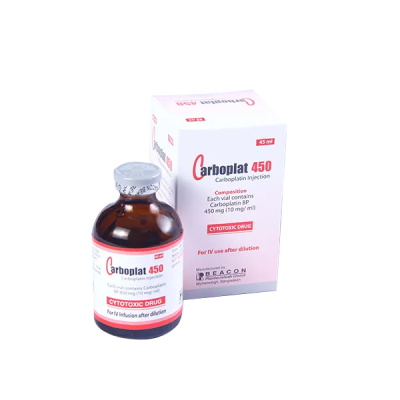
Carboplat contains carboplatin, a platinum-based chemotherapy medicine
that fights cancer by interfering with the DNA inside cancer cells, preventing
them from multiplying. It is administered exclusively by intravenous infusion
in hospital oncology centres under specialist supervision.
Carboplatin was developed as a less toxic alternative to cisplatin,
offering similar anti-tumour activity with significantly reduced kidney damage
and nerve toxicity, though it causes more bone marrow suppression than
cisplatin.
Approved Uses
• Advanced ovarian carcinoma —
first-line treatment in combination with paclitaxel or cyclophosphamide
• Recurrent ovarian cancer — palliative
treatment after prior chemotherapy
• Also widely used (off-label) in:
non-small cell lung cancer (NSCLC), small cell lung cancer (SCLC), breast
cancer, bladder cancer, endometrial cancer, cervical cancer, testicular cancer,
head and neck cancer, brain tumours, and paediatric solid tumours
2. How to Take This Medicine
Dosing is ALWAYS individualised by the oncologist using the Calvert
formula, which takes into account the patient's kidney function (GFR) and the
target drug exposure (AUC), where Total dose (mg) = Target AUC × (GFR +
25). There is no universal standard dose.
Typical Doses
• Single agent (recurrent ovarian
cancer): Approximately 360 mg/m² IV on Day 1 of each 4-week cycle
• Combination therapy (first-line
ovarian cancer with paclitaxel): Approximately 300 mg/m² IV on Day 1, every 4
weeks for 6 cycles
• Alternative AUC-based dosing: AUC 5–7
for combination therapy; AUC 4–6 for single-agent use
Administration Rules
• Infused IV over at least 15–60
minutes (longer if tolerated, to reduce infusion reactions)
• CRITICAL: Do NOT use needles or IV
sets containing aluminium — aluminium reacts with carboplatin, causing loss of
potency
• A new cycle must NOT begin until:
neutrophil count ≥2,000/mm³ AND platelets ≥100,000/mm³
• Dose reductions are required for
renal impairment — recalculate using GFR
3. Side Effects
Common (may affect more than 1 in 10 patients)
• Myelosuppression: Low platelets
(thrombocytopenia), low neutrophils (neutropenia), anaemia — the most
significant side effect
• Nausea and vomiting — antiemetic
pre-treatment is standard
• Fatigue and weakness
• Peripheral neuropathy
(numbness/tingling in hands and feet) — less common than cisplatin
• Hair loss (alopecia)
• Elevated liver enzymes
Serious — Tell Your Oncology Team Immediately
|
⚠ FEVER ABOVE 38°C during chemotherapy may
indicate neutropenic sepsis — a life-threatening emergency. Seek immediate
medical attention. |
• Severe bone marrow suppression:
life-threatening infection or bleeding — requires regular blood count
monitoring
• Anaphylaxis / severe allergic
reactions: can occur within minutes of starting the infusion — epinephrine and
corticosteroids must be available
• Acute kidney injury: less nephrotoxic
than cisplatin but kidney function monitoring is still required
• Hearing changes (ototoxicity): less
common than with cisplatin but monitor for changes in hearing
• Secondary leukaemia: very rare
long-term risk with platinum agents
4. Contraindications — Who Should NOT Receive
This Medicine
• Known hypersensitivity to
carboplatin, cisplatin, or other platinum compounds
• Severe myelosuppression (very low
blood cell counts) at baseline
• Severe renal impairment
• Pregnancy — can cause serious harm to
the developing fetus
• Breastfeeding
5. Safety Warnings and Special Precautions
Pregnancy
CONTRAINDICATED. Carboplatin is known to cause fetal harm. Effective
contraception is required during treatment and for at least 6 months after the
last dose (females) or 3 months (males).
Breastfeeding
CONTRAINDICATED. Do not breastfeed during treatment or for at least 2
weeks after the final dose.
Blood Count Monitoring
Complete blood counts must be performed before every cycle. Dose delays
or reductions are necessary if counts are too low.
6. Drug Interactions
• Nephrotoxic drugs (aminoglycosides,
amphotericin B): Additive kidney toxicity — avoid or monitor very closely
• Ototoxic drugs (aminoglycosides, loop
diuretics): Additive hearing damage
• Live vaccines: CONTRAINDICATED during
chemotherapy — risk of serious or fatal vaccine-related infection
• Warfarin and anticoagulants: May
alter INR — monitor closely
• Phenytoin: Carboplatin may reduce
phenytoin blood levels — increased risk of seizures; monitor
7. Storage
• Store at room temperature (15–30°C),
protected from light. Do not refrigerate or freeze.
• Once opened: stable for up to 14 days
at 25°C
• Prepared infusion solutions: discard
within 8 hours of preparation
• NEVER use aluminium-containing IV
equipment — causes degradation
8. Prescription Status
POM — Prescription Only Medicine. Specialist oncologist or haematologist
prescription required. Administration in a certified oncology unit only.
9. Patient Guidance
|
⚠ Go to the emergency department immediately if
you develop fever (>38°C), unusual bruising or bleeding, or signs of
severe infection at any point during your chemotherapy course. |
• Attend all blood count checks before
each cycle — your dose depends on your results
• Use effective contraception during
treatment and for 6 months after your last dose
• Avoid live vaccines during treatment
• Tell all other healthcare providers
that you are receiving carboplatin chemotherapy
10. Pharmacist / Prescriber Notes
• Calvert formula: Dose (mg) = Target
AUC × (GFR + 25) — GFR should be measured (eGFR or 24-hr urine CrCl), not
estimated
• Maximum GFR cap: Many centres cap GFR
at 125 mL/min in the Calvert formula to avoid overdosing
• Nadir: Thrombocytopenia and
neutropenia nadir occur at days 14–21 post-infusion — plan monitoring
accordingly
• Hypersensitivity reactions: More
common after 6+ cycles or in platinum-sensitive patients — have an anaphylaxis kit
at bedside
• Aluminium incompatibility: Strictly
enforce — aluminium needles/tubing cause carboplatin degradation and
potentially enhance toxicity
• No glass containers required:
carboplatin is stable in PVC bags/tubing (unlike cisplatin)
11. Frequently Asked Questions (FAQs)
Q: Why does my dose look different from another patient's
with the same cancer?
A: Carboplatin is dosed based on your
individual kidney function and body measurements using a precise mathematical
formula (the Calvert formula). Every patient receives a personalised dose —
this is deliberate, not an error.
Q: What should I watch for between my chemotherapy cycles?
A: Contact your oncology team
immediately if you develop: fever above 38°C (sign of dangerous infection),
unusual bleeding or bruising, black or tarry stools, persistent vomiting,
significantly reduced urine output, or any other concerning symptoms.
Q: Is carboplatin the same as cisplatin?
A: Both are platinum-based
chemotherapy drugs, but they are not the same. Carboplatin generally causes less
nausea, less kidney damage, and less nerve damage than cisplatin, but tends to
cause more bone marrow suppression (lower blood counts).
There are no product reviews yet.