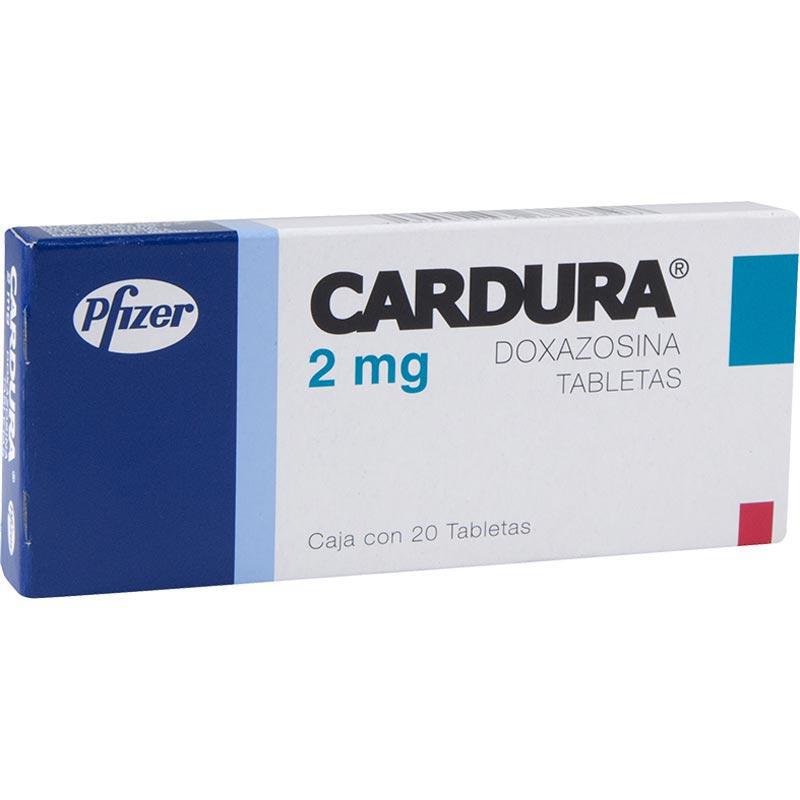
What is CARDURA and What Is It Used For?
Cardura (doxazosin) belongs to a class of medicines called alpha-1
blockers. It has two distinct clinical uses: reducing high blood pressure
(hypertension) and relieving the urinary symptoms of an enlarged prostate gland
(benign prostatic hyperplasia or BPH). By relaxing smooth muscle in blood
vessel walls and in the prostate and bladder neck, doxazosin improves both
blood pressure control and urinary flow.
Cardura does not shrink the prostate or cure hypertension — it controls
symptoms and reduces cardiovascular risk over the long term.
Approved Uses
• Hypertension (high blood pressure) —
to reduce the risk of stroke, heart attack, and kidney disease
• Benign prostatic hyperplasia (BPH) —
to relieve symptoms including: weak urine stream, difficulty starting
urination, frequent urination (especially at night), and incomplete bladder
emptying
• Also used off-label: to help pass
kidney/ureteral stones, PTSD-associated nightmares, pre-operative management of
phaeochromocytoma
2. How to Take This Medicine
Hypertension — Adults
• Start at 1 mg once daily (morning or
evening). Double the dose at 1–2 week intervals based on response.
• Usual maintenance: 1–4 mg daily.
Maximum: 16 mg daily
Benign Prostatic Hyperplasia — Adults
• Start at 1 mg once daily. Increase to
2 mg, 4 mg, then up to 8 mg at 1–2 week intervals
• Maximum: 8 mg daily
Elderly
• Start at 0.5–1 mg. Titrate very
gradually — elderly patients are more prone to first-dose hypotension and falls
Take once daily at the same time each day, with or without food. If
therapy is interrupted for several days, restart at 1 mg and re-titrate slowly.
Missed Dose
Take as soon as you remember, unless it is almost time for the next dose
— skip the missed dose and continue normally. Never double up.
|
⚠ FIRST-DOSE EFFECT: Take your first dose at
BEDTIME to reduce the risk of dizziness and fainting on standing. This
applies after any dose increase as well. |
3. Side Effects
Common (may affect more than 1 in 10 patients)
• Dizziness and lightheadedness —
especially after the first dose or any dose increase
• Orthostatic hypotension: blood
pressure drops suddenly when standing — risk of fainting
• Fatigue and somnolence (drowsiness)
• Headache
• Peripheral oedema (swelling in legs
and ankles)
• Palpitations and nausea
Serious — Tell Your Doctor Immediately
• Syncope (fainting): most likely after
first dose or dose increase
• Intraoperative floppy iris syndrome
(IFIS): can complicate cataract surgery — inform your eye surgeon BEFORE any
eye operation
• Priapism (prolonged painful
erection): extremely rare but requires immediate medical attention
• Signs of increased heart failure
symptoms (use with caution in heart failure patients)
4. Contraindications — Who Should NOT Take This
Medicine
• Known hypersensitivity to doxazosin,
other quinazolines (prazosin, terazosin), or any ingredient
• History of orthostatic hypotension
• Combination with PDE-5 inhibitors for
erectile dysfunction (sildenafil, tadalafil, vardenafil) — risk of severe
hypotension; sildenafil >25 mg is contraindicated
• Severe hepatic impairment
• Congestive heart failure caused by
mechanical obstruction (e.g. aortic stenosis, pulmonary embolism)
5. Safety Warnings and Special Precautions
Pregnancy
Limited data available. Use only when clearly necessary. Untreated
hypertension in pregnancy is dangerous.
Breastfeeding
Not recommended — it is unknown whether doxazosin passes into breast
milk.
Driving and Machinery
Doxazosin may cause dizziness, drowsiness, and low blood pressure. Do not
drive or operate machinery until you know how this medicine affects you —
particularly for the first few days of treatment.
Elderly Patients
Higher risk of dizziness and falls. Start with 0.5–1 mg and titrate very
slowly. Monitor closely for postural hypotension.
Prostate Cancer
Doxazosin does not treat prostate cancer. Prostate-specific antigen (PSA)
testing may be needed to exclude cancer before starting BPH therapy.
6. Drug Interactions
• PDE-5 inhibitors (sildenafil,
tadalafil, vardenafil): Significant additive blood pressure lowering — risk of
dangerous hypotension. CONTRAINDICATED with vardenafil. Use sildenafil >25
mg with extreme caution (separate by 4 hours)
• Other antihypertensives and
diuretics: Enhanced blood pressure lowering
• Beta-blockers: Enhanced hypotensive
effect and increased risk of first-dose syncope
• NSAIDs (ibuprofen): May reduce
antihypertensive effect of doxazosin
• CYP3A4 inhibitors (clarithromycin,
ritonavir, itraconazole): May increase doxazosin blood levels
• Alcohol: Enhances hypotensive and
sedative effects — avoid, especially on first dose
7. Storage
• Store at 25°C (15–30°C acceptable),
away from light and moisture
8. Prescription Status
POM — Prescription Only Medicine.
9. Patient Guidance
• Always take your first dose at
bedtime to minimise the risk of dizziness or fainting
• Rise slowly from a lying or sitting
position — hold on to something stable for support
• Avoid alcohol, especially in the
first week of treatment
• Tell your eye surgeon that you take
or have ever taken doxazosin before any eye operation (including cataract
surgery) — this is critical for surgical safety
10. Pharmacist / Prescriber Notes
• Alpha-1 selectivity: Doxazosin
selects alpha-1A (prostate) and alpha-1B (blood vessels) — equal benefit for
both indications from a single dose
• ALLHAT trial data: Doxazosin
increased rates of congestive heart failure compared to chlorthalidone as
first-line antihypertensive — not recommended as first-line monotherapy for
hypertension; preferred only if both hypertension and BPH co-exist
• IFIS alert: Important for
ophthalmology teams — any patient taking or who has ever taken alpha-blockers
requires modified cataract surgical technique (small pupil protocol)
• Beers Criteria: Avoid for
hypertension in elderly patients due to excessive hypotension risk and falls —
safer alternatives exist (ACE inhibitors, calcium channel blockers)
• PDE-5 inhibitor co-prescription:
Screen medication list at every dispensing — this combination is a common cause
of emergency admissions for severe hypotension
11. Frequently Asked Questions (FAQs)
Q: Will Cardura shrink my enlarged prostate?
A: No. Cardura relaxes the muscles
around the prostate and bladder neck, making urination easier and reducing
symptoms, but it does not reduce the actual size of the prostate. For prostate
size reduction, other medications such as finasteride or dutasteride (5-alpha
reductase inhibitors) are used — your doctor may combine these with Cardura.
Q: How long before I notice improvement?
A: Blood pressure reduction may be
seen within 1–2 weeks of regular dosing. Improvement in urinary flow and BPH
symptoms typically takes 2 weeks of regular treatment. Some patients may notice
changes earlier.
Q: Why did my doctor tell me to take the first tablet at
bedtime?
A: The first dose of doxazosin (or
after any dose increase) can sometimes cause a significant drop in blood
pressure, particularly when you stand up. Taking it at bedtime means any
dizziness happens while you are lying down and asleep, greatly reducing the
risk of a fall or fainting.
There are no product reviews yet.