
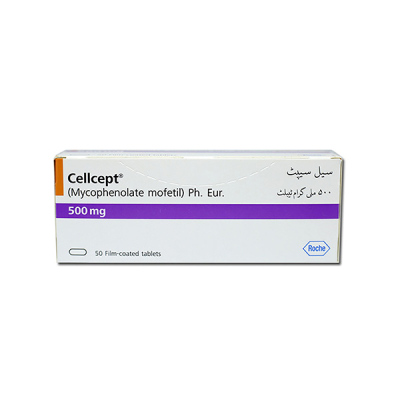
What is CELLCEPT and What Is It Used For?
CellCept (mycophenolate mofetil) is an immunosuppressant medicine that
prevents the body's immune system from rejecting a transplanted organ. When a
person receives a donor kidney, heart, or liver, the immune system recognises
the new organ as 'foreign' and attacks it — this is called rejection. CellCept
suppresses this immune response by blocking the proliferation of the
lymphocytes (white blood cells) that drive the attack.
CellCept is always used in combination with cyclosporine and
corticosteroids and is prescribed and monitored exclusively by specialist
transplant physicians.
Approved Indications
• Prevention of acute rejection in
kidney (renal) transplant recipients — in combination with ciclosporin and
corticosteroids
• Prevention of acute rejection in
heart (cardiac) transplant recipients — in combination with ciclosporin and
corticosteroids
• Prevention of acute rejection in
liver (hepatic) transplant recipients — in combination with ciclosporin and
corticosteroids
• Also used off-label: lupus nephritis,
vasculitis, IgA nephropathy, inflammatory myopathies, and other autoimmune
conditions
2. How to Take This Medicine
Kidney Transplant — Adults
• 1 g (2 × 500 mg tablets) twice daily.
Start within 72 hours of transplant. Total daily dose: 2 g
Heart Transplant — Adults
• 1.5 g (3 × 500 mg tablets) twice
daily. Start within 5 days of transplant. Total daily dose: 3 g
Liver Transplant — Adults
• 1.5 g (3 × 500 mg tablets) twice
daily. Total daily dose: 3 g
Children (1–18 years)
• Based on body surface area (BSA):
typically 600 mg/m² twice daily. Your transplant team will calculate the
specific dose.
Administration
• Best taken on an empty stomach — 1
hour before or 2 hours after meals — for maximum absorption
• If GI side effects are problematic,
may be taken with food (minor reduction in absorption)
• Swallow tablets whole. DO NOT crush
or chew — mycophenolate powder is teratogenic and must not contact skin or
mucous membranes
Missed Dose
Take as soon as you remember. If it is almost time for the next dose,
skip it — never double up. Contact your transplant team if unsure.
3. Side Effects
Common (may affect more than 1 in 10 patients)
• Diarrhoea, nausea, vomiting,
abdominal pain — gastrointestinal side effects are the most common
• Infections: viral (CMV), bacterial,
and fungal — common due to immune suppression
• Anaemia, neutropenia (low white
cells), thrombocytopenia (low platelets)
• Headache, hypertension, tremor,
insomnia, peripheral oedema
Serious — Tell Your Transplant Team Immediately
|
⚠ Do NOT stop CellCept without first consulting
your transplant team. Stopping suddenly could trigger organ rejection, which
may be life-threatening. |
• Serious, life-threatening infections:
bacterial sepsis, CMV disease, pneumonia, PML (progressive multifocal
leukoencephalopathy — a rare brain infection caused by the JC virus)
• Malignancies: increased risk of
lymphoma and skin cancers with long-term immunosuppression
• Pure red cell aplasia (PRCA): rare
but serious blood disorder requiring dose reduction
• Neutropenia: may require dose
reduction or treatment interruption
4. Contraindications — Who Should NOT Take This
Medicine
• Known hypersensitivity to
mycophenolate mofetil, mycophenolic acid, or any ingredient
• Pregnancy — ABSOLUTELY
CONTRAINDICATED: causes miscarriage and serious birth defects
• Females of reproductive age NOT using
two reliable methods of contraception simultaneously
• Lesch-Nyhan syndrome or
Kelley-Seegmiller syndrome (rare enzyme disorders)
5. Safety Warnings and Special Precautions
Pregnancy — CRITICAL TERATOGEN
CellCept causes miscarriage and serious birth defects (external ear,
facial, heart, kidney, and limb malformations). Females MUST use TWO reliable
methods of contraception starting 4 weeks before, throughout treatment, and for
6 weeks after stopping. Two negative pregnancy tests are required before
starting in women of reproductive potential.
Breastfeeding
Not recommended — it is unknown whether mycophenolate passes into breast
milk.
Infection Risk
CellCept suppresses the immune system — avoid contact with people who
have active infections. Report any fever, cough, or unusual symptoms to your
transplant team immediately.
Sun Protection
Long-term immunosuppression significantly increases skin cancer risk. Use
SPF 50+ sunscreen, protective clothing, and avoid excessive sun exposure
throughout therapy.
6. Drug Interactions
• Antacids (aluminium/magnesium — e.g.
Maalox): Reduce MMF absorption — separate by at least 2 hours
• Proton pump inhibitors (omeprazole,
pantoprazole): May reduce MMF absorption — clinical significance varies;
consider monitoring
• Ciclosporin: Reduces MMF levels by
inhibiting enterohepatic circulation — monitor transplant efficacy
• Tacrolimus: When switching from
ciclosporin, MMF levels may rise — monitor for toxicity
• Aciclovir, ganciclovir: Compete with
MMF for renal tubular secretion — monitor both drugs' levels
• Cholestyramine: Reduces MMF levels
significantly — avoid concurrent use
• Live vaccines: CONTRAINDICATED during
immunosuppressive therapy
• Azathioprine: Avoid concurrent use —
no added benefit and significantly increased toxicity
7. Storage
• Store at 15–30°C, away from moisture,
heat, and light
• Keep in original packaging
• Handle with care: do not crush or
break tablets without protective gloves
8. Prescription Status
POM — Prescription Only Medicine. Specialist transplant physician
prescription required. Pharmacy dispensing should verify pregnancy prevention
plan in women of reproductive age at every dispensing.
9. Patient Guidance
|
⚠ NEVER stop CellCept without consulting your
transplant team — sudden discontinuation can cause organ rejection, which may
be life-threatening. |
• Take every dose at the same times
each day — consistency is critical for transplant protection
• Tell all other healthcare providers
(including dentists) that you take CellCept
• Apply sunscreen (SPF 50+) every day —
long-term use significantly increases skin cancer risk
• Attend all monitoring blood tests as
scheduled by your transplant team
10. Pharmacist / Prescriber Notes
• Teratogenicity programme: At every
dispensing for women of reproductive age — verify two methods of contraception
are in use and document. Pregnancy prevention programme compliance is
mandatory.
• MPA exposure monitoring: Trough
levels of MPA can guide dosing (target AUC 30–60 mg·h/L in renal transplant),
though not always measured routinely
• GI side effects: Most common reason
for dose reduction — splitting dose to 3× daily (total dose unchanged) can
improve GI tolerability; Myfortic (EC-MPS) may be switched if persistent
• Ciclosporin interaction: MMF levels
are ~30–50% lower when co-prescribed with ciclosporin vs tacrolimus — patients
switching between calcineurin inhibitors need MMF dose reassessment
• CMV prophylaxis: High-risk transplant
patients on MMF require co-prescription of valganciclovir for CMV prophylaxis —
MMF increases CMV susceptibility
• Handling: Wear gloves when handling
broken or crushed tablets; powder is teratogenic — protect pharmacy staff
11. Frequently Asked Questions (FAQs)
Q: Can I ever stop taking CellCept?
A: You should never stop or reduce
CellCept without first consulting your transplant specialist. Stopping suddenly
can cause your immune system to attack and reject your transplanted organ —
which can be life-threatening. Most transplant patients take CellCept or a
similar drug for the rest of their lives.
Q: Is it safe to have vaccinations while on CellCept?
A: Live vaccines (such as BCG, yellow
fever, MMR, varicella) are contraindicated because the weakened live virus in
the vaccine could cause a real infection in your suppressed immune system.
Inactivated vaccines (influenza, hepatitis B, pneumococcal) may be given but
may not work as effectively. Always discuss any planned vaccination with your
transplant team first.
Q: Why can't I take antacids at the same time as CellCept?
A: Antacids containing aluminium or
magnesium bind to CellCept in the stomach and significantly reduce how much
enters your bloodstream — meaning your transplanted organ may not be adequately
protected. Always separate antacids from CellCept by at least 2 hours.
There are no product reviews yet.