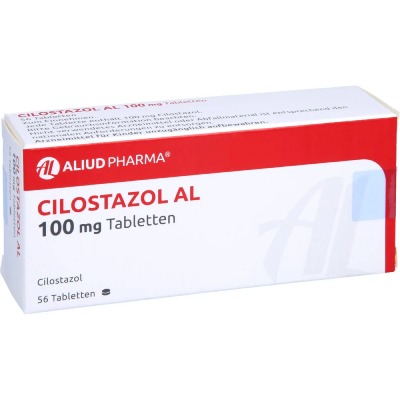
What is CILOSTAZOL and What Is It Used For?
Cilostazol is a medicine used to relieve the leg pain and cramping that
occurs when walking in patients with peripheral arterial disease (PAD) — a
condition in which narrowed leg arteries reduce blood flow to the leg muscles.
The resulting pain on walking that eases with rest is called intermittent
claudication.
Cilostazol works by widening the arteries supplying the legs
(vasodilation) and preventing blood platelets from clumping together
(antiplatelet effect), improving blood flow to the muscles during exercise.
With regular treatment, most patients can walk significantly further before
experiencing pain. It is typically used as a second-line treatment after
lifestyle changes have not adequately improved walking distance.
Approved Uses
• Improvement of pain-free and maximum
walking distance in patients with intermittent claudication (PAD, Fontaine
Stage II) — without rest pain or tissue necrosis
• Also used (in some international
guidelines) for secondary prevention of stroke recurrence after
non-cardioembolic ischaemic stroke or TIA
2. How to Take This Medicine
Adults
• 100 mg twice daily — best taken at
least 30 minutes before or 2 hours after breakfast and dinner
• Taking with food significantly
increases drug absorption and side effects (particularly headache and
palpitations) — take on an empty stomach when possible
Dose Reduction to 50 mg Twice Daily — Required With
• Moderate/strong CYP3A4 inhibitors:
clarithromycin, erythromycin, diltiazem, itraconazole, ketoconazole
• CYP2C19 inhibitors: omeprazole,
esomeprazole, fluconazole
Clinical Assessment at 3 Months
If there is no meaningful improvement in walking distance after 3 months
of treatment, cilostazol should be discontinued — continued therapy without
benefit is not recommended.
Special Populations
• Renal impairment: No dose adjustment
if CrCl >25 mL/min. Use with caution if CrCl ≤25 mL/min
• Hepatic impairment: Mild — no
adjustment. Moderate–severe — insufficient data; use with caution
• Children: Safety and efficacy not
established
Missed Dose
Take as soon as you remember, unless it is almost time for the next dose
— skip it and continue normally. Never double up.
3. Side Effects
Common (may affect more than 1 in 10 patients)
• Headache: most common side effect,
affecting over 30% of patients; usually improves with continued use
• Diarrhoea and loose stools (affecting
over 15%)
• Palpitations and tachycardia (average
increase of 5–8 bpm)
• Dizziness and peripheral oedema
(ankle swelling)
• Nausea and abnormal stools
Serious — Tell Your Doctor Immediately
• Cardiac arrhythmias: Palpitations are
common and usually benign, but serious arrhythmias can occur in susceptible
individuals
• Significant bleeding: cilostazol
inhibits platelet function — report unusual bruising, prolonged bleeding from
cuts, blood in urine/stools
• Rare: agranulocytosis (dangerously
low white blood cells) and thrombocytopenia (low platelets) — require immediate
medical attention
4. Contraindications — Who Should NOT Take This
Medicine
|
⚠ Heart failure of ANY severity is an ABSOLUTE
CONTRAINDICATION. Cilostazol and similar PDE-3 inhibitors have been
associated with increased mortality in heart failure patients. This
contraindication must be strictly observed. |
• Known hypersensitivity to cilostazol
• Active pathological bleeding (peptic
ulcer, intracranial bleeding)
• Pregnancy — caused fetal
malformations in animal studies
• Unstable angina or myocardial
infarction within the past 6 months
• History of ventricular tachycardia,
ventricular fibrillation, or QTc prolongation
5. Safety Warnings and Special Precautions
Heart Failure
ABSOLUTE CONTRAINDICATION. PDE-3 inhibitors increase the force of cardiac
contraction (positive inotropic effect) — in heart failure, this has been shown
to increase mortality. Do NOT use in any patient with a diagnosis of heart
failure, regardless of severity.
Pregnancy
CONTRAINDICATED. Cilostazol caused fetal malformations in animal studies.
Use effective contraception during treatment.
Breastfeeding
Not recommended — cilostazol and its metabolites pass into breast milk
and may affect the nursing infant.
Smoking
Patients with PAD must be strongly encouraged to stop smoking. Smoking
significantly constricts blood vessels and greatly limits cilostazol's
effectiveness.
Grapefruit Juice
Avoid grapefruit juice during treatment — it inhibits CYP3A4 and
increases cilostazol levels by approximately 50%, increasing side effects.
6. Drug Interactions
• CYP3A4 inhibitors — strong
(clarithromycin, erythromycin, itraconazole, ketoconazole): Significantly
increase cilostazol levels — reduce dose to 50 mg twice daily
• CYP2C19 inhibitors (omeprazole,
esomeprazole): Increase active metabolite levels — reduce dose to 50 mg twice
daily
• CYP3A4 inducers (carbamazepine,
rifampicin): Decrease cilostazol levels — may reduce efficacy
• Grapefruit juice: CYP3A4 inhibitor —
increases cilostazol levels ~50%. Avoid.
• Anticoagulants (warfarin, heparin)
and antiplatelet agents (aspirin, clopidogrel): Additive increased bleeding
risk — monitor closely
• Antihypertensives and vasodilators
(calcium channel blockers): Additive hypotension and reflex tachycardia
• Alcohol: Enhances hypotensive effect
— advise moderation
7. Storage
• Store at room temperature (15–25°C),
protected from moisture and heat
• Keep in original packaging, out of
reach of children
8. Prescription Status
POM — Prescription Only Medicine.
9. Patient Guidance
• Take on an empty stomach — at least
30 minutes before or 2 hours after meals — for best effect
• Avoid grapefruit juice during the
course of treatment
• Continue prescribed lifestyle
measures: smoking cessation, supervised walking exercise, cholesterol
management, and blood pressure control — these are as important as the
medication
• Return for clinical review at 3
months — if your walking distance has not improved meaningfully, your doctor
will reassess whether to continue cilostazol
• Tell your doctor before any procedure
or surgery — cilostazol affects platelet function and bleeding risk
10. Pharmacist / Prescriber Notes
• Heart failure screening: Mandatory
before prescribing — check for any history of heart failure, LV dysfunction, or
recent hospitalisation for fluid overload. Any doubt warrants an echo or
cardiology referral.
• 3-month rule: Build in a clinical
review at 3 months — if no objective improvement in maximum or pain-free
walking distance, discontinue. Continued prescribing without review is not
evidence-based.
• CYP interactions: Very common in
practice — omeprazole (one of the most prescribed drugs) is a CYP2C19 inhibitor
that requires a cilostazol dose reduction to 50 mg twice daily
• Grapefruit juice: Counsel patients
explicitly — this is a commonly overlooked interaction that significantly
increases drug exposure
• Aspirin combination: Sometimes
co-prescribed for cardiovascular prevention — increased bleeding risk; patient
should be aware
• Pletal comparison: Cilostazol 100 mg
BD is the generic equivalent of Pletal® 100 mg BD — bioequivalence established
11. Frequently Asked Questions (FAQs)
Q: How long before I start walking further without pain?
A: Many patients notice some
improvement within 2–4 weeks, but the full benefit — the maximum increase in
walking distance — may take up to 12 weeks of regular treatment. Continue
taking it as prescribed even if early improvement is modest.
Q: Can I take aspirin or ibuprofen with cilostazol?
A: Low-dose aspirin is sometimes
co-prescribed with cilostazol for cardiovascular protection — this is done
under medical supervision as it adds to the antiplatelet effect and increases
bleeding risk. Ibuprofen and other NSAIDs should only be taken with caution and
are not recommended without medical guidance, as they also increase bleeding
risk and can raise blood pressure.
Q: What happens if I stop taking cilostazol?
A: The improvements in walking
distance will gradually reverse within 48–96 hours as platelet function and
blood vessel tone return to their pre-treatment state. There is no rebound
effect or worsening beyond your original baseline — you simply return to where
you started.
There are no product reviews yet.