
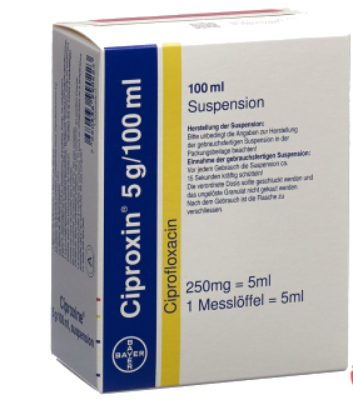
WHAT IS THIS MEDICINE?
Ciproxin Suspension contains ciprofloxacin, a fluoroquinolone
antibiotic that fights a wide range of bacterial infections. The liquid form
makes it ideal for patients who have difficulty swallowing tablets, including
children and older adults.
2. HOW TO TAKE THIS MEDICINE
Shake the bottle well before each use. Measure the dose
carefully with the oral syringe or spoon provided. Adults typically receive
250–500mg (5–10ml) twice daily. Children are dosed by body weight — follow your
doctor's instructions precisely. Take with or without food, but drink plenty of
water. Complete the full course even if you feel better.
3. POSSIBLE SIDE EFFECTS
Common side effects include the following. Contact your
doctor or pharmacist if any side effect worries you.
|
Side Effect |
Frequency |
What To Do |
|
Nausea/vomiting |
Common |
Take with food; contact the doctor if severe |
|
Diarrhoea |
Common |
Stay hydrated; see a doctor if bloody |
|
Headache/dizziness |
Common |
Avoid driving until you know your response |
|
Tendon pain/swelling |
Uncommon |
Stop immediately & contact doctor |
|
Allergic rash/hives |
Rare |
Stop & seek urgent medical attention |
|
Photosensitivity |
Uncommon |
Avoid prolonged sun exposure; use sunscreen |
|
QT-interval prolongation |
Very rare |
Report palpitations to doctor immediately |
|
⚠ IMPORTANT WARNING |
|
Stop taking and seek emergency help if you
experience tendon pain, swelling, or rupture. Ciprofloxacin can cause
tendinitis and tendon rupture, especially in patients over 60 or those on
corticosteroids. |
4. WHO SHOULD NOT TAKE THIS MEDICINE
Do not use if allergic to ciprofloxacin or any
fluoroquinolone antibiotic. Avoid in children under 1 year. Use with caution in
patients with epilepsy, kidney disease, myasthenia gravis, or a history of
QT-prolongation. Not recommended in pregnancy or breastfeeding without
specialist advice.
5. DRUG INTERACTIONS
Avoid dairy products, calcium-fortified juices, antacids, and
iron supplements within 2 hours — they reduce absorption. Do not take with
theophylline or tizanidine. Tell your doctor about all medicines, including
warfarin, NSAIDs, and antiepileptics.
6. HOW TO STORE
Store below 25°C. After reconstitution, the suspension is
stable for 14 days in the refrigerator (2–8°C). Do not freeze. Discard any
remaining suspension after 14 days.
7. PRESCRIPTION STATUS
Prescription Only Medicine (POM). Dispensed only with a valid
prescription.
|
💚 PATIENT TIP |
|
Drink at least 1.5–2 litres of water daily
while taking this medicine to help prevent kidney stone formation, a rare but
known side effect. |
8. PHARMACIST'S NOTE
Ciprofloxacin suspension must be reconstituted by the
pharmacist before dispensing. Counsel patients to shake well before each dose
and to refrigerate after opening. Remind patients that stopping early may cause
antibiotic resistance.
9. FREQUENTLY ASKED QUESTIONS
|
FREQUENTLY ASKED QUESTIONS |
|
Q: What infections does
Ciproxin suspension treat? A: It treats urinary tract infections,
respiratory infections, skin infections, gastrointestinal infections, bone
and joint infections, and certain sexually transmitted infections caused by
susceptible bacteria. |
|
Q: Can children take
Ciproxin suspension? A: Yes — in children aged 1 year and above, the
dose is calculated by body weight. It is commonly used in children for
urinary tract and respiratory infections, especially in cystic fibrosis. |
|
Q: Can I give it with
milk or juice? A: Avoid giving dairy products or
calcium-enriched drinks, as they can reduce the amount of antibiotics absorbed
into the bloodstream. |
|
Q: What if I miss a dose? A: Take it as soon as you remember. If it is
nearly time for the next dose, skip the missed one. Never double up. |
|
Q: Is Ciproxin safe in
pregnancy? A: Ciprofloxacin is generally avoided in
pregnancy unless no safer alternative exists. Discuss risks and benefits with
your doctor. |
There are no product reviews yet.