WHAT IS THIS MEDICINE?
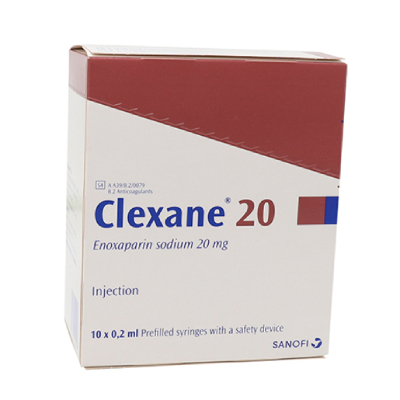
Clexane contains enoxaparin, a low-molecular-weight heparin
(LMWH) anticoagulant that prevents blood clots from forming or growing. The
20mg dose is primarily used for prophylaxis (prevention) of deep vein
thrombosis (DVT) in patients at moderate risk, such as those undergoing
general surgery or medical patients with limited mobility.
2. HOW TO TAKE THIS MEDICINE
Clexane is given as a subcutaneous (under-skin) injection,
usually into the abdomen. The standard prophylactic dose is 40 mg once daily,
started 2 hours before surgery or 12 hours before and continued for 7–10 days
or until the patient is mobile. Injections should be given lying down. Rotate
injection sites and do not rub the area after injecting. Treatment dose is 1
mg/kg every 12 hours or 1.5 mg/kg once daily.
3. POSSIBLE SIDE EFFECTS
Common side effects include the following. Contact your
doctor or pharmacist if any side effect worries you.
|
Side Effect |
Frequency |
What To Do |
|
Bruising at the injection site |
Very common |
Normal — rotate sites daily |
|
Bleeding (minor) |
Common |
Apply gentle pressure; call doctor if excessive |
|
Mild pain at the injection site |
Common |
Use the correct injection technique |
|
Anaemia |
Common |
Report unusual tiredness to doctor |
|
Thrombocytopenia (HIT) |
Rare |
Report falling platelet count immediately |
|
Elevated liver enzymes |
Common |
Monitor liver function — usually reversible |
|
Osteoporosis |
Rare (long-term) |
Discuss with the doctor if on prolonged therapy |
|
⚠ IMPORTANT WARNING |
|
Heparin-Induced Thrombocytopenia (HIT) is a
rare but serious reaction. Contact your doctor immediately if you develop new
blood clots or unexplained bruising during treatment. Regular platelet count
monitoring is required. |
4. WHO SHOULD NOT TAKE THIS MEDICINE
Do not use in patients with active major bleeding, HIT
antibodies, or allergy to enoxaparin or pork products (heparin is derived from
porcine intestinal mucosa). Use with great caution in severe kidney disease
(eGFR <30) — dose reduction required. Avoid spinal/epidural procedures
within dosing windows.
5. DRUG INTERACTIONS
Increased bleeding risk with aspirin, NSAIDs, warfarin,
clopidogrel, other anticoagulants, and thrombolytics. Avoid routine use of
NSAIDs during enoxaparin therapy. Vitamin K antagonists require careful INR
monitoring during overlap.
6. HOW TO STORE
Store below 25°C. Do not freeze. Keep in original packaging
to protect from light. Keep out of reach of children. Single-use pre-filled
syringes — discard any unused portion.
7. PRESCRIPTION STATUS
Prescription Only Medicine (POM). Initiation should be by or
under the supervision of a physician experienced in anticoagulant therapy.
|
💚 PATIENT TIP |
|
If you are self-injecting at home, inject into
the fatty tissue of the lower abdomen, at least 5cm away from your navel.
Pinch a fold of skin and inject at a 90-degree angle. Hold the skin fold
throughout the injection. |
8. PHARMACIST'S NOTE
Counsel patients (or caregivers) on correct subcutaneous
injection technique. Emphasise rotating injection sites, not rubbing after
injection, and the importance of not missing doses. Advise patients to carry an
anticoagulant alert card and to inform all healthcare providers they are on
enoxaparin.
9. FREQUENTLY ASKED QUESTIONS
|
FREQUENTLY ASKED QUESTIONS |
|
Q: Does it hurt to
inject? A: There may be a mild sting. Using the correct
technique — slow, steady injection into a pinched fold of abdominal fat —
minimises discomfort. |
|
Q: Can I use Clexane
during pregnancy? A: Enoxaparin is the preferred anticoagulant in
pregnancy as it does not cross the placenta. However, it must be prescribed
and monitored by a doctor. |
|
Q: What should I do if I
miss a dose? A: Contact your doctor or nurse for guidance.
Do not inject a double dose. For surgical prophylaxis, the timing of doses
around procedures is critical. |
|
Q: Can I travel by air
while on Clexane? A: Yes — enoxaparin is often prescribed before
long-haul flights for high-risk patients. Discuss the timing of doses around your
travel with your doctor. |
|
Q: How do I dispose of
used syringes? A: Place used syringes in a sharps container
(puncture-resistant bin). Never recap needles or dispose in household
rubbish. Return to pharmacy or follow local disposal guidelines. |
There are no product reviews yet.