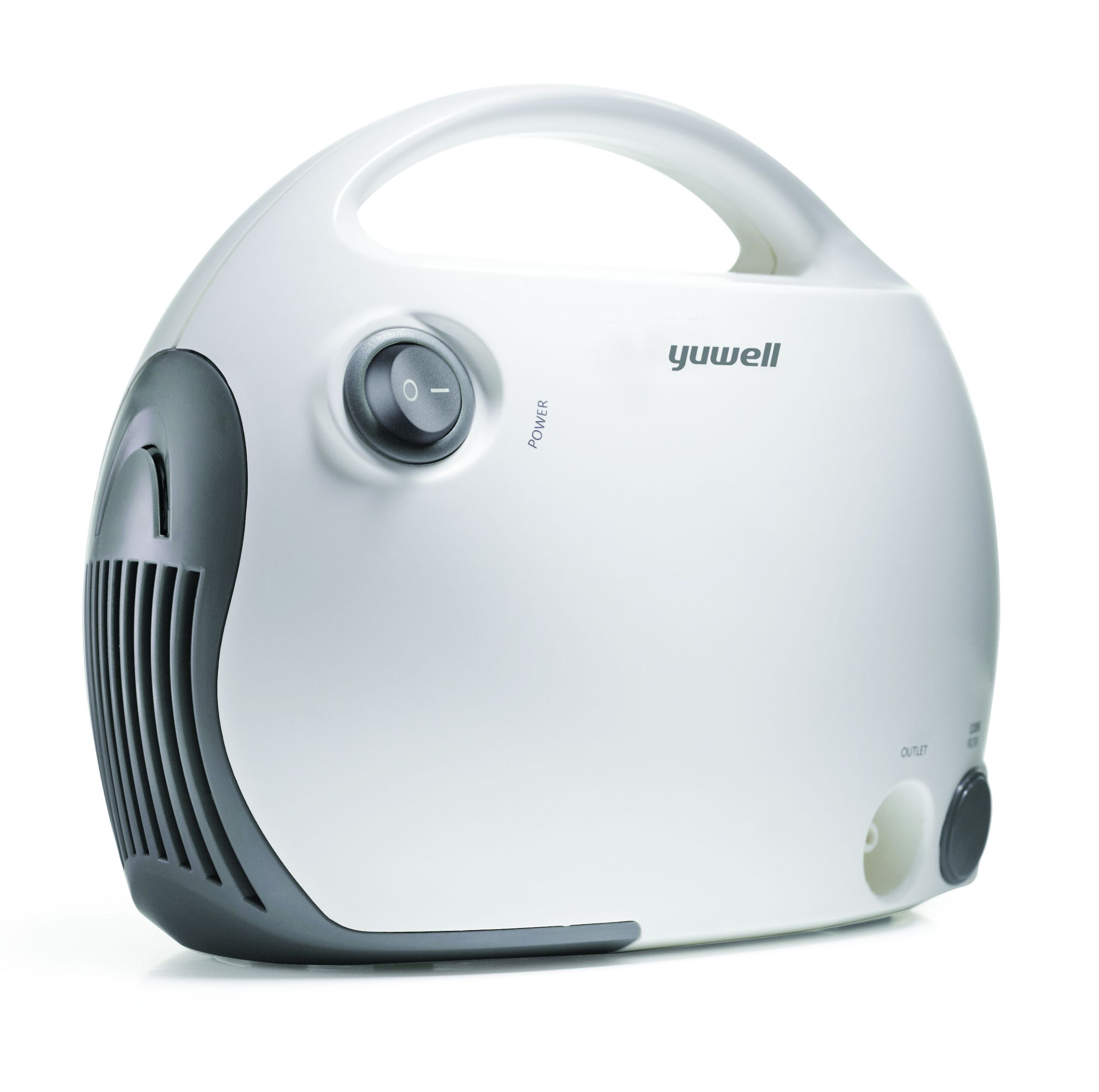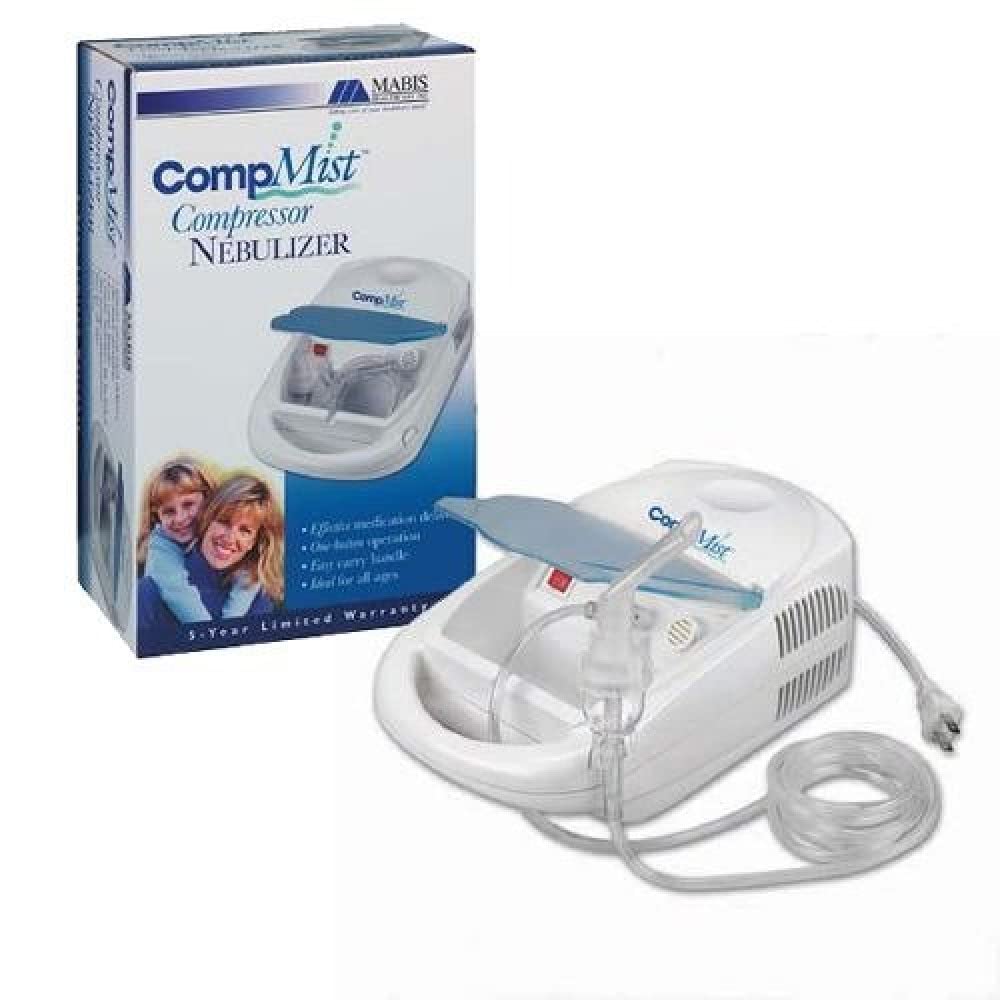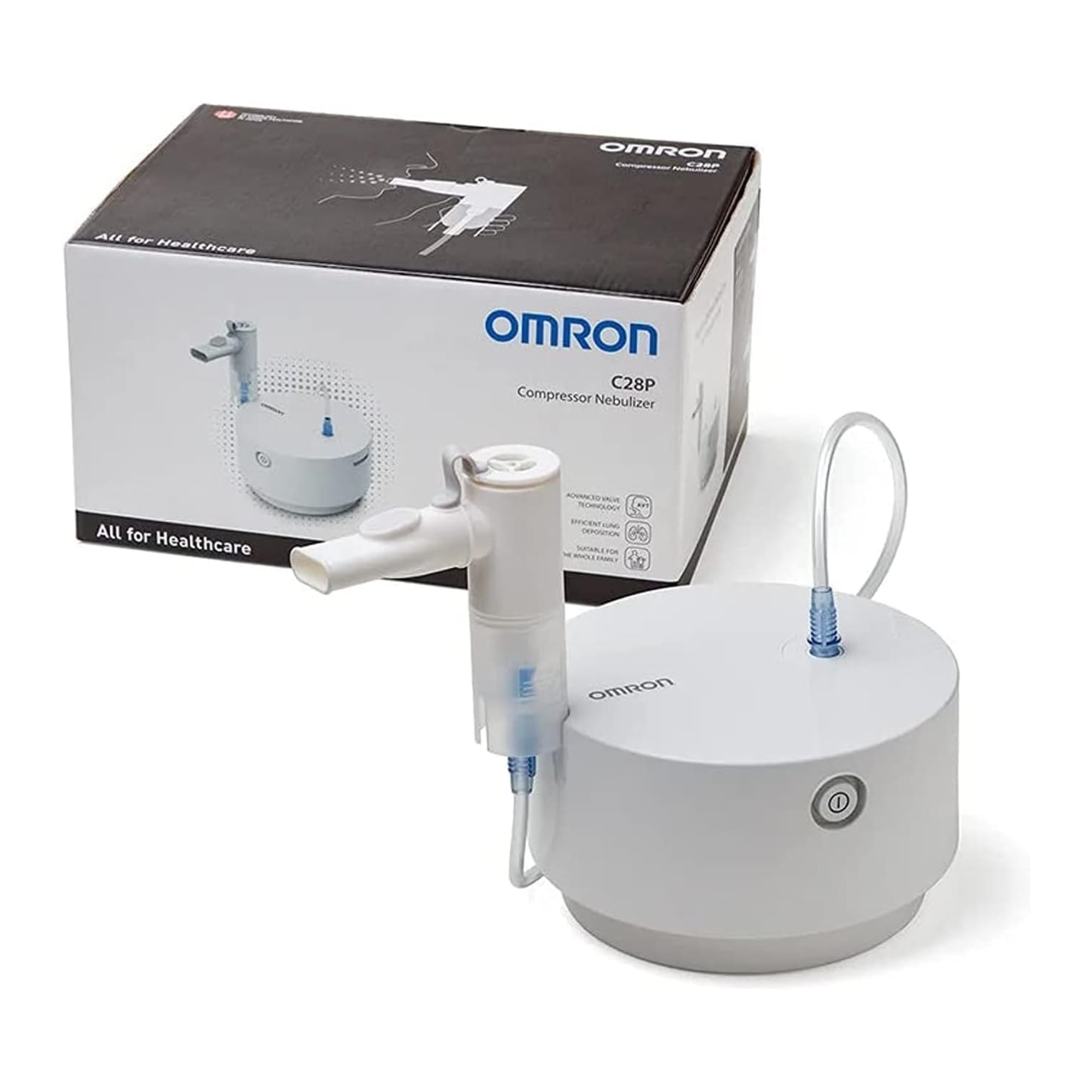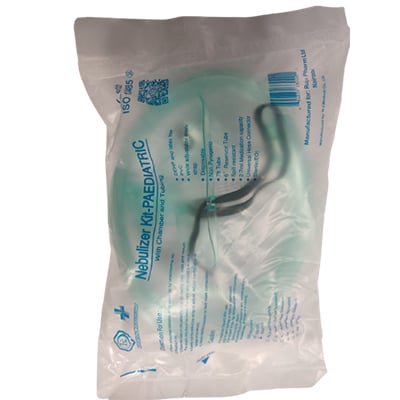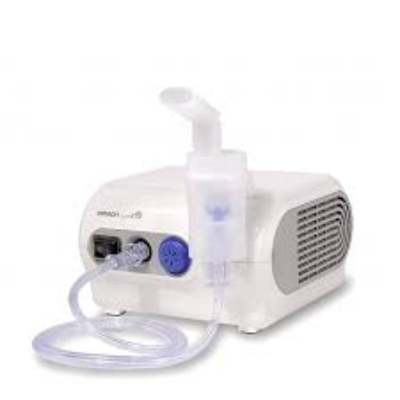
WHAT IS THIS Device?
A compressor nebulizer (also called a jet nebulizer) is a
medical device that uses compressed air to convert liquid medication into a
fine aerosol mist that can be inhaled directly into the lungs. It is used for
patients who cannot use traditional inhalers effectively — including children,
elderly patients, and those with severe breathlessness.
2. HOW TO Use THIS Device
Pour the prescribed liquid medication into the nebuliser cup.
Connect the tubing to the compressor. Sit upright in a comfortable chair. Place
the mouthpiece in your mouth (or face mask over nose and mouth for children).
Switch on the compressor and breathe normally through your mouth until the
medication is finished (usually 5–15 minutes). Clean the nebuliser after each
use.
3. POSSIBLE SIDE EFFECTS
Common side effects include the following. Contact your
doctor or pharmacist if any side effect worries you.
|
Side Effect |
Frequency |
What To Do |
|
Throat/airway irritation |
Common (device-related) |
Rinse mouth after use; use correct technique |
|
Noise sensitivity |
Device characteristic |
Use in quiet environment; earplugs available |
|
Infection risk |
If not cleaned properly |
Clean and dry after every use |
|
⚠ IMPORTANT WARNING |
|
Never share your nebuliser with another person
— cross-infection risk. Always ensure the device is clean and dry before use.
Bacteria can grow in a damp nebuliser and cause serious lung infections. |
4. WHO SHOULD NOT Use This Device
No absolute contraindications for the device itself. Some
medications may not be suitable for nebulisation — always confirm with your
pharmacist or doctor that your medicine is appropriate for nebuliser use.
5. DRUG INTERACTIONS
Not applicable for the device itself. Medication interactions
depend on the drugs being nebulised.
6. HOW TO STORE
Store in a clean, dry place. Keep the device in its carrying
case when not in use. Replace the nebuliser cup and mask every 3–6 months or as
per manufacturer instructions. The compressor filter should be replaced
periodically.
7. PRESCRIPTION STATUS
Generally available as a medical device. Some prescriptions
for nebuliser solution will specify or assume the availability of a nebuliser.
Check with your healthcare provider for recommended device specifications.
|
💚 PATIENT TIP |
|
After each nebulisation session, disconnect the
tubing, rinse the cup and mouthpiece under running water, shake off excess
water, and leave to air dry on a clean tissue. Never put the compressor unit
in water. |
8. PHARMACIST'S NOTE
When dispensing nebuliser solutions, always check that the
patient has a functioning, appropriate compressor nebuliser. Advise on the
correct fill volume for the nebuliser cup (usually 2.5–4ml; some require normal
saline to make up volume). Recommend mesh nebulisers for paediatric use where
efficiency is important.
9. FREQUENTLY ASKED QUESTIONS
|
FREQUENTLY ASKED QUESTIONS |
|
Q: Who needs a nebulizer? A: Patients who cannot coordinate inhaler use
(young children, elderly), those with severe asthma or COPD exacerbations,
cystic fibrosis patients, and those needing nebulised antibiotics like
colistin or tobramycin. |
|
Q: How long does a
nebulization session take? A: Typically 5–15 minutes depending on the fill
volume and drug viscosity. The session is complete when sputtering sounds
indicate the cup is empty. |
|
Q: How often should I
replace parts? A: The nebuliser cup and mask every 3–6 months.
The air filter on the compressor every 6–12 months. The complete unit every
few years depending on manufacturer recommendations. |
|
Q: What if my nebuliser
stops producing mist? A: Check that the cup is properly connected,
the tubing is not kinked, and the filter is not blocked. A clogged filter is
the most common reason for poor mist output. |
|
Q: Is a mesh nebulizer
better than a compressor nebulizer? A: Mesh nebulizers are quieter, portable, and
more efficient — but more expensive. Compressor nebulizers are reliable and
lower-cost. For hospital and home use, compressors remain widely used. |
There are no product reviews yet.